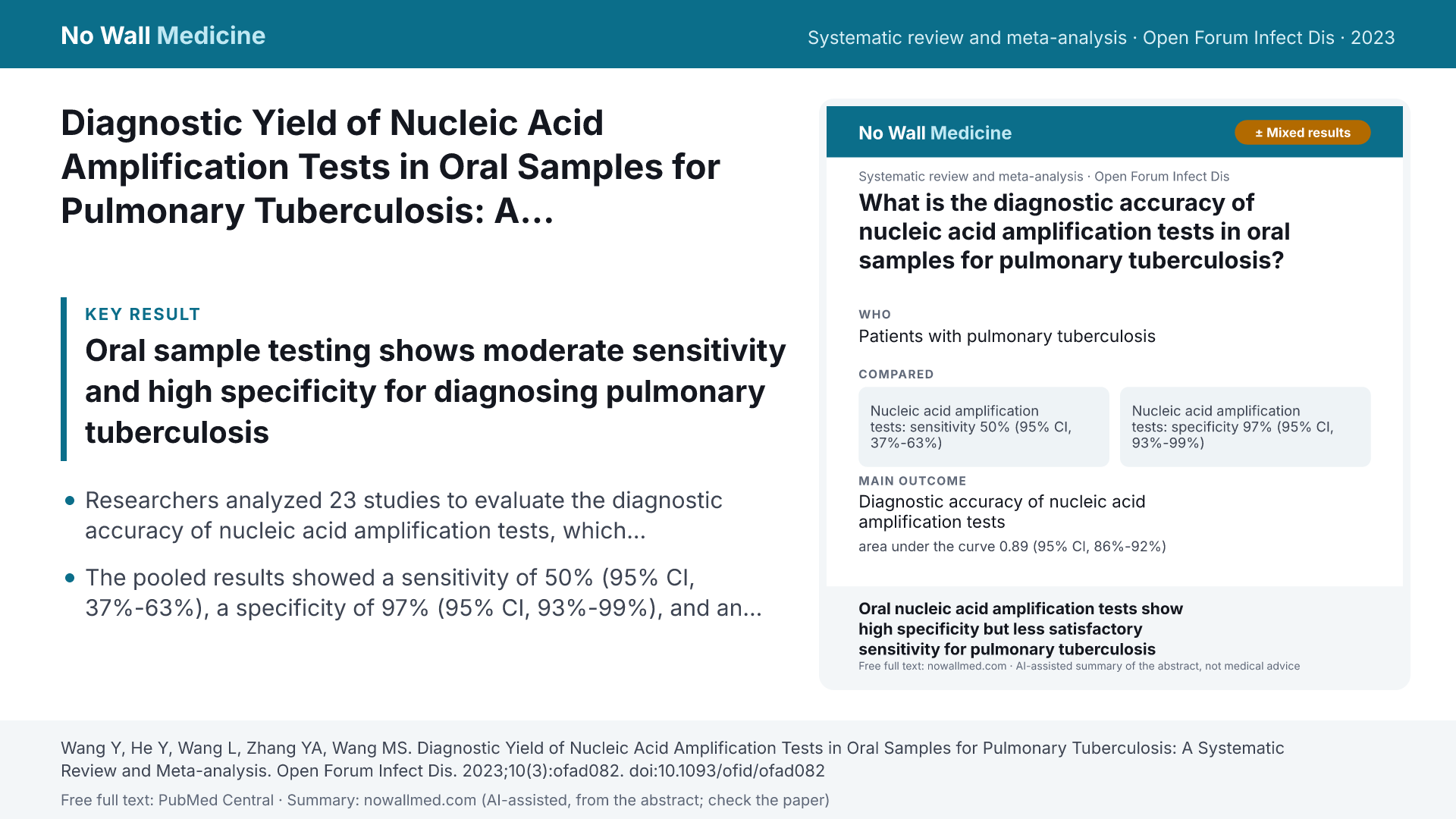
Diagnostic Yield of Nucleic Acid Amplification Tests in Oral Samples for Pulmonary Tuberculosis: A Systematic Review and Meta-analysis
Key result: Oral sample testing shows moderate sensitivity and high specificity for diagnosing pulmonary tuberculosis
Key points
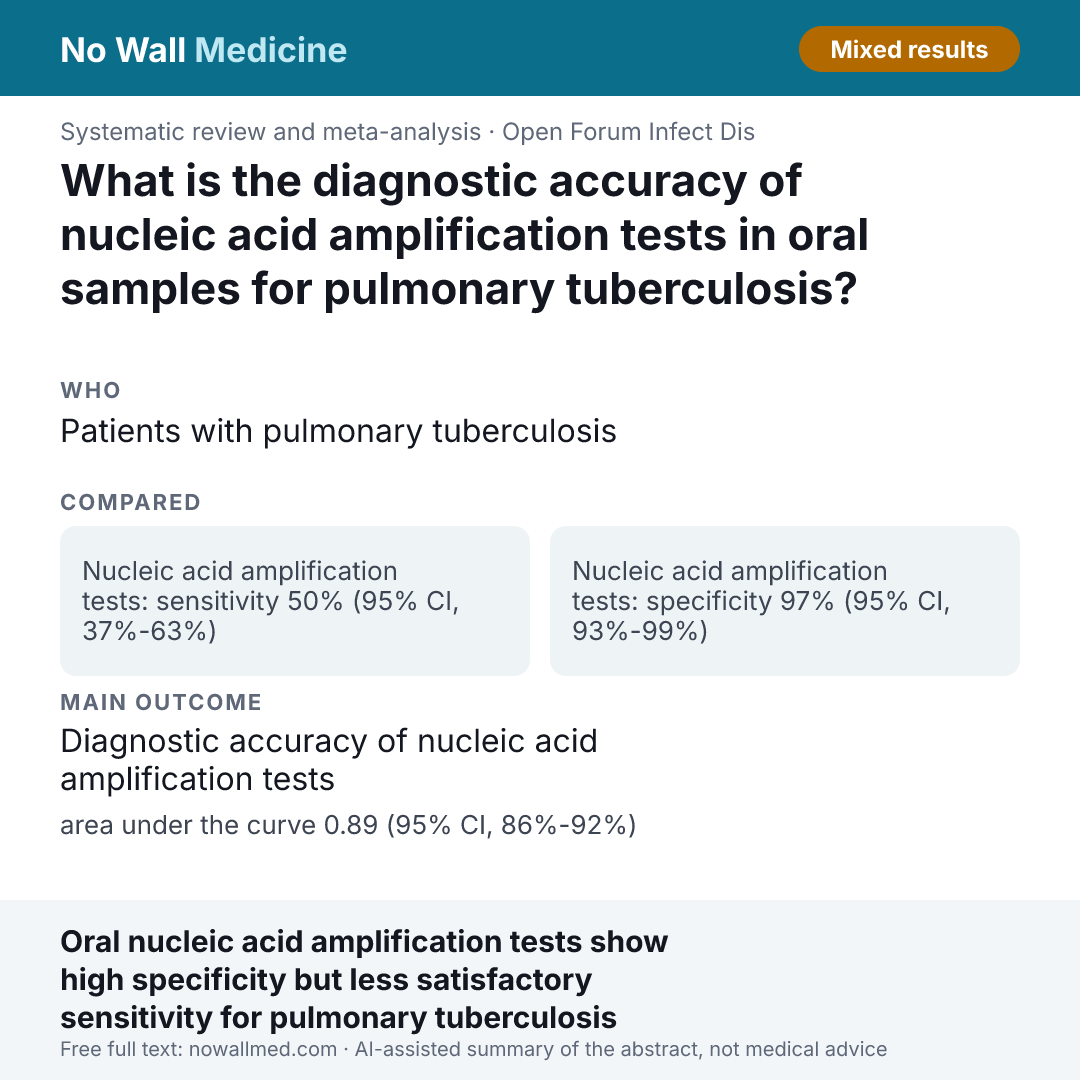
- Researchers analyzed 23 studies to evaluate the diagnostic accuracy of nucleic acid amplification tests, which are molecular tests that detect genetic material, using oral samples for tuberculosis.
- The pooled results showed a sensitivity of 50% (95% CI, 37%-63%), a specificity of 97% (95% CI, 93%-99%), and an area under the curve of 0.89 (95% CI, 86%-92%).
Why it matters: The diagnostic accuracy of using oral samples for molecular testing of pulmonary tuberculosis remains controversial.
Limitation the authors note: Significant heterogeneity in the data, such as differences in age, means the results should be interpreted with caution.
Discussion prompts
- Would these patients look like yours? Who was left out?
- Is the main outcome one that matters to patients?
- Is the difference large enough to change what you do?
Cite: Wang Y, He Y, Wang L, Zhang YA, Wang MS. Diagnostic Yield of Nucleic Acid Amplification Tests in Oral Samples for Pulmonary Tuberculosis: A Systematic Review and Meta-analysis. Open Forum Infect Dis. 2023;10(3):ofad082. doi:10.1093/ofid/ofad082
Free full text: PubMed Central · Summary and visual abstract: nowallmed.com/a/diagnostic-yield-of-nucleic-acid-amplification-tests-in-oral-samples-h18fq5/ (AI-assisted from the abstract; check the paper before relying on it).