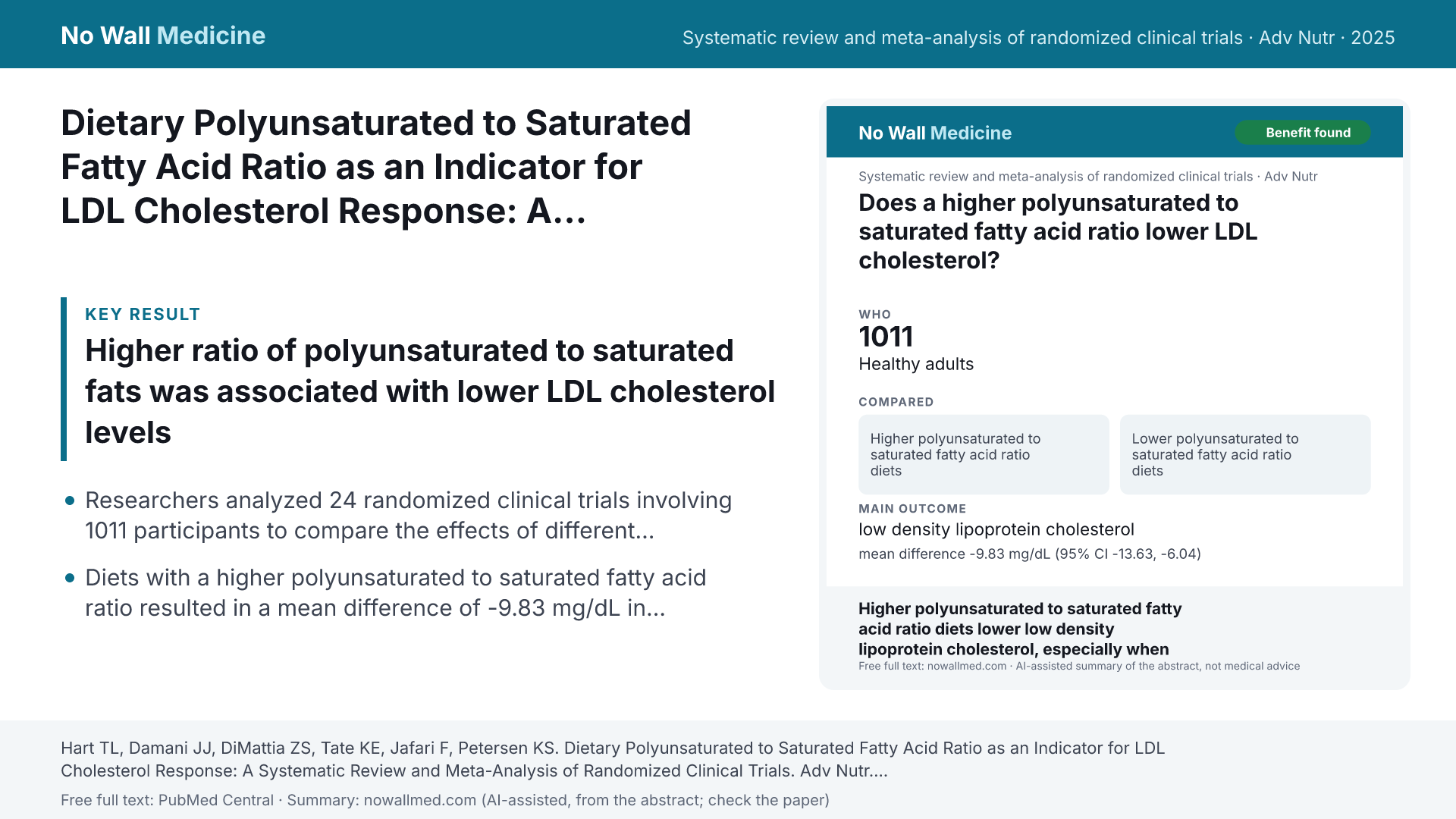
Higher ratio of polyunsaturated to saturated fats was associated with lower LDL cholesterol levels
Dietary Polyunsaturated to Saturated Fatty Acid Ratio as an Indicator for LDL Cholesterol Response: A Systematic Review and Meta-Analysis of Randomized Clinical Trials
Systematic review and meta-analysis of randomized clinical trialsBenefit found
Does a higher polyunsaturated to saturated fatty acid ratio lower LDL cholesterol?
Who
1011
Healthy adults
Compared
Higher polyunsaturated to saturated fatty acid ratio diets
Lower polyunsaturated to saturated fatty acid ratio diets
Main outcome
low density lipoprotein cholesterol
Result: mean difference -9.83 mg/dL (95% CI -13.63, -6.04)
Bottom line: Higher polyunsaturated to saturated fatty acid ratio diets lower low density lipoprotein cholesterol, especially when polyunsaturated fatty acids replace saturated fatty acids.
Adv Nutr · 2025-08-28Download image
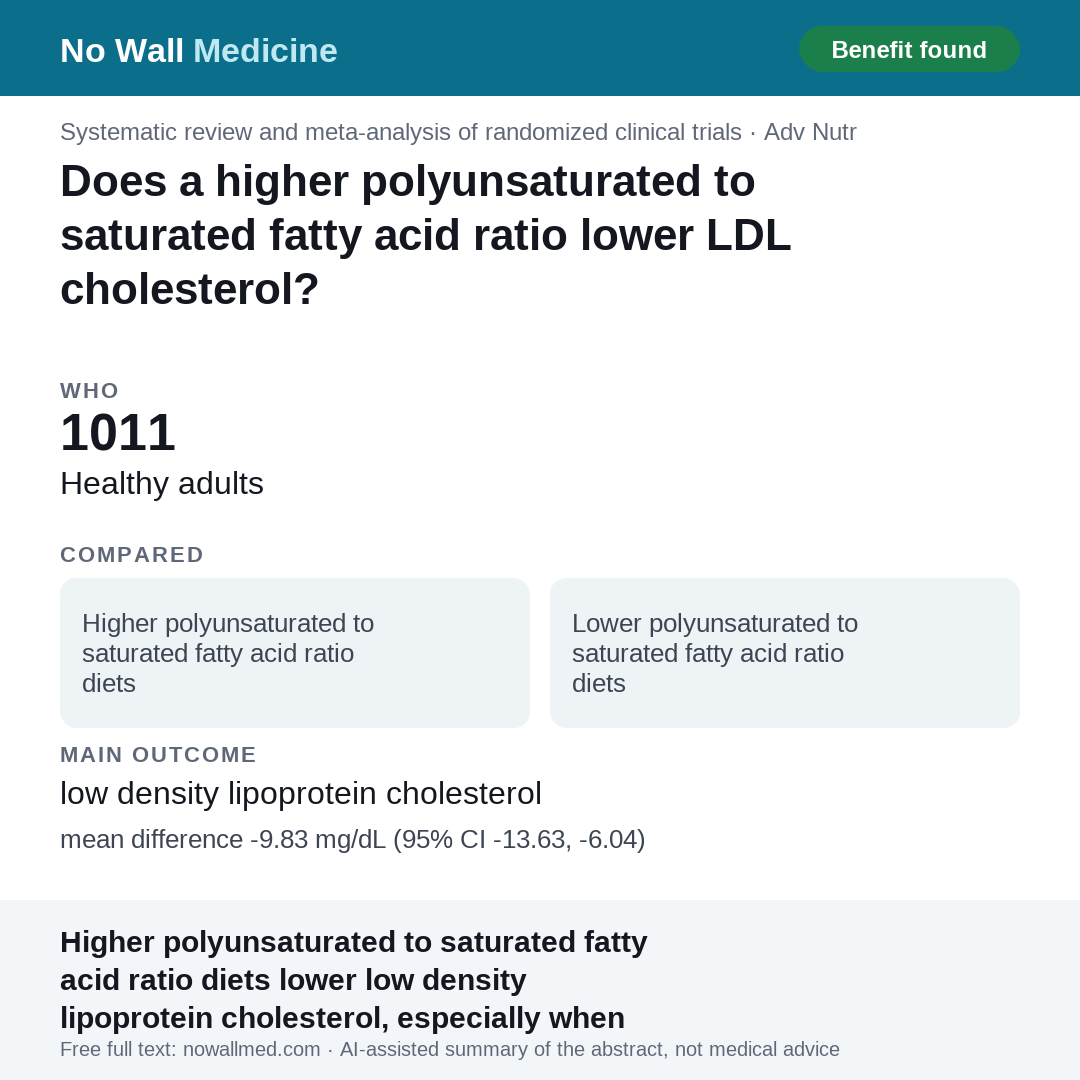
Clinical question: Does a higher polyunsaturated to saturated fatty acid ratio lower LDL cholesterol?
Why it matters: Current guidelines recommend replacing saturated fatty acids with polyunsaturated fatty acids, but it is unclear if the ratio of these fats is a better indicator of cholesterol response.
Key points
- Researchers analyzed 24 randomized clinical trials involving 1011 participants to compare the effects of different dietary fat ratios on low density lipoprotein cholesterol.
- Diets with a higher polyunsaturated to saturated fatty acid ratio resulted in a mean difference of -9.83 mg/dL in low density lipoprotein cholesterol.
- The effect was stronger when polyunsaturated fats replaced saturated fats, showing a mean difference of -15.72 mg/dL when diets differed in saturated fat content.
Headline and key points written with AI from the paper’s abstract, with every number checked against it. Read the paper before relying on them.
Was this summary helpful?
Subject terms
Cite this article
Hart TL, Damani JJ, DiMattia ZS, Tate KE, Jafari F, Petersen KS. Dietary Polyunsaturated to Saturated Fatty Acid Ratio as an Indicator for LDL Cholesterol Response: A Systematic Review and Meta-Analysis of Randomized Clinical Trials. Adv Nutr. 2025. doi:10.1016/j.advnut.2025.100502
Spotted a mistake? Suggest a correction