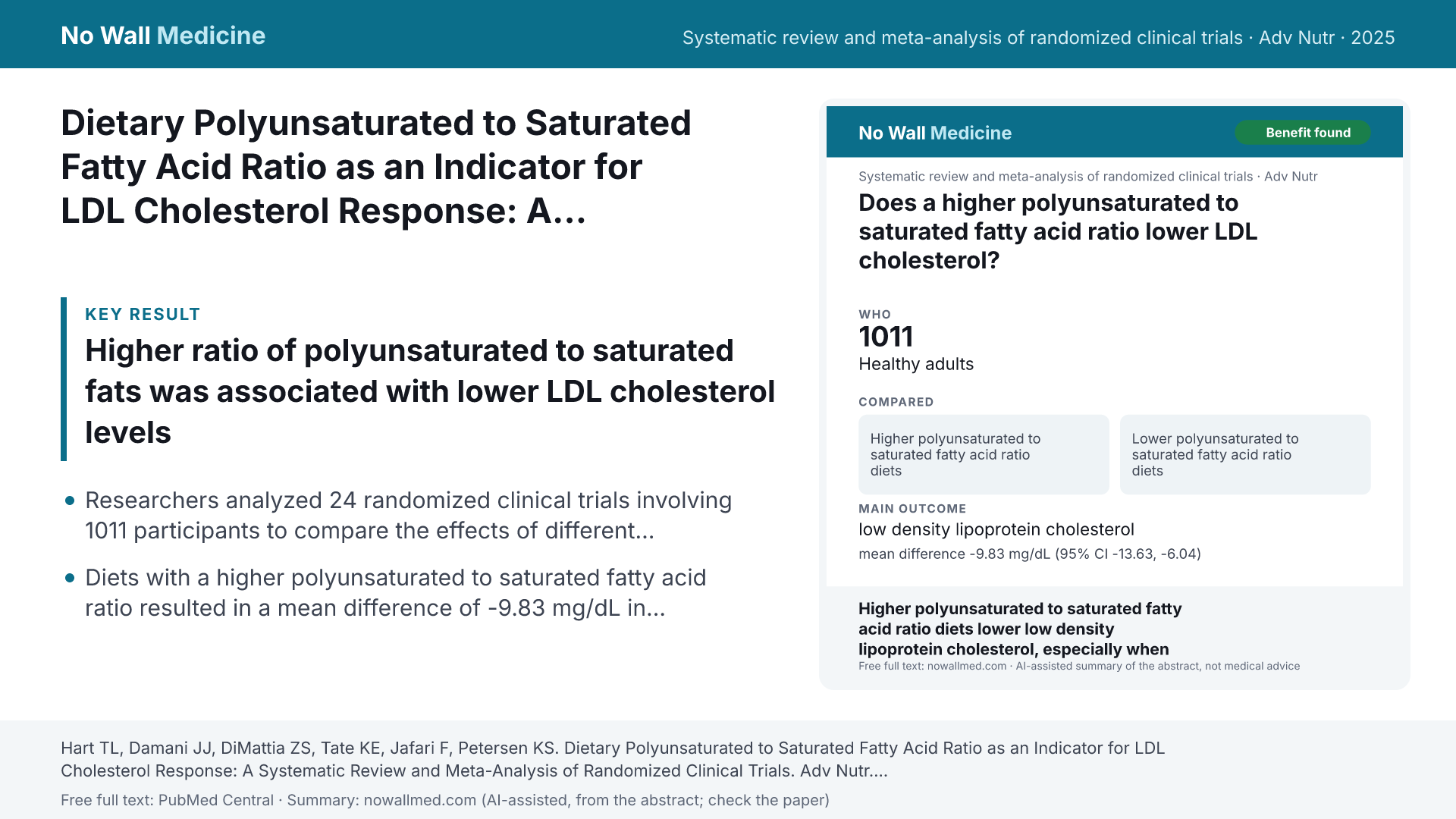
Dietary Polyunsaturated to Saturated Fatty Acid Ratio as an Indicator for LDL Cholesterol Response: A Systematic Review and Meta-Analysis of Randomized Clinical Trials
Key result: Higher ratio of polyunsaturated to saturated fats was associated with lower LDL cholesterol levels
Key points
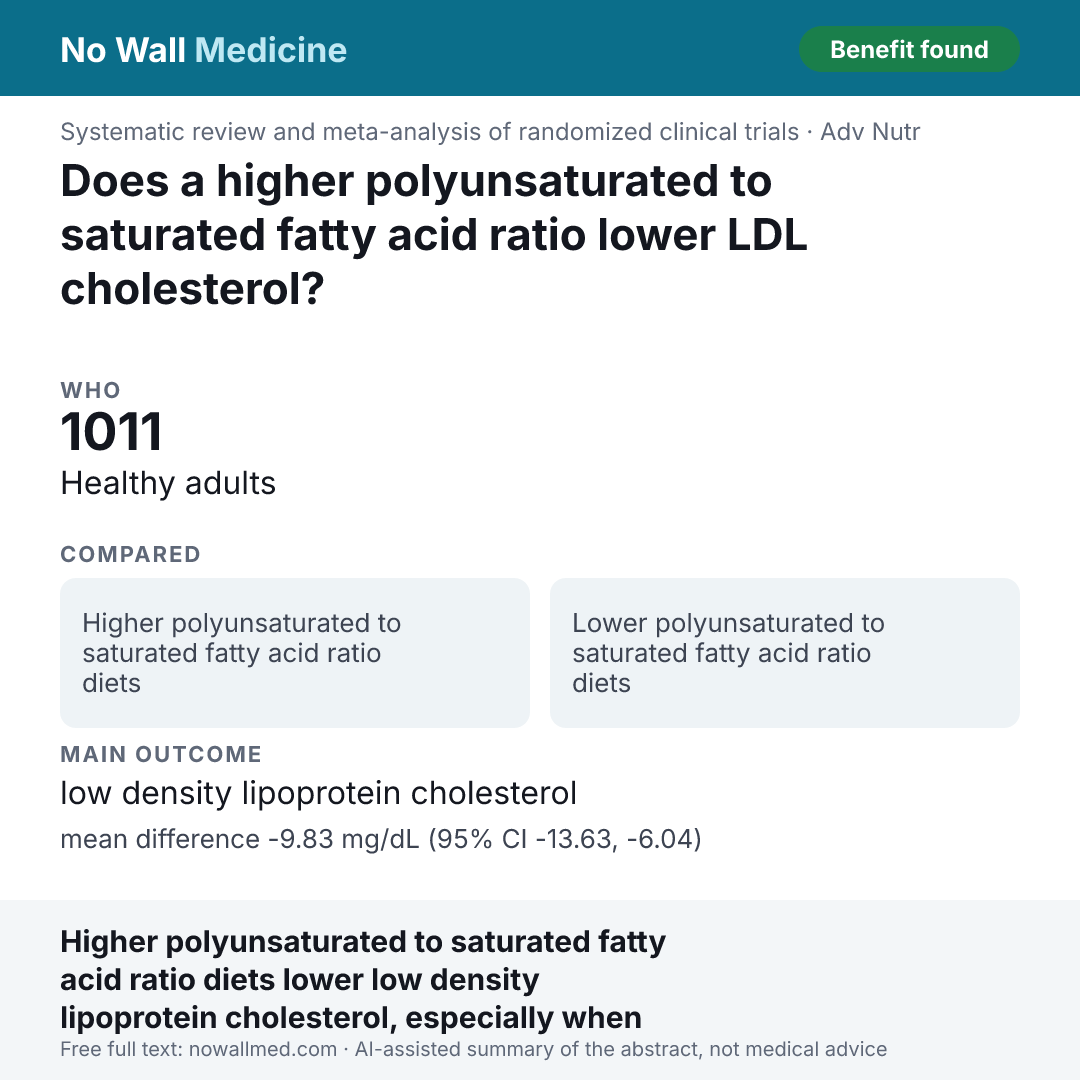
- Researchers analyzed 24 randomized clinical trials involving 1011 participants to compare the effects of different dietary fat ratios on low density lipoprotein cholesterol.
- Diets with a higher polyunsaturated to saturated fatty acid ratio resulted in a mean difference of -9.83 mg/dL in low density lipoprotein cholesterol.
- The effect was stronger when polyunsaturated fats replaced saturated fats, showing a mean difference of -15.72 mg/dL when diets differed in saturated fat content.
Why it matters: Current guidelines recommend replacing saturated fatty acids with polyunsaturated fatty acids, but it is unclear if the ratio of these fats is a better indicator of cholesterol response.
Discussion prompts
- Would these patients look like yours? Who was left out?
- Is the main outcome one that matters to patients?
- Is the difference large enough to change what you do?
Cite: Hart TL, Damani JJ, DiMattia ZS, Tate KE, Jafari F, Petersen KS. Dietary Polyunsaturated to Saturated Fatty Acid Ratio as an Indicator for LDL Cholesterol Response: A Systematic Review and Meta-Analysis of Randomized Clinical Trials. Adv Nutr. 2025;16(10):100502. doi:10.1016/j.advnut.2025.100502
Free full text: PubMed Central · Summary and visual abstract: nowallmed.com/a/dietary-polyunsaturated-to-saturated-fatty-acid-ratio-as-an-indicator-6omv40/ (AI-assisted from the abstract; check the paper before relying on it).