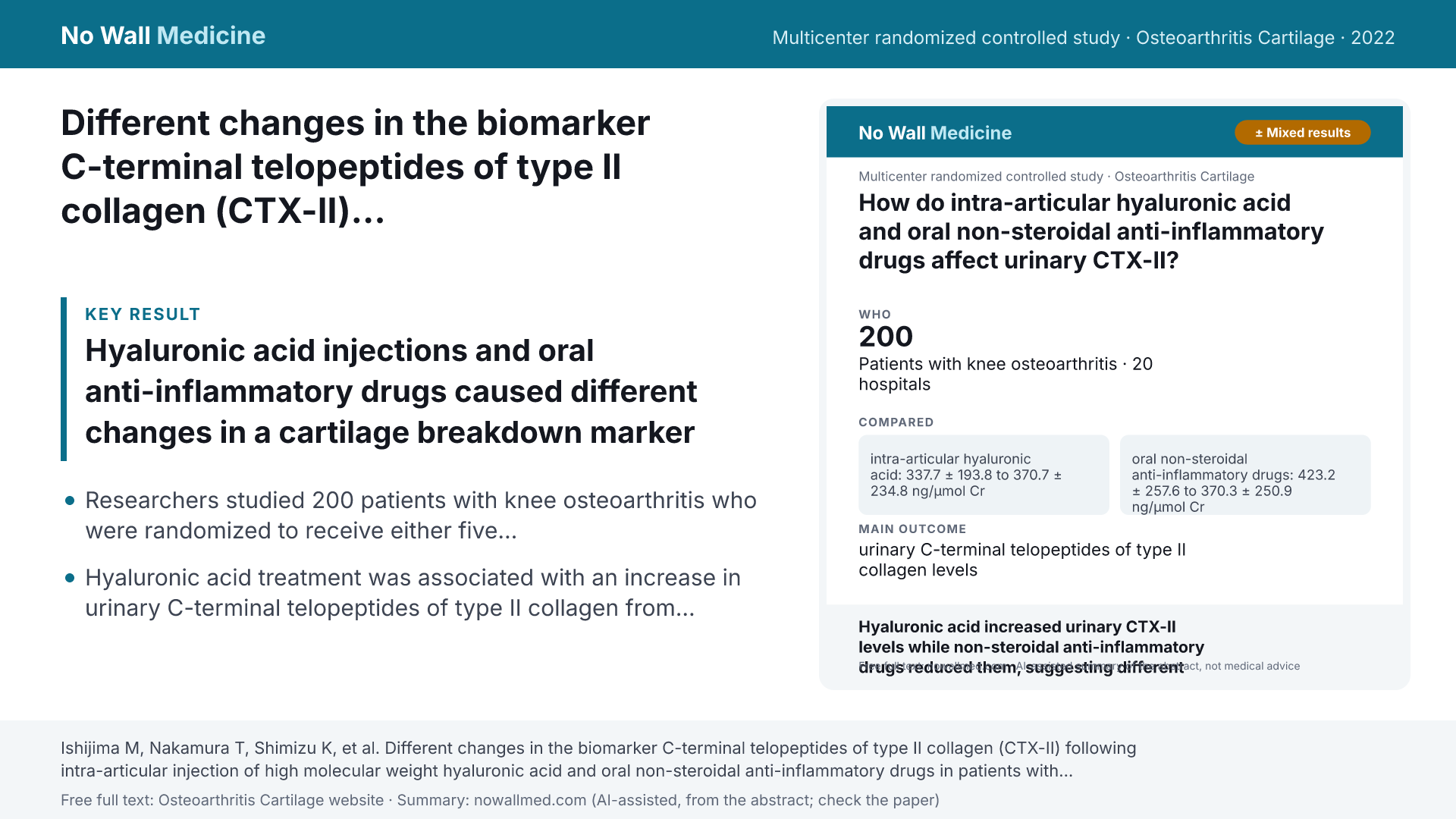
Different changes in the biomarker C-terminal telopeptides of type II collagen (CTX-II) following intra-articular injection of high molecular weight hyaluronic acid and oral non-steroidal anti-inflammatory drugs in patients with knee osteoarthritis: a multi-center randomized controlled study
Key result: Hyaluronic acid injections and oral anti-inflammatory drugs caused different changes in a cartilage breakdown marker
Key points
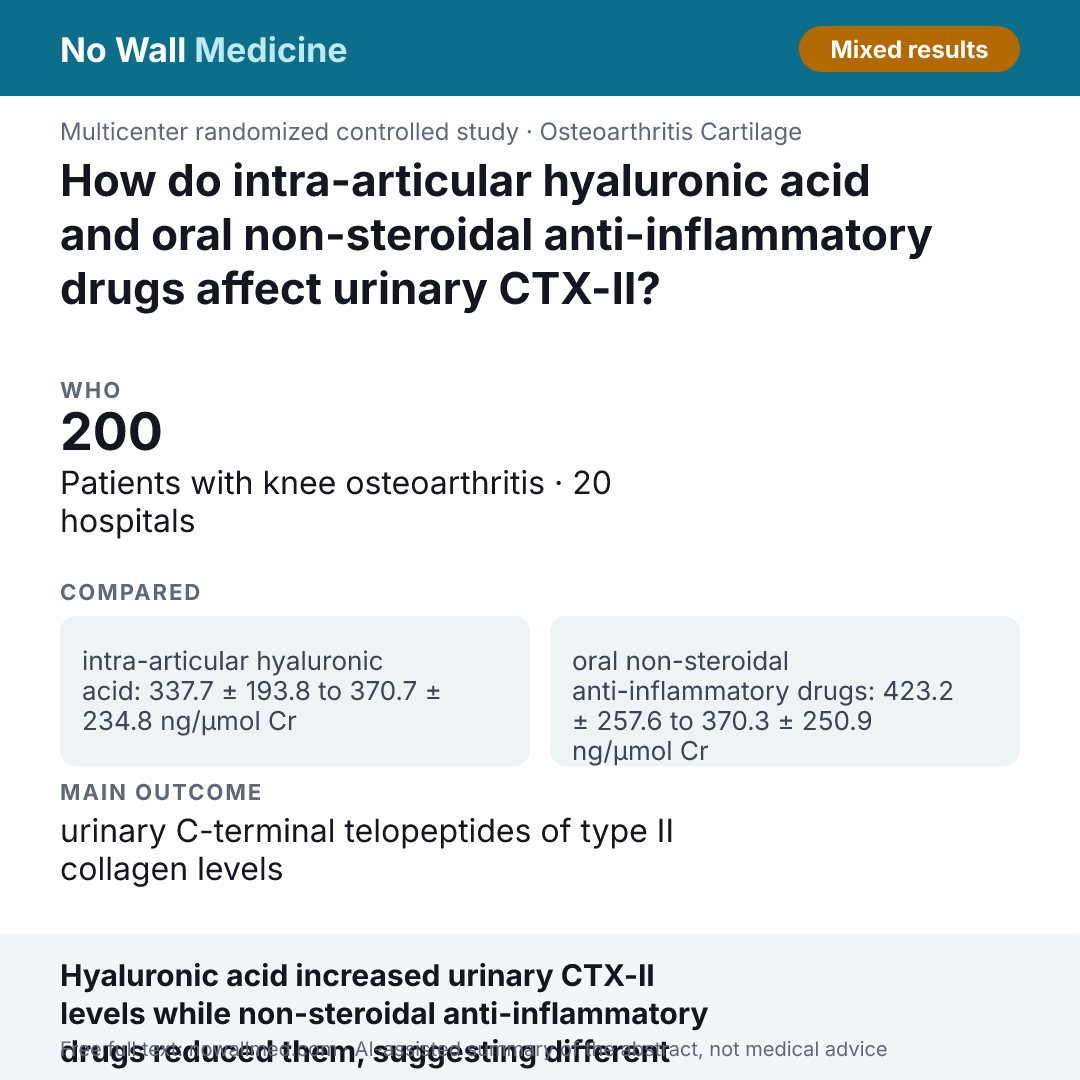
- Researchers studied 200 patients with knee osteoarthritis who were randomized to receive either five intra-articular injections of hyaluronic acid or daily oral loxoprofen sodium for 5 weeks.
- Hyaluronic acid treatment was associated with an increase in urinary C-terminal telopeptides of type II collagen from 337.7 ± 193.8 to 370.7 ± 234.8 ng/μmol Cr.
- Oral non-steroidal anti-inflammatory drug treatment was associated with a decrease in urinary C-terminal telopeptides of type II collagen from 423.2 ± 257.6 to 370.3 ± 250.9 ng/μmol Cr.
Why it matters: The molecular effects on the pathophysiology of knee osteoarthritis remain unclear despite both treatments improving symptoms.
Discussion prompts
- Would these patients look like yours? Who was left out?
- Is the main outcome one that matters to patients?
- Is the difference large enough to change what you do?
Cite: Ishijima M, Nakamura T, Shimizu K, et al. Different changes in the biomarker C-terminal telopeptides of type II collagen (CTX-II) following intra-articular injection of high molecular weight hyaluronic acid and oral non-steroidal anti-inflammatory drugs in patients with knee osteoarthritis: a multi-center randomized controlled study. Osteoarthritis Cartilage. 2022;30(6):852-861. doi:10.1016/j.joca.2022.03.003
Free full text: Osteoarthritis Cartilage website · Summary and visual abstract: nowallmed.com/a/different-changes-in-the-biomarker-c-terminal-telopeptides-of-type-ii-116c4va/ (AI-assisted from the abstract; check the paper before relying on it).