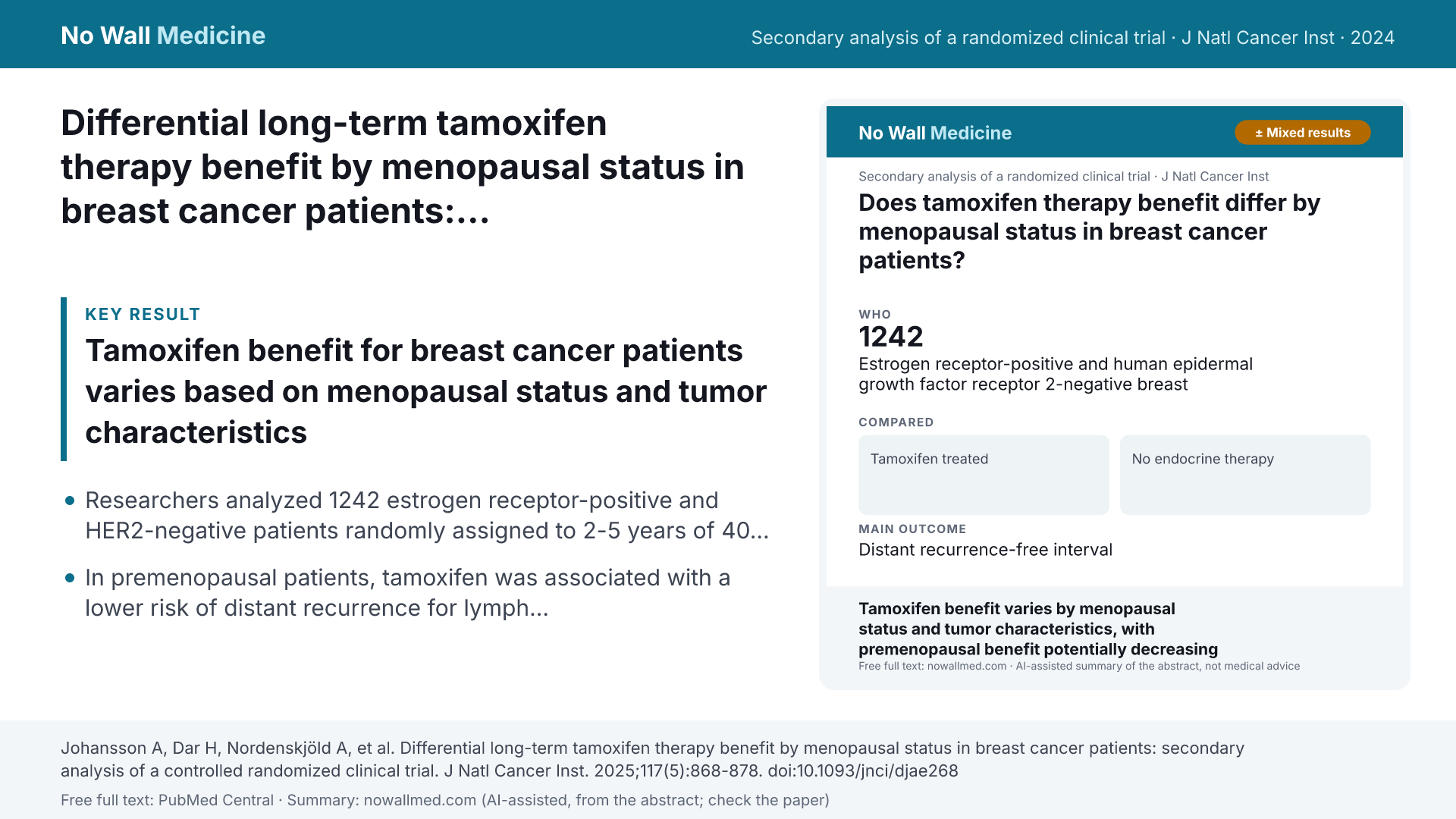
Tamoxifen benefit for breast cancer patients varies based on menopausal status and tumor characteristics
Differential long-term tamoxifen therapy benefit by menopausal status in breast cancer patients: secondary analysis of a controlled randomized clinical trial
Secondary analysis of a randomized clinical trialMixed results
Does tamoxifen therapy benefit differ by menopausal status in breast cancer patients?
Who
1242
Estrogen receptor-positive and human epidermal growth factor receptor 2-negative breast cancer patients · Stockholm tamoxifen trials
Compared
Tamoxifen treated
No endocrine therapy
Main outcome
Distant recurrence-free interval
Bottom line: Tamoxifen benefit varies by menopausal status and tumor characteristics, with premenopausal benefit potentially decreasing after 10 years.
J Natl Cancer Inst · 2024-12-15Download image
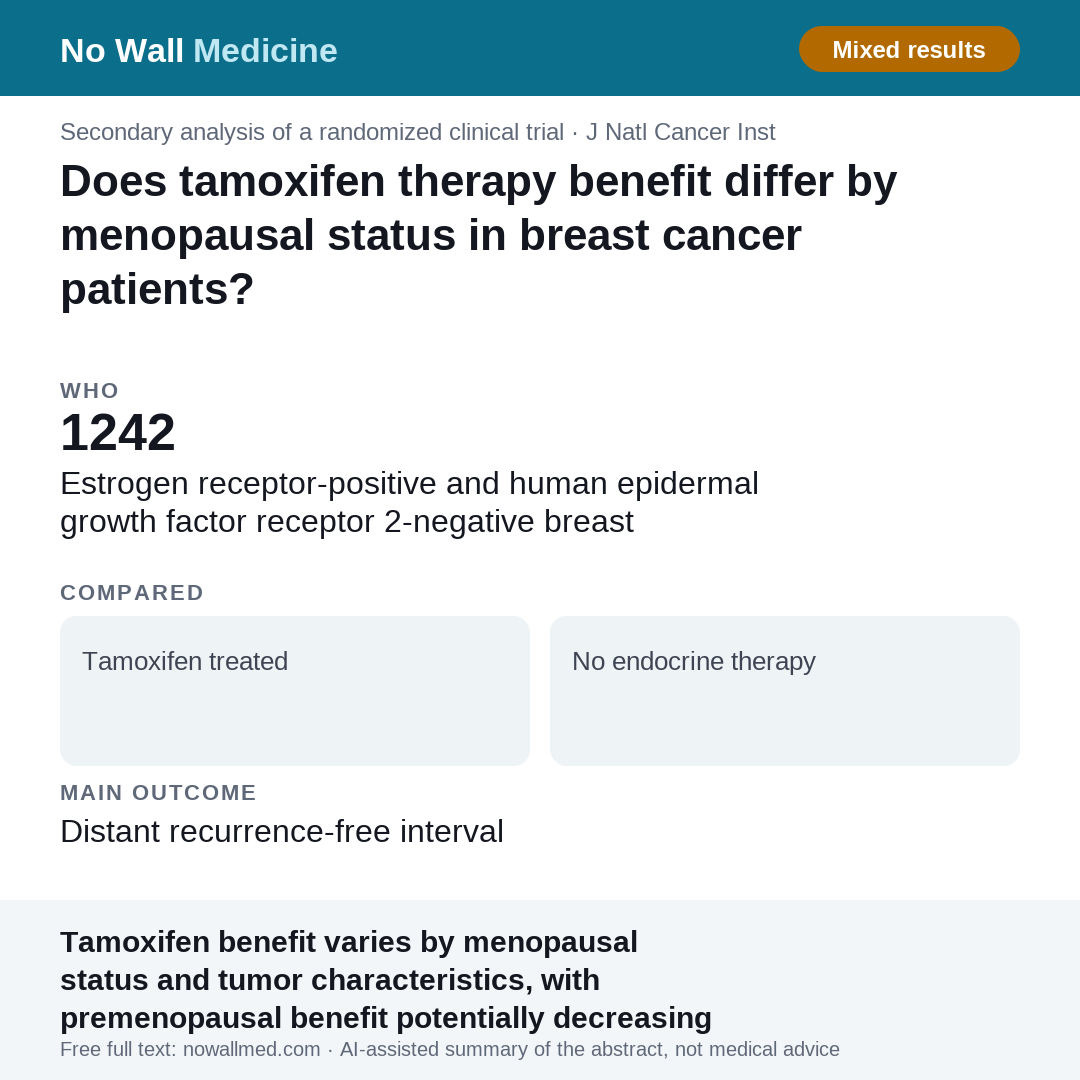
Clinical question: Does tamoxifen therapy benefit differ by menopausal status in breast cancer patients?
Why it matters: It is unknown how the long-term benefit of tamoxifen differs between premenopausal and postmenopausal patients based on specific tumor characteristics.
Key points
- Researchers analyzed 1242 estrogen receptor-positive and HER2-negative patients randomly assigned to 2-5 years of 40 mg tamoxifen or no endocrine therapy.
- In premenopausal patients, tamoxifen was associated with a lower risk of distant recurrence for lymph node-negative (adjusted HR = 0.46), progesterone receptor-positive (adjusted HR = 0.61), and genomic low-risk tumors (adjusted HR = 0.47).
- Postmenopausal patients showed long-term benefit across all good-prognosis markers, including low-grade (adjusted HR = 0.55), lymph node-negative (adjusted HR = 0.44), and Ki-67 low (adjusted HR = 0.51) tumors.
Headline and key points written with AI from the paper’s abstract, with every number checked against it. Read the paper before relying on them.
Was this summary helpful?
Subject terms
Cite this article
Johansson A, Dar H, Nordenskjöld A, Perez-Tenorio G, Tobin NP, Yau C. Differential long-term tamoxifen therapy benefit by menopausal status in breast cancer patients: secondary analysis of a controlled randomized clinical trial. J Natl Cancer Inst. 2024. doi:10.1093/jnci/djae268
Spotted a mistake? Suggest a correction
Top studies every Monday
The week’s key trials and guidelines in your specialties, plus any topics you follow. By email, free.
Get the weekly digest