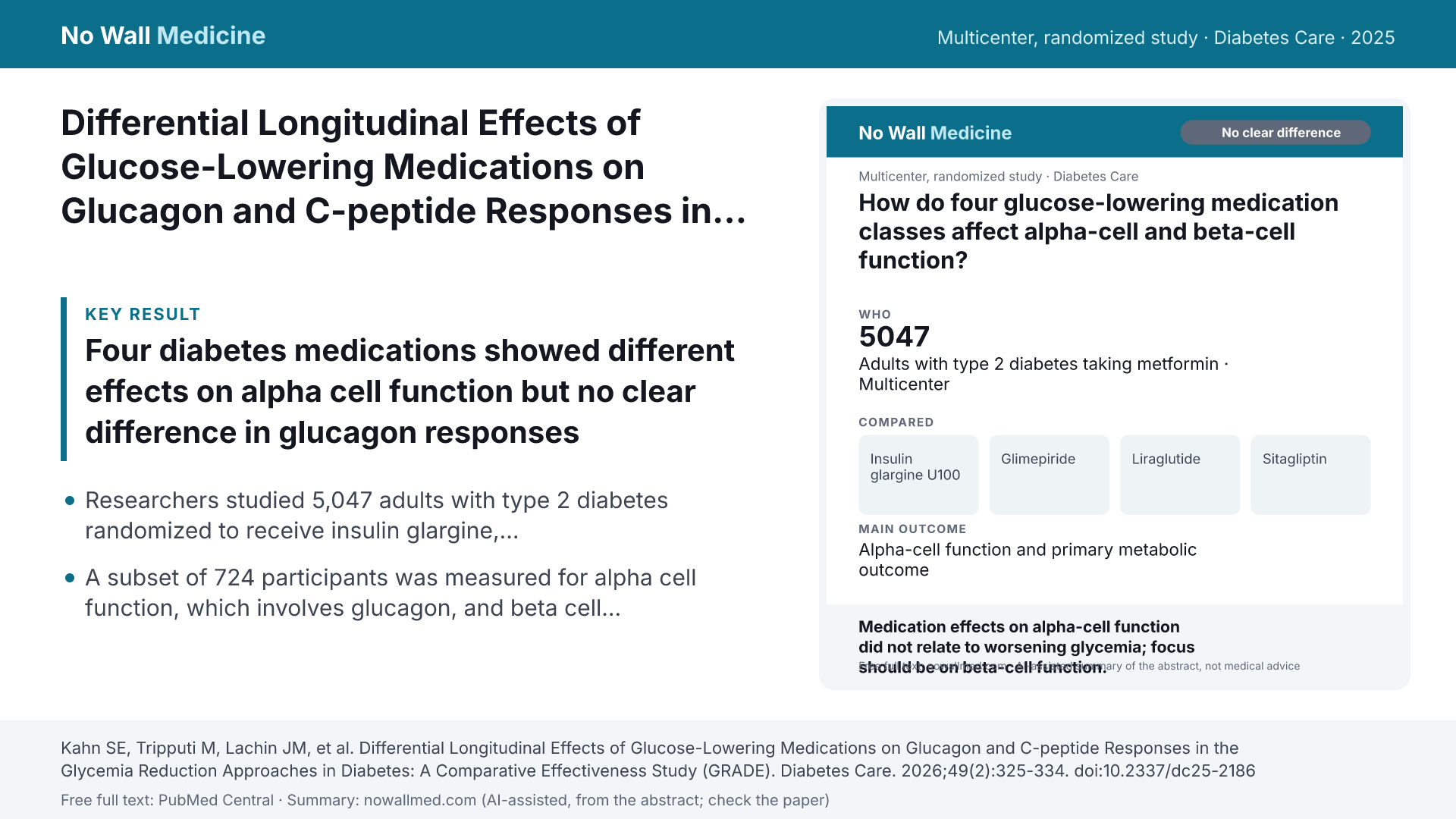
Differential Longitudinal Effects of Glucose-Lowering Medications on Glucagon and C-peptide Responses in the Glycemia Reduction Approaches in Diabetes: A Comparative Effectiveness Study (GRADE)
Key result: Four diabetes medications showed different effects on alpha cell function but no clear difference in glucagon responses
Key points
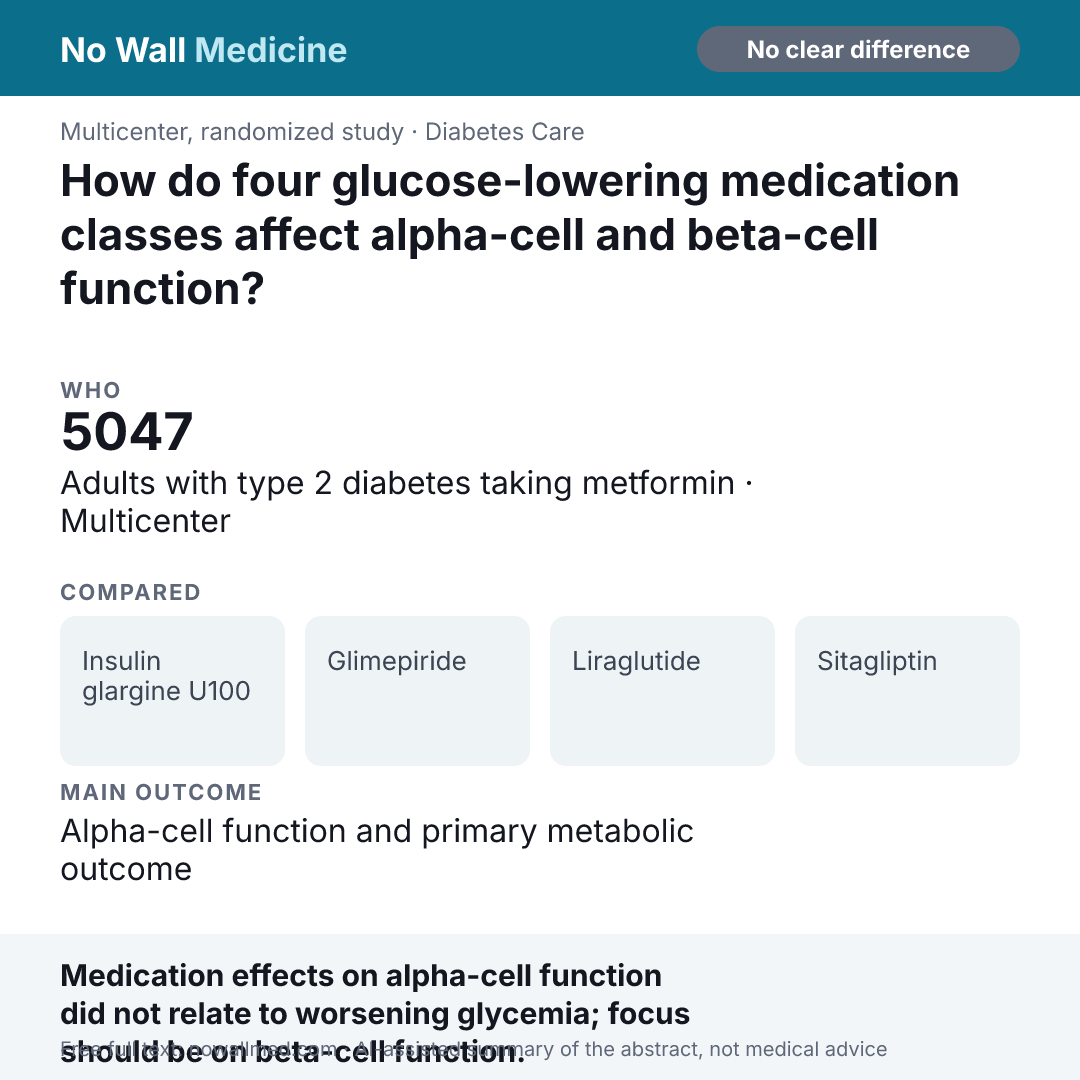
- Researchers studied 5,047 adults with type 2 diabetes randomized to receive insulin glargine, glimepiride, liraglutide, or sitagliptin alongside metformin.
- A subset of 724 participants was measured for alpha cell function, which involves glucagon, and beta cell function, which involves C-peptide.
- Changes in the C-peptide index were associated with a 17% reduction in the risk of the primary metabolic outcome of HbA1c ≥7.0%.
Why it matters: Researchers wanted to determine how different classes of glucose-lowering medications added to metformin affect alpha cell function in adults with type 2 diabetes.
Discussion prompts
- Would these patients look like yours? Who was left out?
- Is the main outcome one that matters to patients?
- Is the difference large enough to change what you do?
Cite: Kahn SE, Tripputi M, Lachin JM, et al. Differential Longitudinal Effects of Glucose-Lowering Medications on Glucagon and C-peptide Responses in the Glycemia Reduction Approaches in Diabetes: A Comparative Effectiveness Study (GRADE). Diabetes Care. 2026;49(2):325-334. doi:10.2337/dc25-2186
Free full text: PubMed Central · Summary and visual abstract: nowallmed.com/a/differential-longitudinal-effects-of-glucose-lowering-medications-on-qvr8yg/ (AI-assisted from the abstract; check the paper before relying on it).