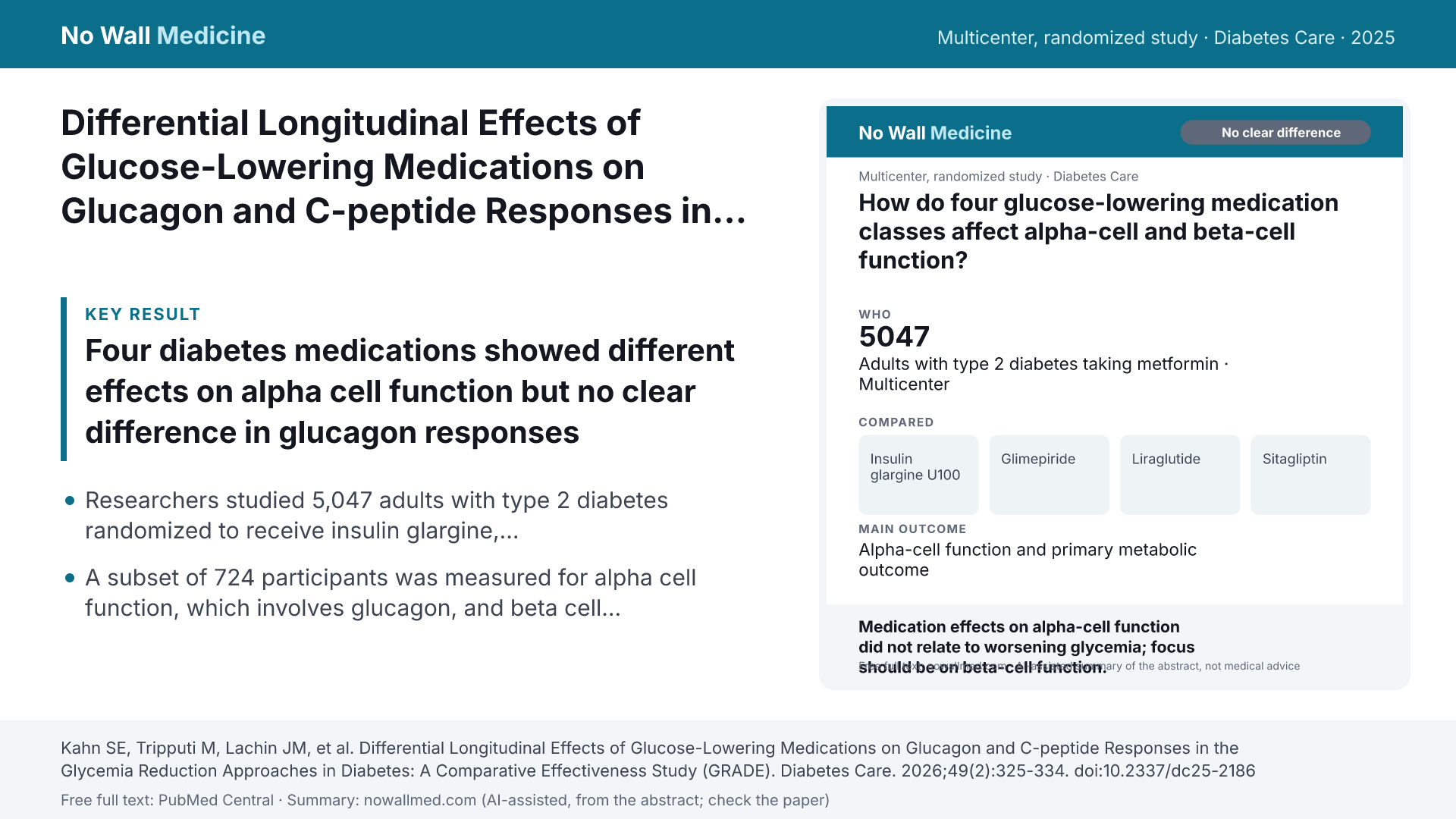
Four diabetes medications showed different effects on alpha cell function but no clear difference in glucagon responses
Differential Longitudinal Effects of Glucose-Lowering Medications on Glucagon and C-peptide Responses in the Glycemia Reduction Approaches in Diabetes: A Comparative Effectiveness Study (GRADE)
Multicenter, randomized studyNo clear difference
How do four glucose-lowering medication classes affect alpha-cell and beta-cell function?
Who
5047
Adults with type 2 diabetes taking metformin · Multicenter
Compared
Insulin glargine U100
Glimepiride
Liraglutide
Sitagliptin
Main outcome
Alpha-cell function and primary metabolic outcome
Bottom line: Medication effects on alpha-cell function did not relate to worsening glycemia; focus should be on beta-cell function.
Diabetes Care · 2025-12-23Download image
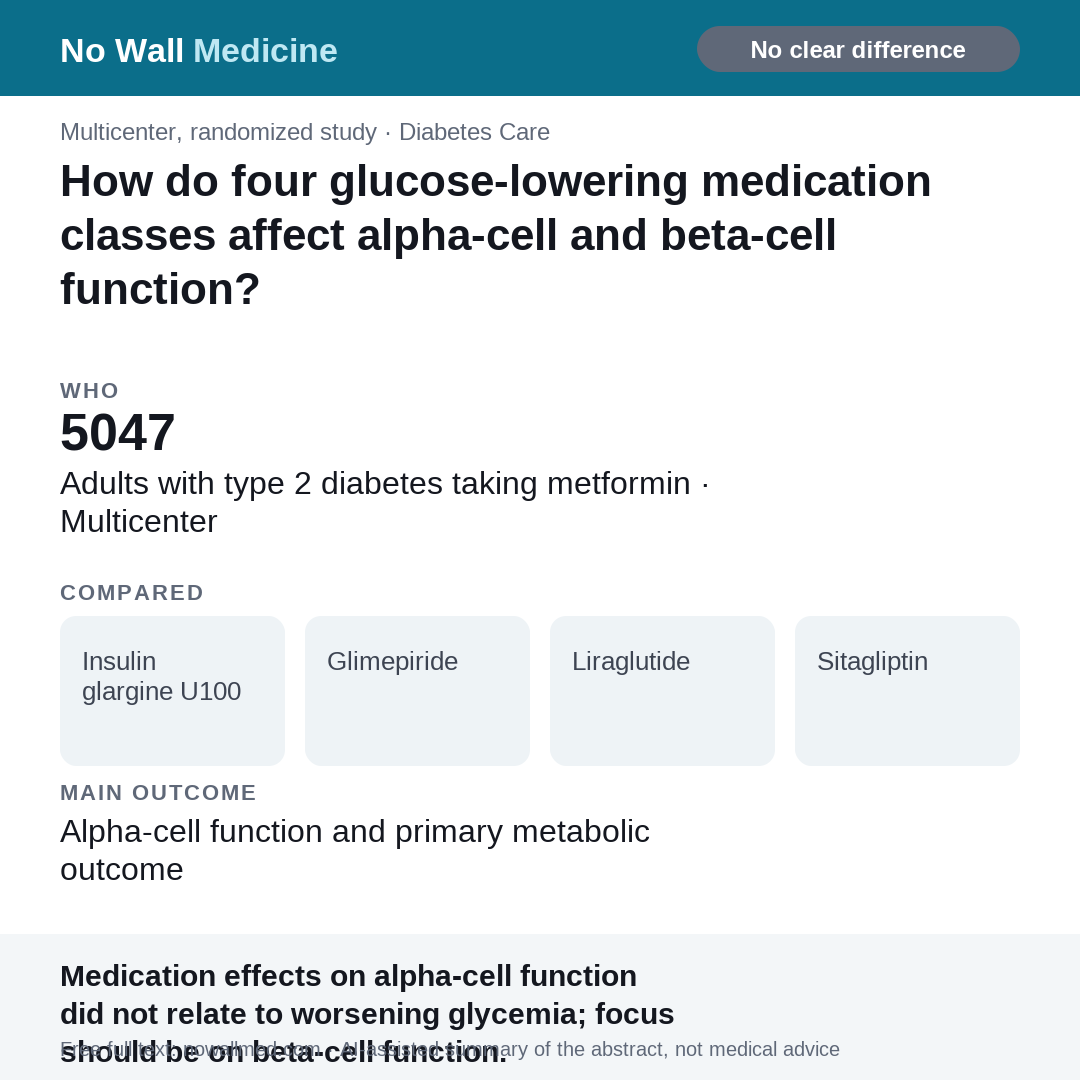
Clinical question: How do four glucose-lowering medication classes affect alpha-cell and beta-cell function?
Why it matters: Researchers wanted to determine how different classes of glucose-lowering medications added to metformin affect alpha cell function in adults with type 2 diabetes.
Key points
- Researchers studied 5,047 adults with type 2 diabetes randomized to receive insulin glargine, glimepiride, liraglutide, or sitagliptin alongside metformin.
- A subset of 724 participants was measured for alpha cell function, which involves glucagon, and beta cell function, which involves C-peptide.
- Changes in the C-peptide index were associated with a 17% reduction in the risk of the primary metabolic outcome of HbA1c ≥7.0%.
Headline and key points written with AI from the paper’s abstract, with every number checked against it. Read the paper before relying on them.
Was this summary helpful?
Subject terms
Cite this article
Kahn SE, Tripputi M, Lachin JM, et al. Differential Longitudinal Effects of Glucose-Lowering Medications on Glucagon and C-peptide Responses in the Glycemia Reduction Approaches in Diabetes: A Comparative Effectiveness Study (GRADE). Diabetes Care. 2025. doi:10.2337/dc25-2186
Spotted a mistake? Suggest a correction