Different diabetes medications affect insulin-producing cell function in distinct ways over five years
Differential Treatment Effects on β-Cell Function Using Model-Based Parameters in Type 2 Diabetes: Results From the Glycemia Reduction Approaches in Diabetes: A Comparative Effectiveness Study (GRADE)
Comparative effectiveness studyMixed results
How do different glucose-lowering treatments affect beta-cell function parameters in type 2 diabetes?
Who
4712
Adults with type 2 diabetes
Compared
Insulin glargine
Glimepiride
Liraglutide: greatest increases in insulin secretion rate, glucose sensitivity and potentiation
Sitagliptin: improved glucose sensitivity
Main outcome
Model-based beta-cell function parameters
Bottom line: Different glucose-lowering medications impact different physiologic components of beta-cell function, which progressively decline after initial improvement.
Diabetes Care · 2025-02-25Download image
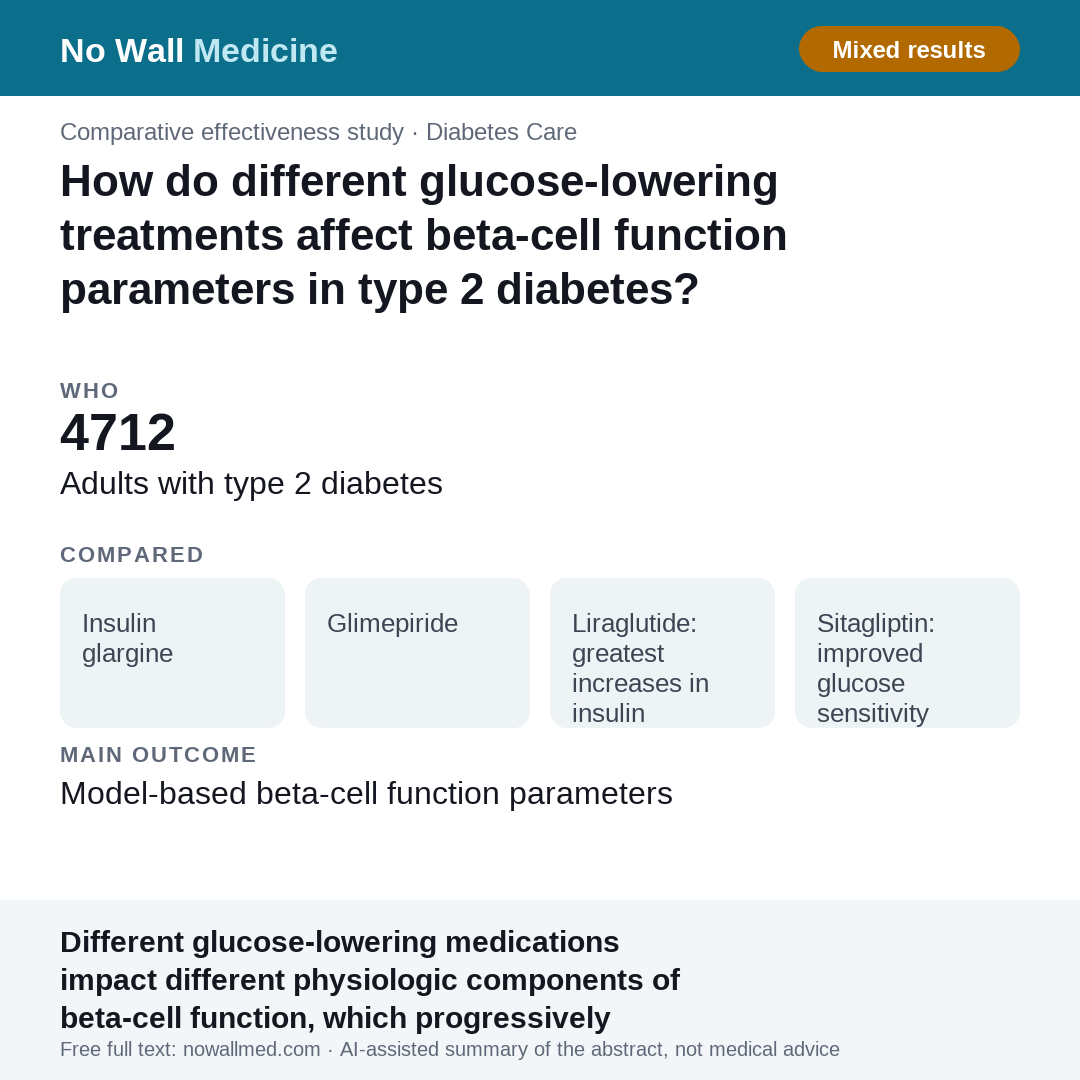
Clinical question: How do different glucose-lowering treatments affect beta-cell function parameters in type 2 diabetes?
Why it matters: It was unknown how different glucose-lowering medications impact the specific physiological components of insulin-producing cell function in adults with type 2 diabetes.
Key points
- Researchers studied 4,712 adults with type 2 diabetes randomized to receive insulin glargine, glimepiride, liraglutide, or sitagliptin added to metformin.
- Liraglutide resulted in the largest increases in insulin secretion rate, glucose sensitivity, and potentiation, which remained above baseline at 5 years.
- Higher insulin-producing cell function parameters were associated with protection against glycemic deterioration, though treatment type did not change this relationship.
Headline and key points written with AI from the paper’s abstract, with every number checked against it. Read the paper before relying on them.
Topics
Cite this article
Utzschneider KM, Tripputi M, Butera NM, Mari A, Rosin SP, Banerji MA. Differential Treatment Effects on β-Cell Function Using Model-Based Parameters in Type 2 Diabetes: Results From the Glycemia Reduction Approaches in Diabetes: A Comparative Effectiveness Study (GRADE). Diabetes Care. 2025. doi:10.2337/dc24-2419
Spotted a mistake? Suggest a correction