Text messages and phone calls reduced unprotected anal intercourse and inconsistent condom use
Digital health interventions for HIV-related sexual risk behaviors: a systematic review and network meta-analysis
Systematic review and network meta-analysisBenefit, low certainty
How effective are digital health interventions for HIV-related sexual risk behaviors?
Who
33183
Participants engaging in HIV-related sexual risk behaviors
Compared
SMS or phone call: largest reductions in unprotected anal intercourse prevalence and inconsistent condom use
eHealth: significant reduction in the number of sexual partners
Main outcome
HIV-related sexual risk behaviors
Result: OR 0.18 (95% CI 0.04-0.79) for unprotected anal intercourse prevalence
Bottom line: SMS, phone calls, and eHealth interventions can reduce HIV-related sexual risk behaviors.
Limitation: The majority of network comparisons were supported by low or very low certainty evidence.
NPJ Digit Med · 2026-07-06 · Save PNG
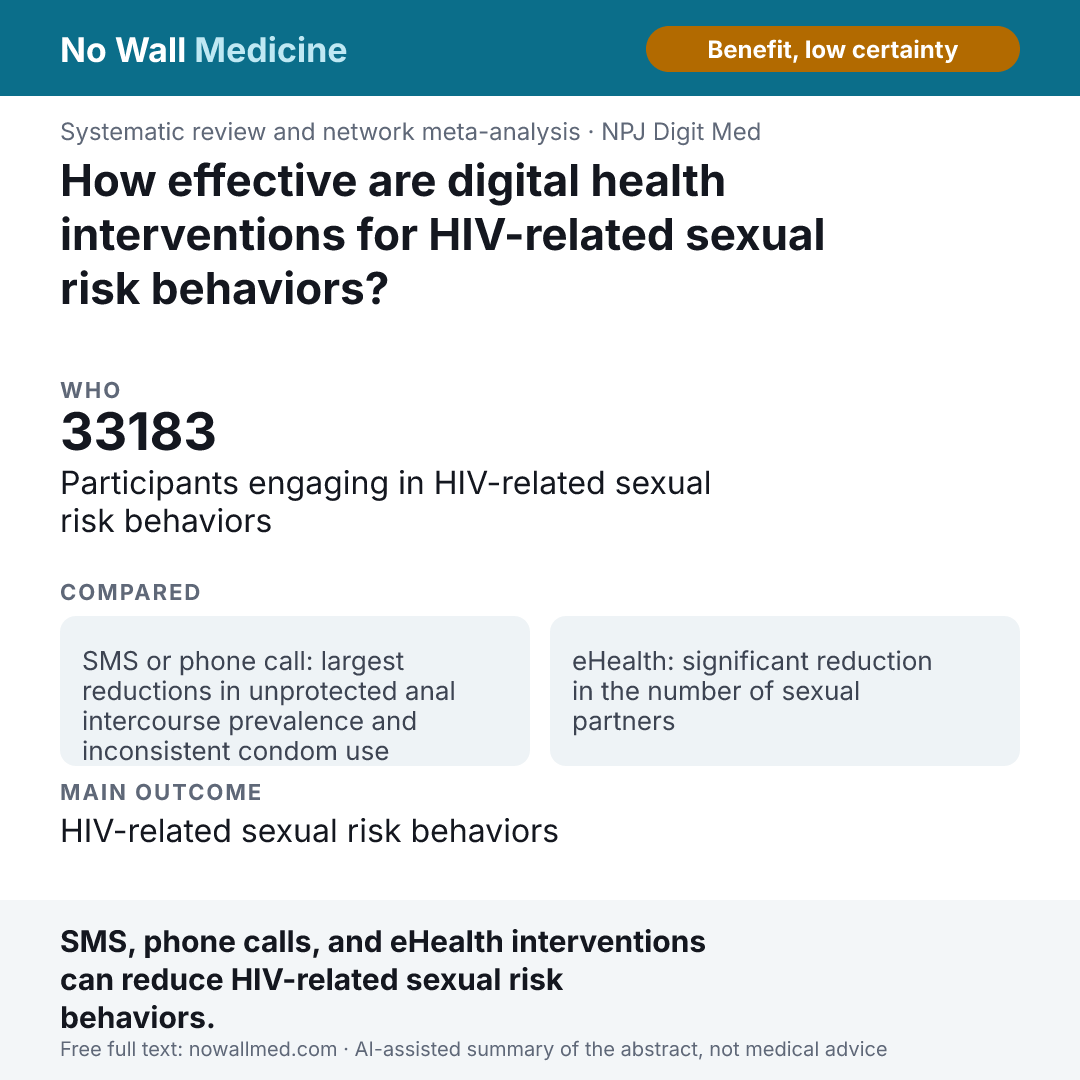
Clinical question: How effective are digital health interventions for HIV-related sexual risk behaviors?
Why it matters: HIV-related sexual risk behaviors like condomless anal intercourse remain a major driver of global HIV infection.
Key points
- Researchers analyzed 35 randomized controlled trials involving 33,183 participants to compare different digital health interventions for HIV-related sexual risk behaviors.
- Short message service or phone call interventions showed the largest reductions in unprotected anal intercourse prevalence (OR 0.18, 95% CI 0.04-0.79) and inconsistent condom use frequency (MD -3.49, 95% CI -5.17 to -1.81).
- Electronic health interventions were associated with a significant reduction in the number of sexual partners (MD -0.28, 95% CI -0.52 to -0.03).
Headline and key points written with AI from the paper’s abstract, with every number checked against it. Read the paper before relying on them.
Was this summary helpful?
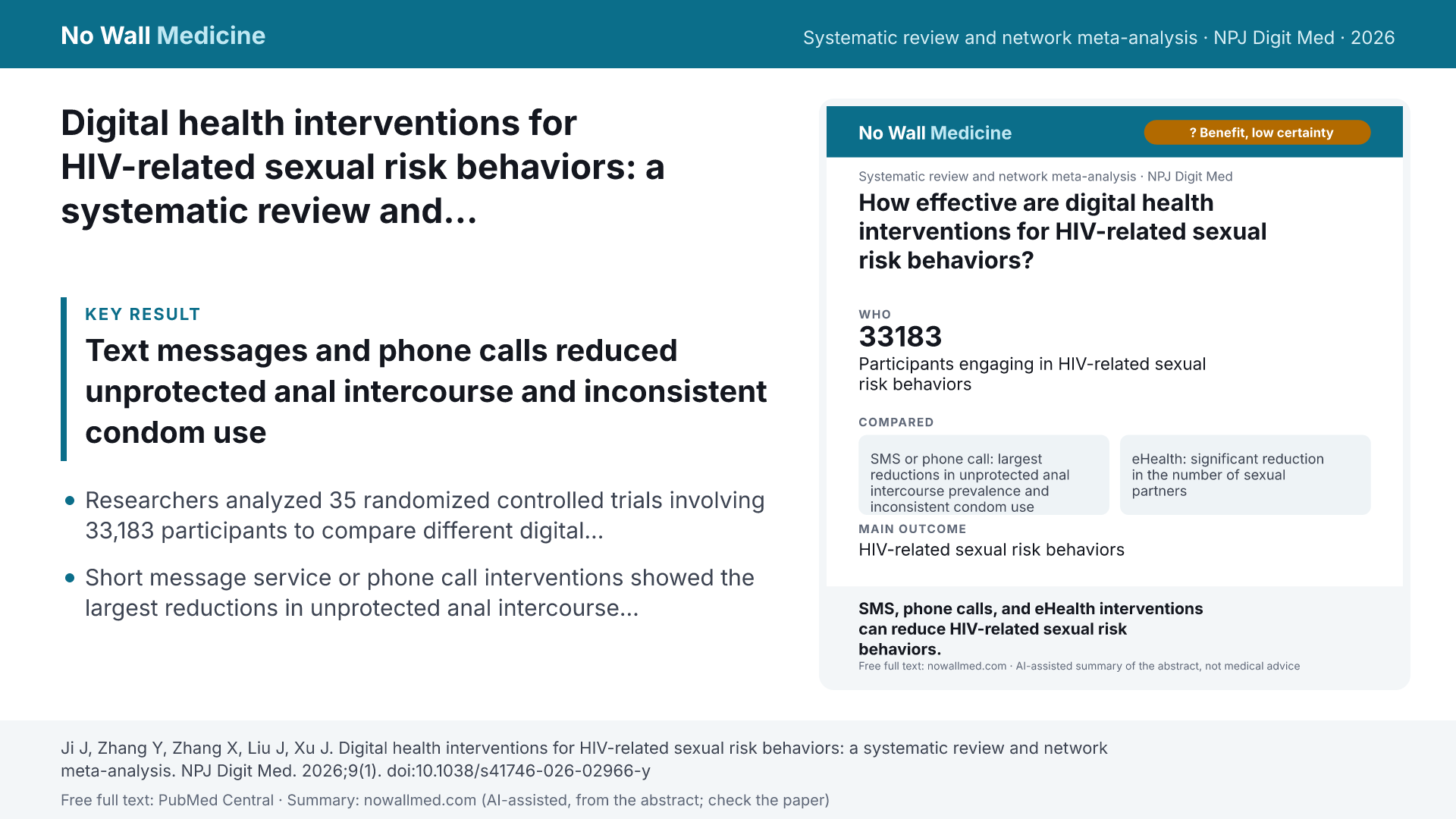
Headline, design, result, key points, caveat and citation as plain text.
Cite this article
Ji J, Zhang Y, Zhang X, Liu J, Xu J. Digital health interventions for HIV-related sexual risk behaviors: a systematic review and network meta-analysis. NPJ Digit Med. 2026;9(1). doi:10.1038/s41746-026-02966-y
Spotted a mistake? Suggest a correction