Digital health technologies show variable effects on medication adherence and outcomes in tuberculosis patients
Digital Health Technologies to Improve Medication Adherence and Treatment Outcomes in Patients With Tuberculosis: Systematic Review of Randomized Controlled Trials
Systematic review of randomized controlled trialsMixed results
Do digital health technologies improve medication adherence and treatment outcomes in tuberculosis patients?
Who
Adult patients with active or latent tuberculosis infection
Compared
Digital health technology interventions
Control
Main outcome
Medication adherence and treatment outcomes
Bottom line: Digital health technologies show variable effects on improving tuberculosis medication adherence and clinical outcomes.
Limitation: Interventions exhibited variable effects regarding effect direction and the extent of improvement.
J Med Internet Res · 2022-02-23Download image
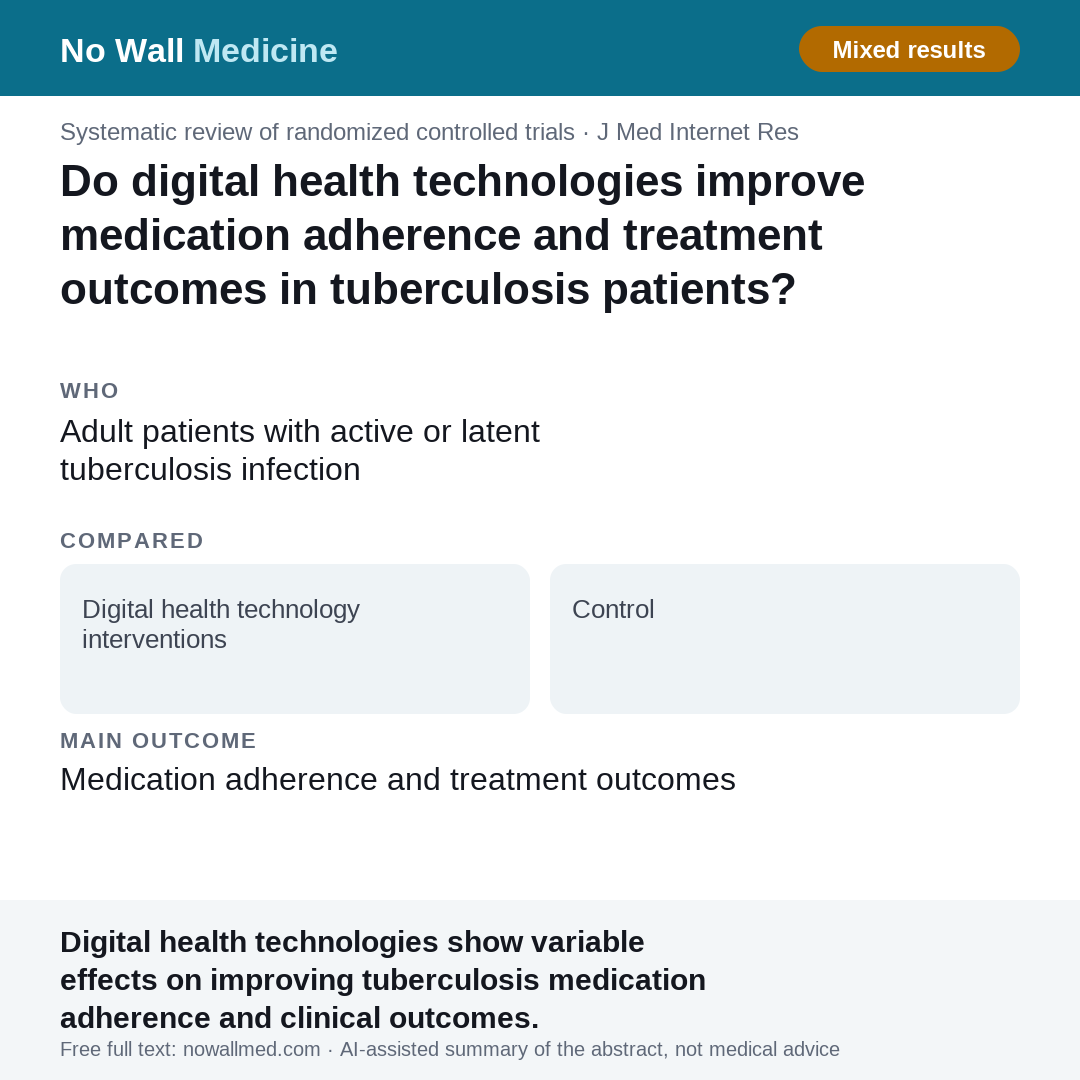
Clinical question: Do digital health technologies improve medication adherence and treatment outcomes in tuberculosis patients?
Why it matters: It is unknown how different types of digital health technology interventions specifically affect medication adherence and clinical outcomes for patients with tuberculosis.
Key points
- Researchers reviewed 16 randomized controlled trials involving adult patients with active or latent tuberculosis to assess digital health technology interventions.
- Four interventions including video directly observed therapy, video-observed therapy, ingestible sensors, and SMS text message reminders were linked to treatment completion.
- Phone calls and SMS text message reminders were associated with higher cure rates, though results for other technologies and outcomes were inconsistent.
Headline and key points written with AI from the paper’s abstract, with every number checked against it. Read the paper before relying on them.
Was this summary helpful?
Subject terms
Cite this article
Ridho A, Alfian SD, van Boven JFM, Levita J, Yalcin EA, Le L. Digital Health Technologies to Improve Medication Adherence and Treatment Outcomes in Patients With Tuberculosis: Systematic Review of Randomized Controlled Trials. J Med Internet Res. 2022. doi:10.2196/33062
Spotted a mistake? Suggest a correction
Top studies every Monday
The week’s key trials and guidelines in your specialties, plus any topics you follow. By email, free.
Get the weekly digest