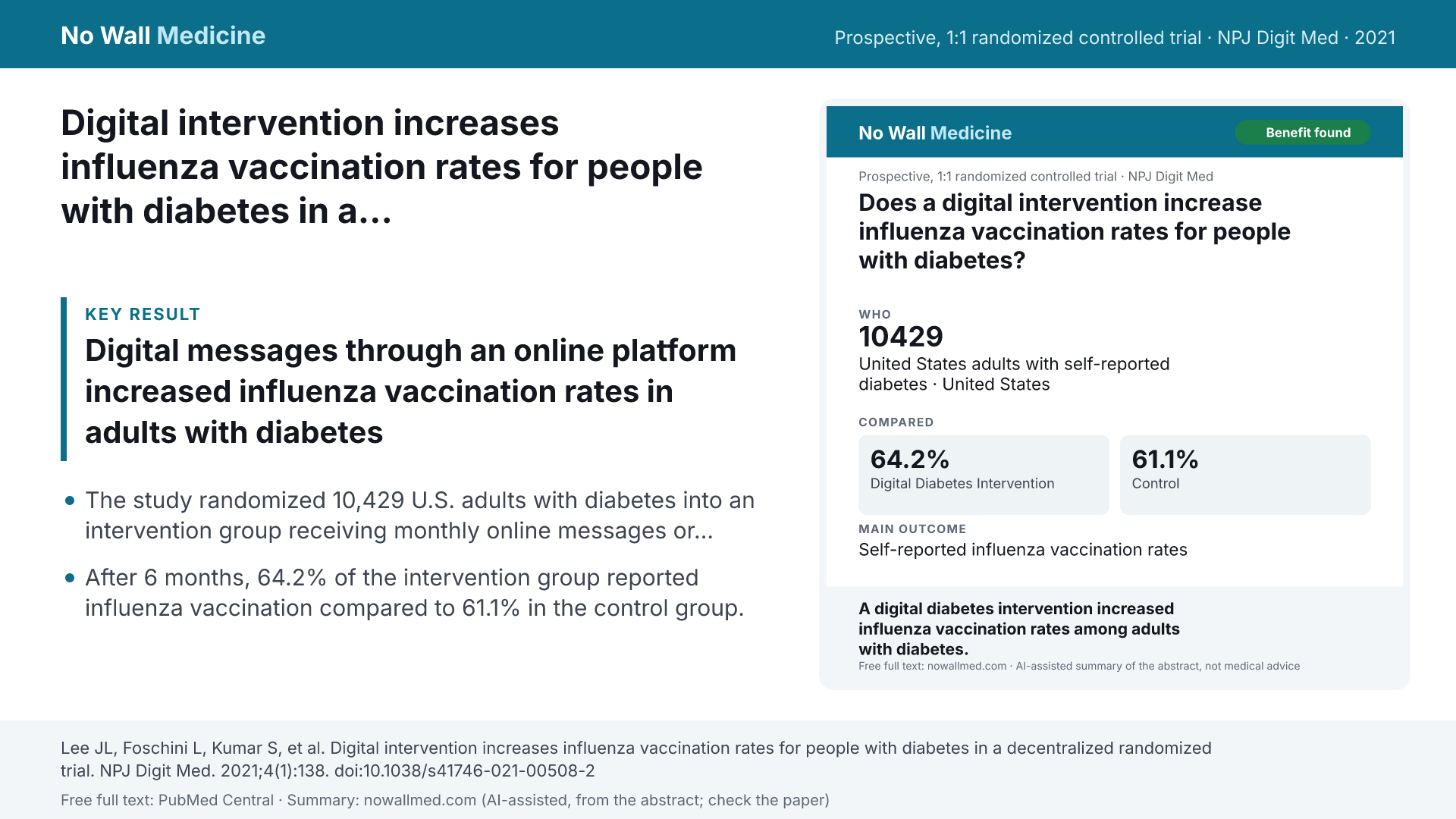
Digital messages through an online platform increased influenza vaccination rates in adults with diabetes
Digital intervention increases influenza vaccination rates for people with diabetes in a decentralized randomized trial
Prospective, 1:1 randomized controlled trialBenefit found
Does a digital intervention increase influenza vaccination rates for people with diabetes?
Who
10429
United States adults with self-reported diabetes · United States
Compared
64.2%Digital Diabetes Intervention
61.1%Control
Main outcome
Self-reported influenza vaccination rates
Result: relative risk 1.05 (95% CI 1.02 to 1.08)
Bottom line: A digital diabetes intervention increased influenza vaccination rates among adults with diabetes.
NPJ Digit Med · 2021-09-17Download image
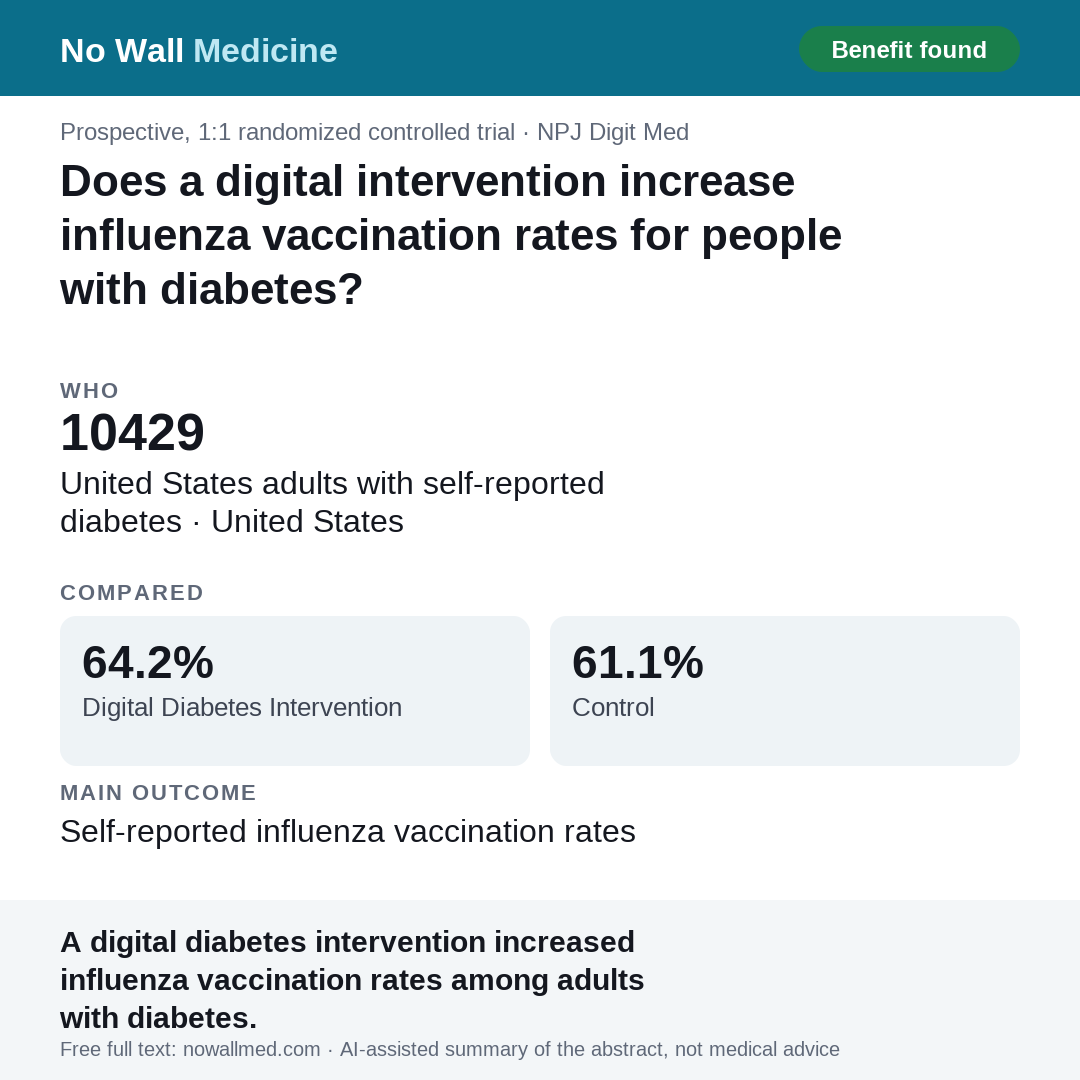
Clinical question: Does a digital intervention increase influenza vaccination rates for people with diabetes?
Why it matters: Annual influenza vaccination rates remain suboptimal among people with diabetes despite their increased risk for complications like pneumonia and hospitalization.
In absolute numbers
Digital Diabetes Intervention: 64.2% · Control: 61.1% → a difference of 3.1 percentage points, so about 33 people would need the treatment for 1 more to benefit (number needed to treat) over the trial’s follow-up.
Worked out by us from the two group results above, not reported by the authors. Check the paper for the exact outcome and timing.
Key points
- The study randomized 10,429 U.S. adults with diabetes into an intervention group receiving monthly online messages or a control group receiving no intervention.
- After 6 months, 64.2% of the intervention group reported influenza vaccination compared to 61.1% in the control group.
- Completing one or more intervention messages was associated with up to an 8% increase in vaccination rates.
Headline and key points written with AI from the paper’s abstract, with every number checked against it. Read the paper before relying on them.
Was this summary helpful?
Cite this article
Lee JL, Foschini L, Kumar S, et al. Digital intervention increases influenza vaccination rates for people with diabetes in a decentralized randomized trial. NPJ Digit Med. 2021. doi:10.1038/s41746-021-00508-2
Spotted a mistake? Suggest a correction