Digital intervention increases influenza vaccination rates for people with diabetes in a decentralized randomized trial
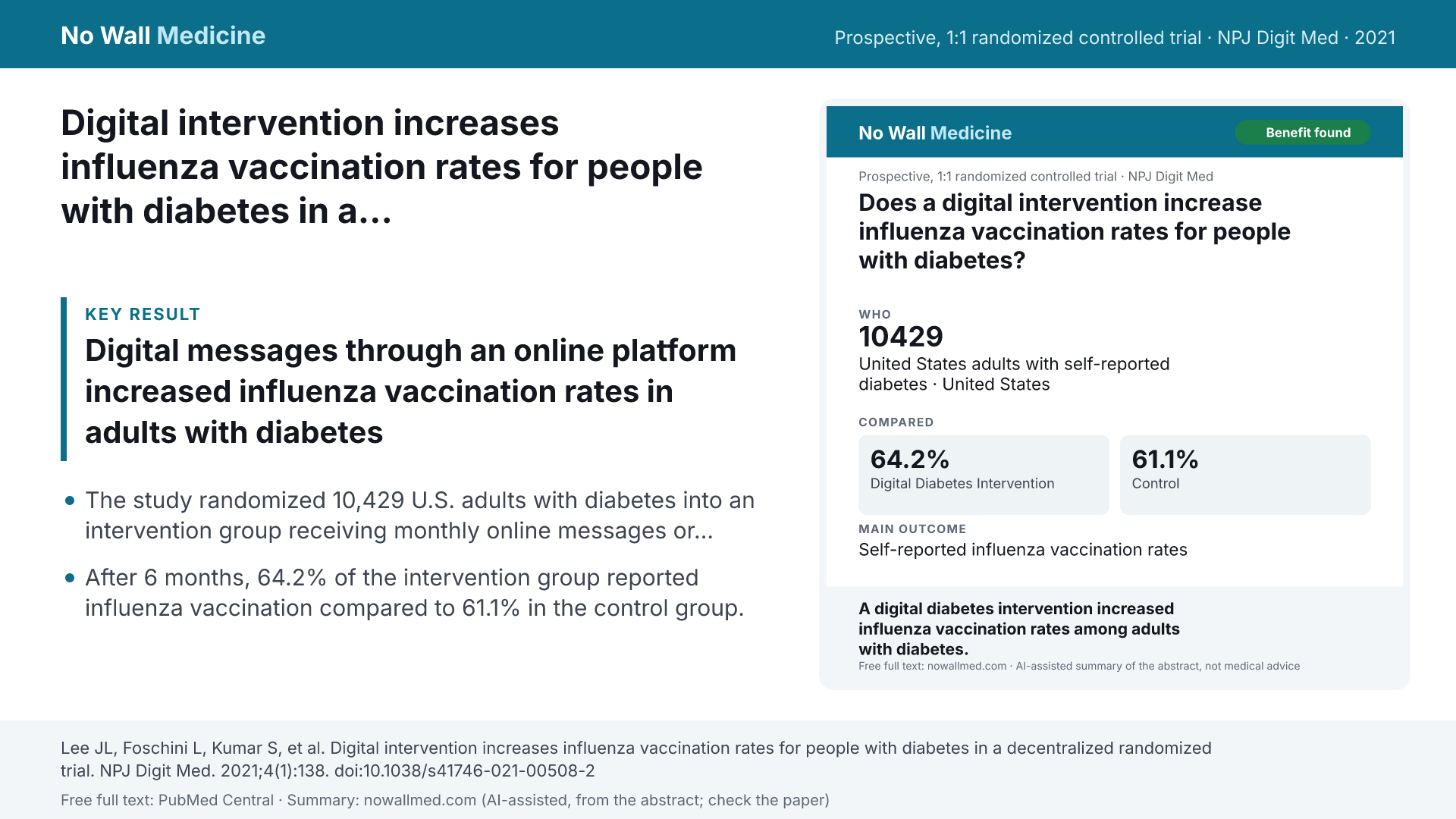
Key result: Digital messages through an online platform increased influenza vaccination rates in adults with diabetes
Digital Diabetes Intervention
Control
About 33 people would need the treatment for 1 more to benefit over the trial’s follow-up (number needed to treat).
Key points
- The study randomized 10,429 U.S. adults with diabetes into an intervention group receiving monthly online messages or a control group receiving no intervention.
- After 6 months, 64.2% of the intervention group reported influenza vaccination compared to 61.1% in the control group.
- Completing one or more intervention messages was associated with up to an 8% increase in vaccination rates.
In absolute numbers: Digital Diabetes Intervention 64.2% vs Control 61.1%, a difference of 3.1 percentage points (about 33 people treated for one more to benefit).
Why it matters: Annual influenza vaccination rates remain suboptimal among people with diabetes despite their increased risk for complications like pneumonia and hospitalization.
Discussion prompts
- Would these patients look like yours? Who was left out?
- Is the main outcome one that matters to patients?
- Is the difference large enough to change what you do?
Cite: Lee JL, Foschini L, Kumar S, et al. Digital intervention increases influenza vaccination rates for people with diabetes in a decentralized randomized trial. NPJ Digit Med. 2021;4(1):138. doi:10.1038/s41746-021-00508-2
Free full text: PubMed Central · Summary and visual abstract: nowallmed.com/a/digital-intervention-increases-influenza-vaccination-rates-for-people-12zsvx1/ (AI-assisted from the abstract; check the paper before relying on it).