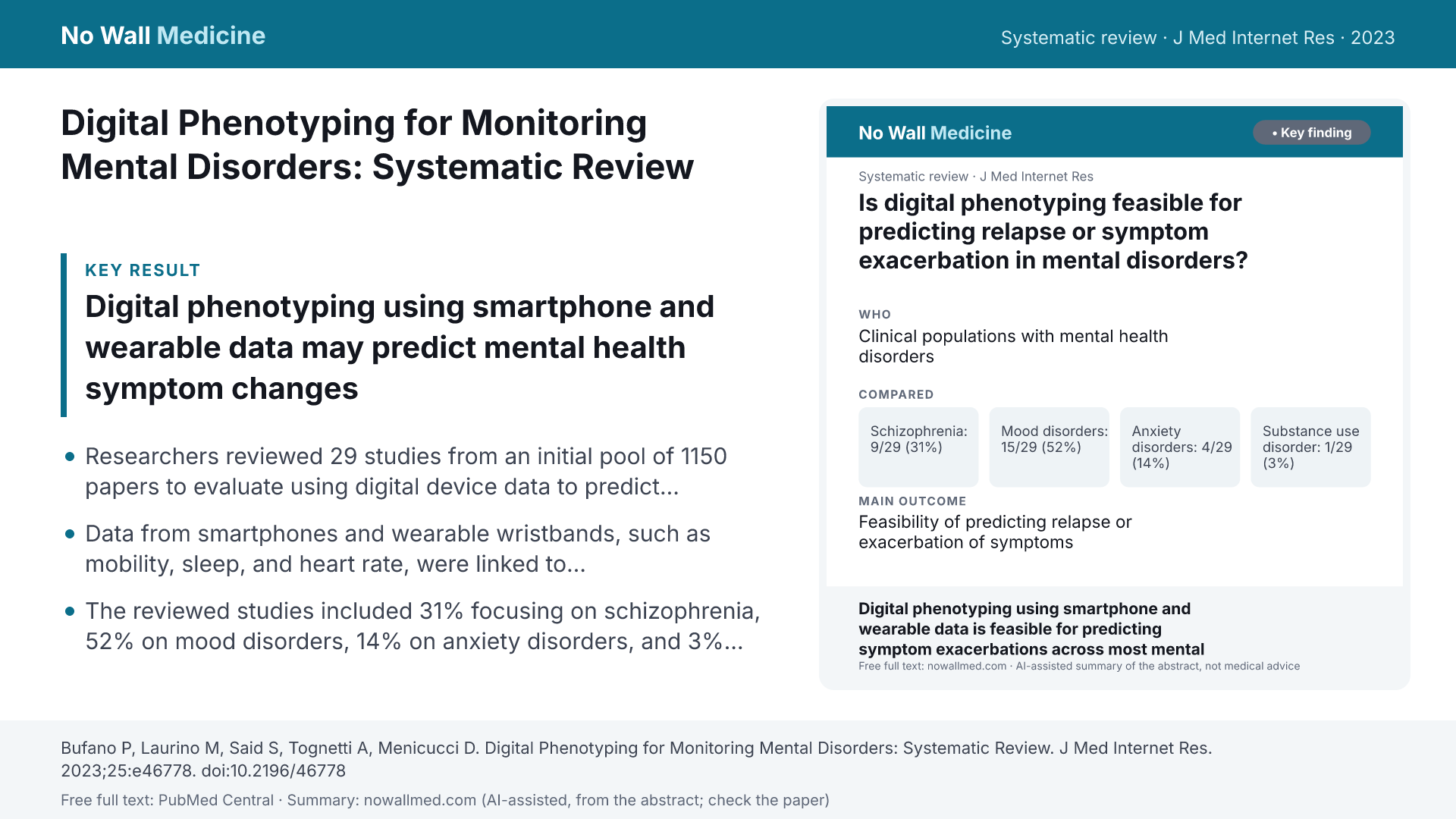
Digital Phenotyping for Monitoring Mental Disorders: Systematic Review
Key result: Digital phenotyping using smartphone and wearable data may predict mental health symptom changes
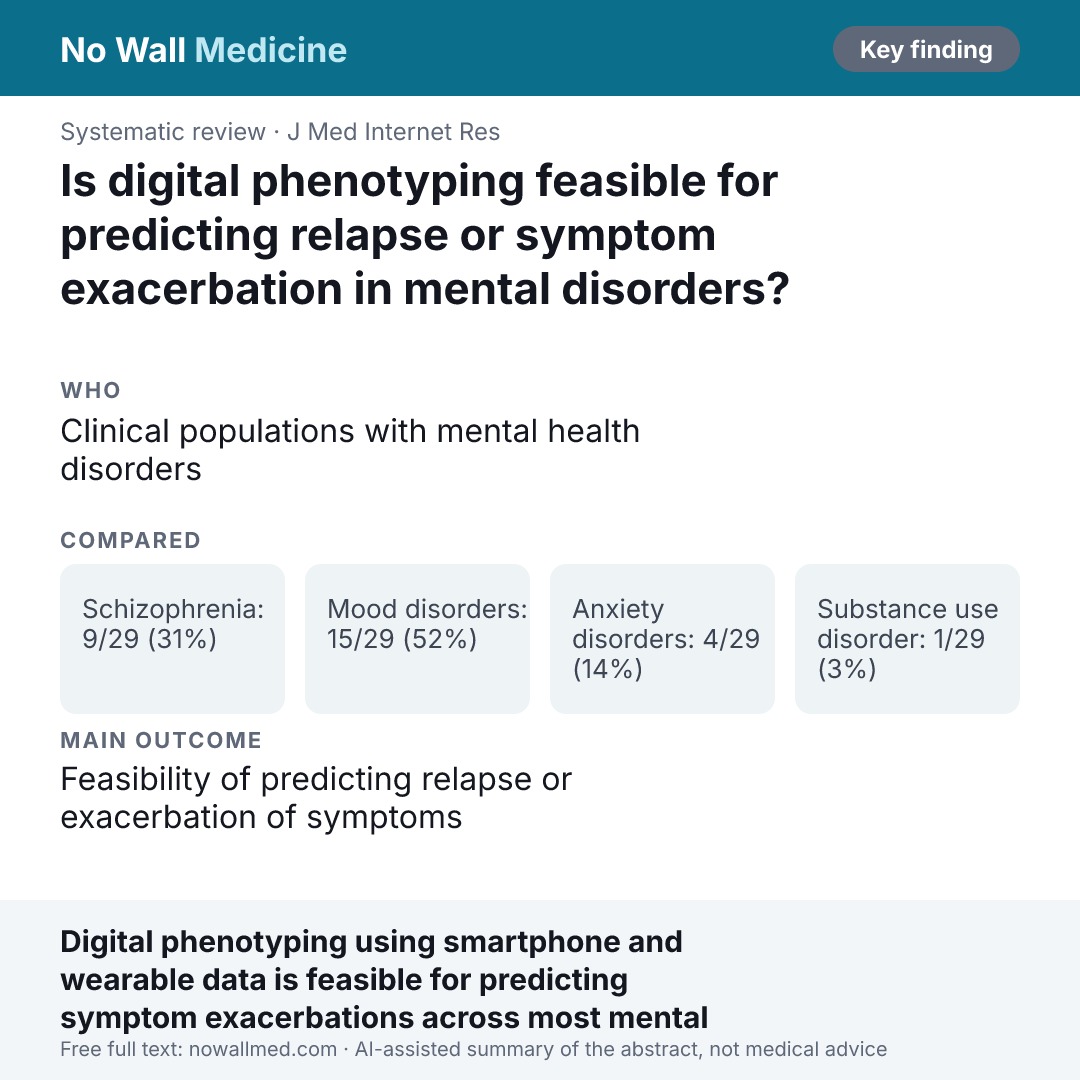
Systematic reviewKey finding
Is digital phenotyping feasible for predicting relapse or symptom exacerbation in mental disorders?
Who
Clinical populations with mental health disorders
Compared
Schizophrenia: 9/29 (31%)
Mood disorders: 15/29 (52%)
Anxiety disorders: 4/29 (14%)
Substance use disorder: 1/29 (3%)
Main outcome
Feasibility of predicting relapse or exacerbation of symptoms
Bottom line: Digital phenotyping using smartphone and wearable data is feasible for predicting symptom exacerbations across most mental disorders.
J Med Internet Res · 2023-12-13 · Save PNG
Key points
- Researchers reviewed 29 studies from an initial pool of 1150 papers to evaluate using digital device data to predict mental health relapses.
- Data from smartphones and wearable wristbands, such as mobility, sleep, and heart rate, were linked to predicting symptom exacerbations in schizophrenia, mood, and anxiety disorders.
- The reviewed studies included 31% focusing on schizophrenia, 52% on mood disorders, 14% on anxiety disorders, and 3% on substance use disorder.
Discussion prompts
- Would these patients look like yours? Who was left out?
- Is the main outcome one that matters to patients?
- Is the difference large enough to change what you do?
Cite: Bufano P, Laurino M, Said S, Tognetti A, Menicucci D. Digital Phenotyping for Monitoring Mental Disorders: Systematic Review. J Med Internet Res. 2023;25:e46778. doi:10.2196/46778
Free full text: PubMed Central · Summary and visual abstract: nowallmed.com/a/digital-phenotyping-for-monitoring-mental-disorders-systematic-b31a0b/ (AI-assisted from the abstract; check the paper before relying on it).