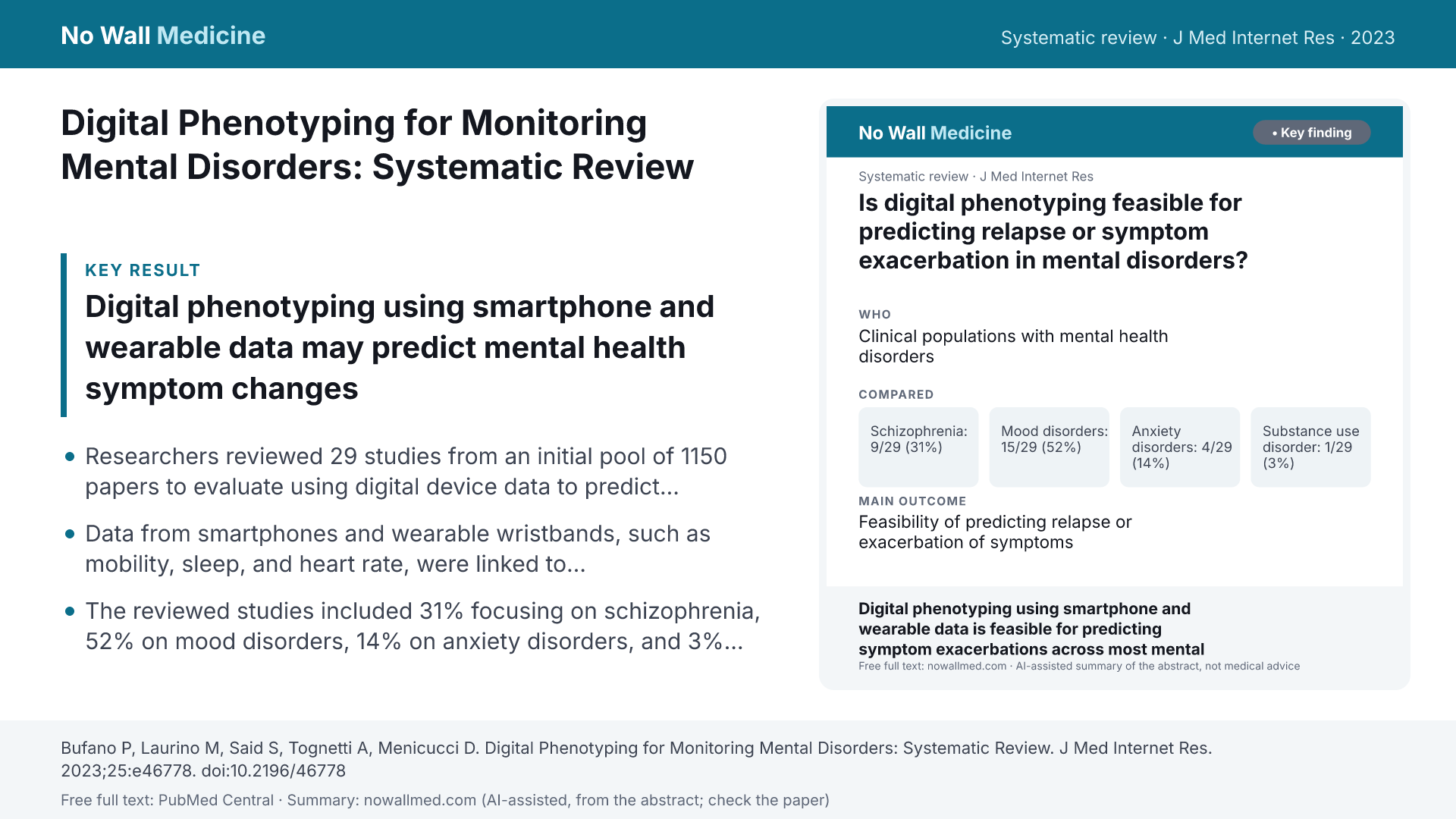
Digital phenotyping using smartphone and wearable data may predict mental health symptom changes
Digital Phenotyping for Monitoring Mental Disorders: Systematic Review
Systematic reviewBenefit found
Is digital phenotyping feasible for predicting relapse or symptom exacerbation in mental disorders?
Who
29
Clinical populations with mental health disorders
Compared
Schizophrenia: 9/29 (31%)
Mood disorders: 15/29 (52%)
Anxiety disorders: 4/29 (14%)
Substance use disorder: 1/29 (3%)
Main outcome
Feasibility of predicting relapse or exacerbation of symptoms
Bottom line: Digital phenotyping using smartphone and wearable data is feasible for predicting symptom exacerbations across most mental disorders.
J Med Internet Res · 2023-12-13Download image
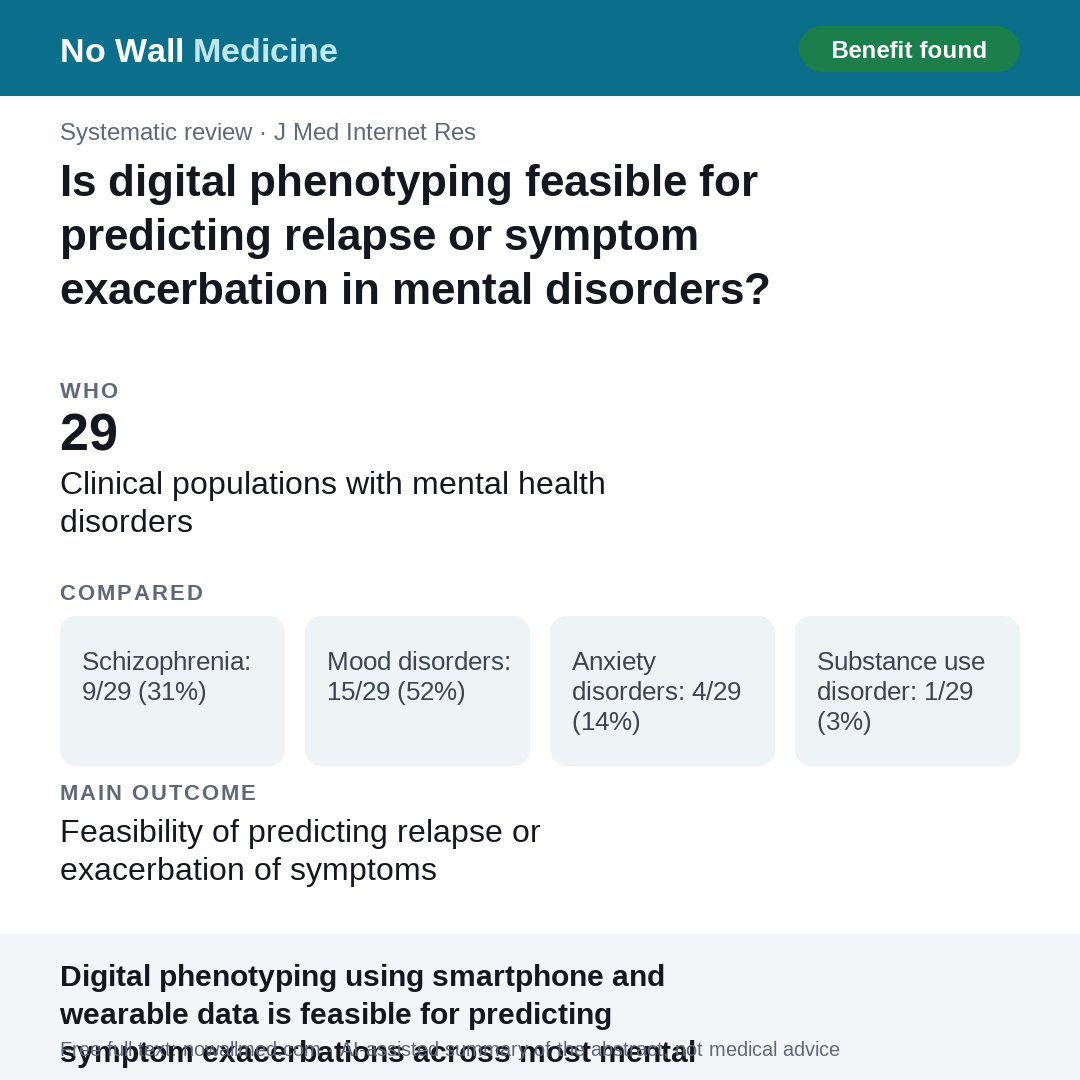
Clinical question: Is digital phenotyping feasible for predicting relapse or symptom exacerbation in mental disorders?
Why it matters: It is unknown if monitoring spontaneous interactions with digital devices can feasibly predict the relapse or worsening of symptoms in people with mental disorders.
Key points
- Researchers reviewed 29 studies from an initial pool of 1150 papers to evaluate using digital device data to predict mental health relapses.
- Data from smartphones and wearable wristbands, such as mobility, sleep, and heart rate, were linked to predicting symptom exacerbations in schizophrenia, mood, and anxiety disorders.
- The reviewed studies included 31% focusing on schizophrenia, 52% on mood disorders, 14% on anxiety disorders, and 3% on substance use disorder.
Headline and key points written with AI from the paper’s abstract, with every number checked against it. Read the paper before relying on them.
Was this summary helpful?
Subject terms
Cite this article
Bufano P, Laurino M, Said S, Tognetti A, Menicucci D. Digital Phenotyping for Monitoring Mental Disorders: Systematic Review. J Med Internet Res. 2023. doi:10.2196/46778
Spotted a mistake? Suggest a correction