Combining diphenhydramine and sodium bicarbonate provided more vertigo relief than diphenhydramine alone
Diphenhydramine, Sodium Bicarbonate, or Combination for Acute Peripheral Vertigo: A Randomized Clinical Trial
Triple-arm, double-blind, randomized clinical trialBenefit found
Are diphenhydramine, sodium bicarbonate, or their combination most effective for acute peripheral vertigo?
Who
222
Adults with peripheral vertigo within 24 hours of onset · National Taiwan University Hospital, Yunlin Branch emergency department
Compared
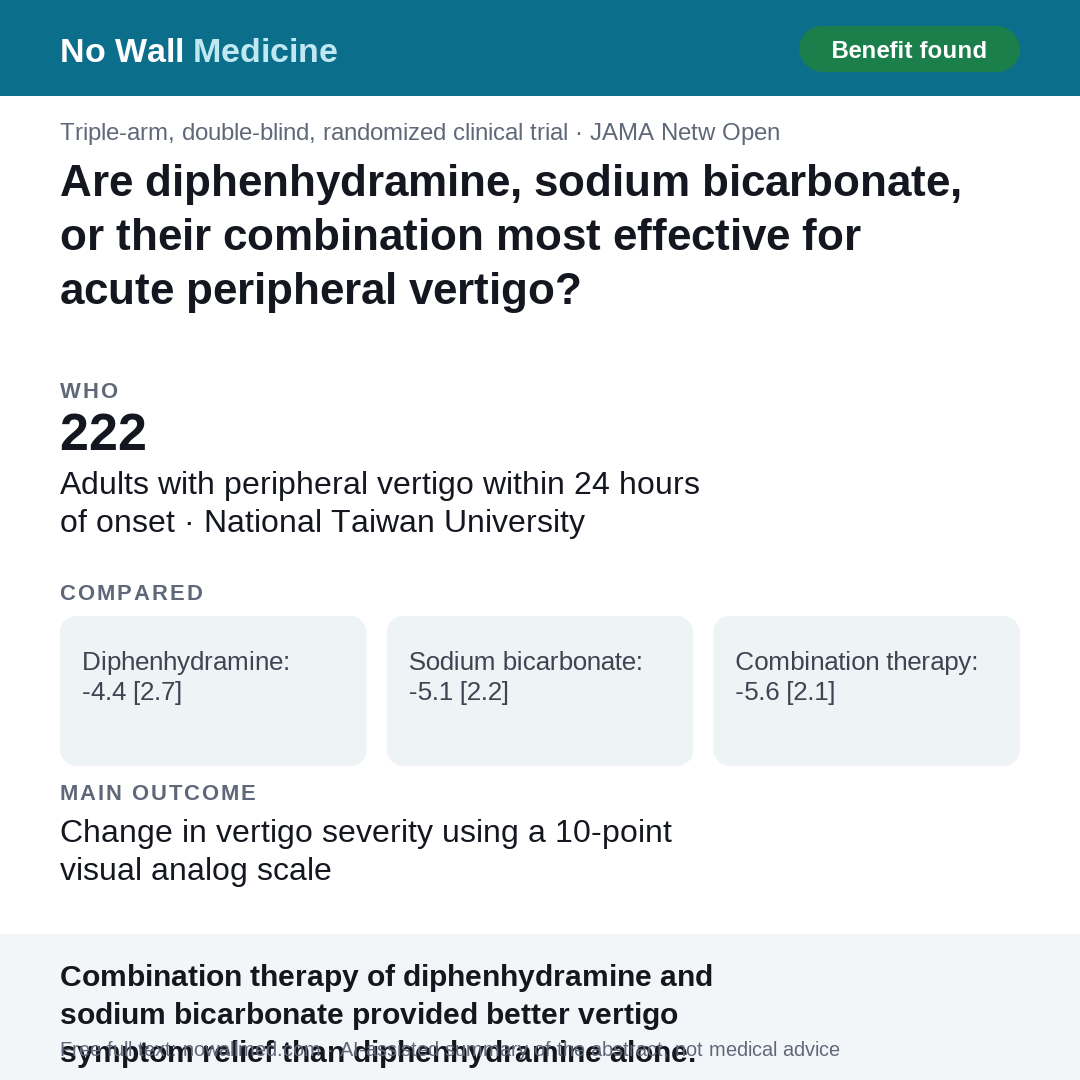
Diphenhydramine: -4.4 [2.7]
Sodium bicarbonate: -5.1 [2.2]
Combination therapy: -5.6 [2.1]
Main outcome
Change in vertigo severity using a 10-point visual analog scale
Bottom line: Combination therapy of diphenhydramine and sodium bicarbonate provided better vertigo symptom relief than diphenhydramine alone.
Limitation: Further studies should focus on determining vertigo types that benefit from sodium bicarbonate and underlying mechanisms.
JAMA Netw Open · 2025-11-03Download image
Clinical question: Are diphenhydramine, sodium bicarbonate, or their combination most effective for acute peripheral vertigo?
Why it matters: Comparative evidence is limited regarding whether sodium bicarbonate or a combination of treatments is more effective or safer than diphenhydramine for treating acute peripheral vertigo.
Key points
- Researchers studied 222 adults with acute peripheral vertigo in an emergency department, comparing intravenous diphenhydramine, sodium bicarbonate, or a combination of both.
- The combination group had a greater improvement in vertigo severity at 60 minutes than the diphenhydramine group, with mean visual analog scale scores of -5.6 versus -4.4.
- Lethargy was more common in the diphenhydramine groups compared to the sodium bicarbonate group, while injection discomfort was more common with sodium bicarbonate.
Headline and key points written with AI from the paper’s abstract, with every number checked against it. Read the paper before relying on them.
Was this summary helpful?
Subject terms
Cite this article
Chi CY, Chen YC, Cheng MT, Chang KC, Chen YP, Tsai MS. Diphenhydramine, Sodium Bicarbonate, or Combination for Acute Peripheral Vertigo: A Randomized Clinical Trial. JAMA Netw Open. 2025. doi:10.1001/jamanetworkopen.2025.41472
Spotted a mistake? Suggest a correction
Top studies every Monday
The week’s key trials and guidelines in your specialties, plus any topics you follow. By email, free.
Get the weekly digest