Disease-associated brain activation predicts clinical response to TNF inhibition in rheumatoid arthritis (PreCePra): a randomised, multicentre, double-blind, placebo-controlled phase 3 study
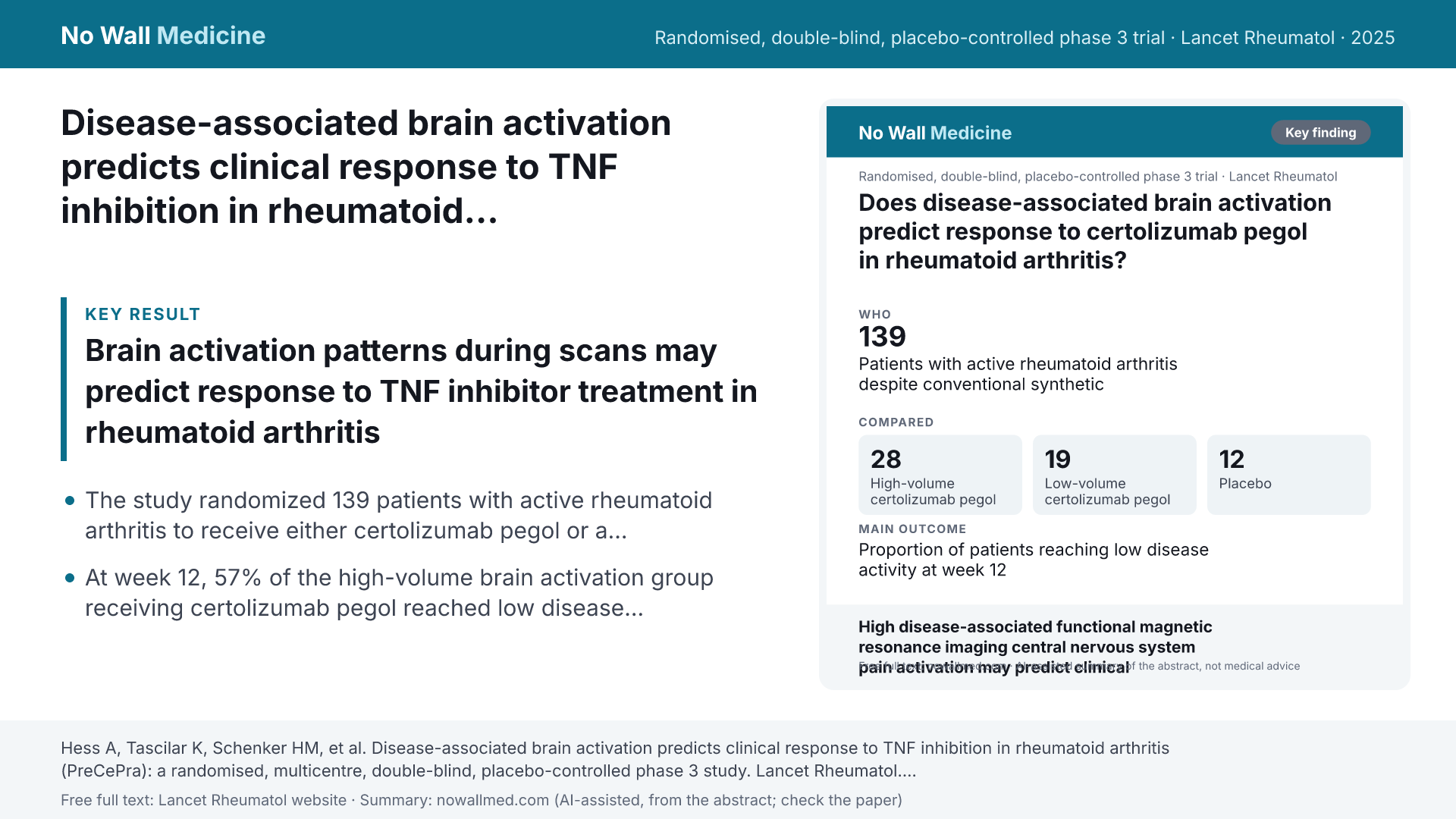
Key result: Brain activation patterns during scans may predict response to TNF inhibitor treatment in rheumatoid arthritis
Randomised, double-blind, placebo-controlled phase 3 trialKey finding
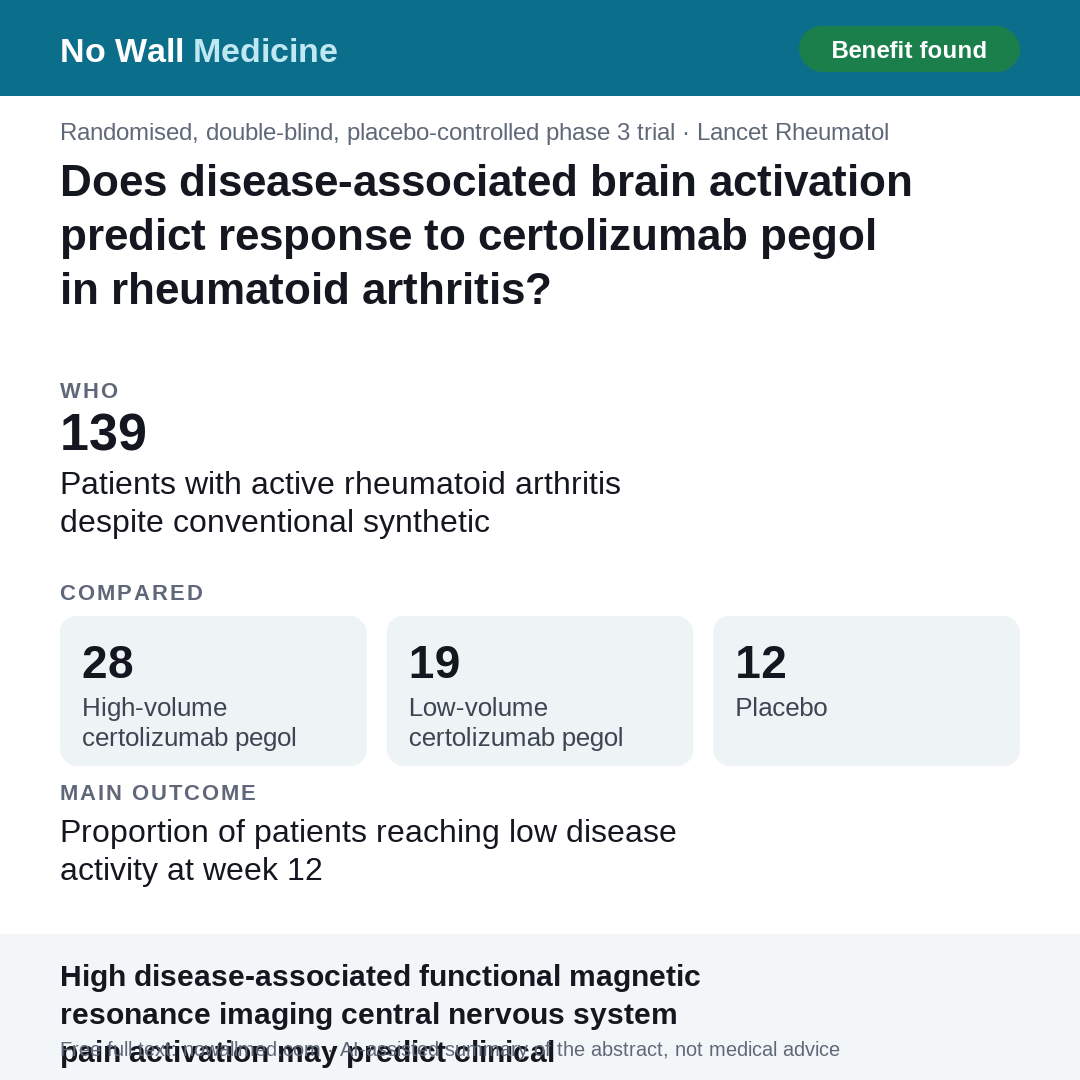
Does disease-associated brain activation predict response to certolizumab pegol in rheumatoid arthritis?
Who
139
Patients with active rheumatoid arthritis despite conventional synthetic disease-modifying antirheumatic drug use · Six rheumatology centres in Germany, Portugal, and Serbia
Compared
28High-volume certolizumab pegol (57%)
19Low-volume certolizumab pegol (44%)
12Placebo (26%)
Main outcome
Proportion of patients reaching low disease activity at week 12
Bottom line: High disease-associated functional magnetic resonance imaging central nervous system pain activation may predict clinical response to certolizumab pegol.
Funded by: UCB Biopharma
Lancet Rheumatol · 2025-06-23Download image
Key points
- The study randomized 139 patients with active rheumatoid arthritis to receive either certolizumab pegol or a placebo, stratified by brain pain activation levels measured by functional magnetic resonance imaging.
- At week 12, 57% of the high-volume brain activation group receiving certolizumab pegol reached low disease activity compared to 26% in the placebo group.
- The response in the high-volume certolizumab pegol group was significantly different from placebo, but the low-volume group was not significantly different from placebo.
Discussion prompts
- Would these patients look like yours? Who was left out?
- Is the main outcome one that matters to patients?
- Is the difference large enough to change what you do?
Cite: Hess A, Tascilar K, Schenker HM, et al. Disease-associated brain activation predicts clinical response to TNF inhibition in rheumatoid arthritis (PreCePra): a randomised, multicentre, double-blind, placebo-controlled phase 3 study. Lancet Rheumatol. 2025. doi:10.1016/S2665-9913(25)00032-3
Free full text: Lancet Rheumatol website · Summary and visual abstract: nowallmed.com/a/disease-associated-brain-activation-predicts-clinical-response-to-tnf-1274vv5/ (AI-assisted from the abstract; check the paper before relying on it).