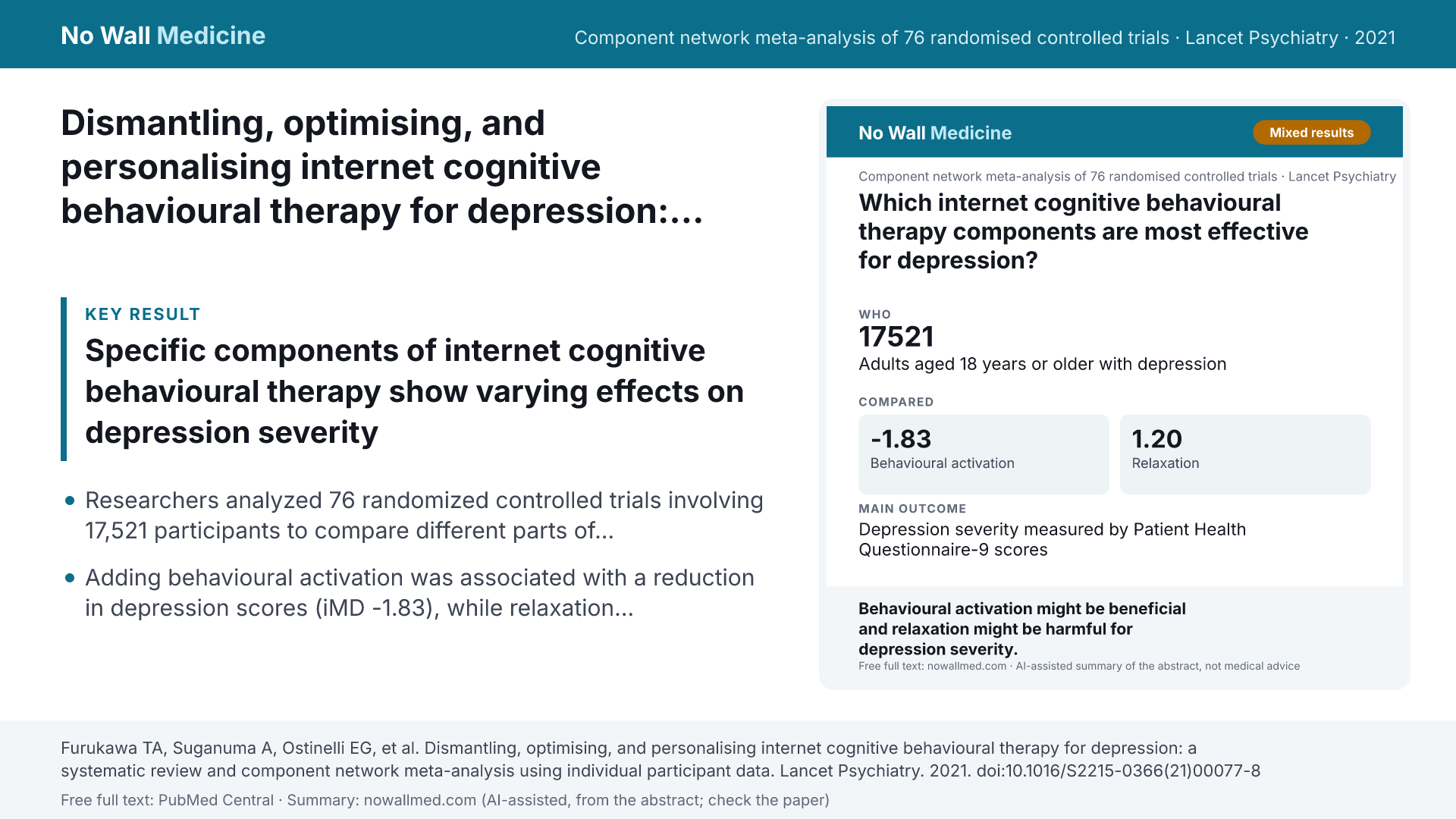
Dismantling, optimising, and personalising internet cognitive behavioural therapy for depression: a systematic review and component network meta-analysis using individual participant data
Key result: Specific components of internet cognitive behavioural therapy show varying effects on depression severity
Key points
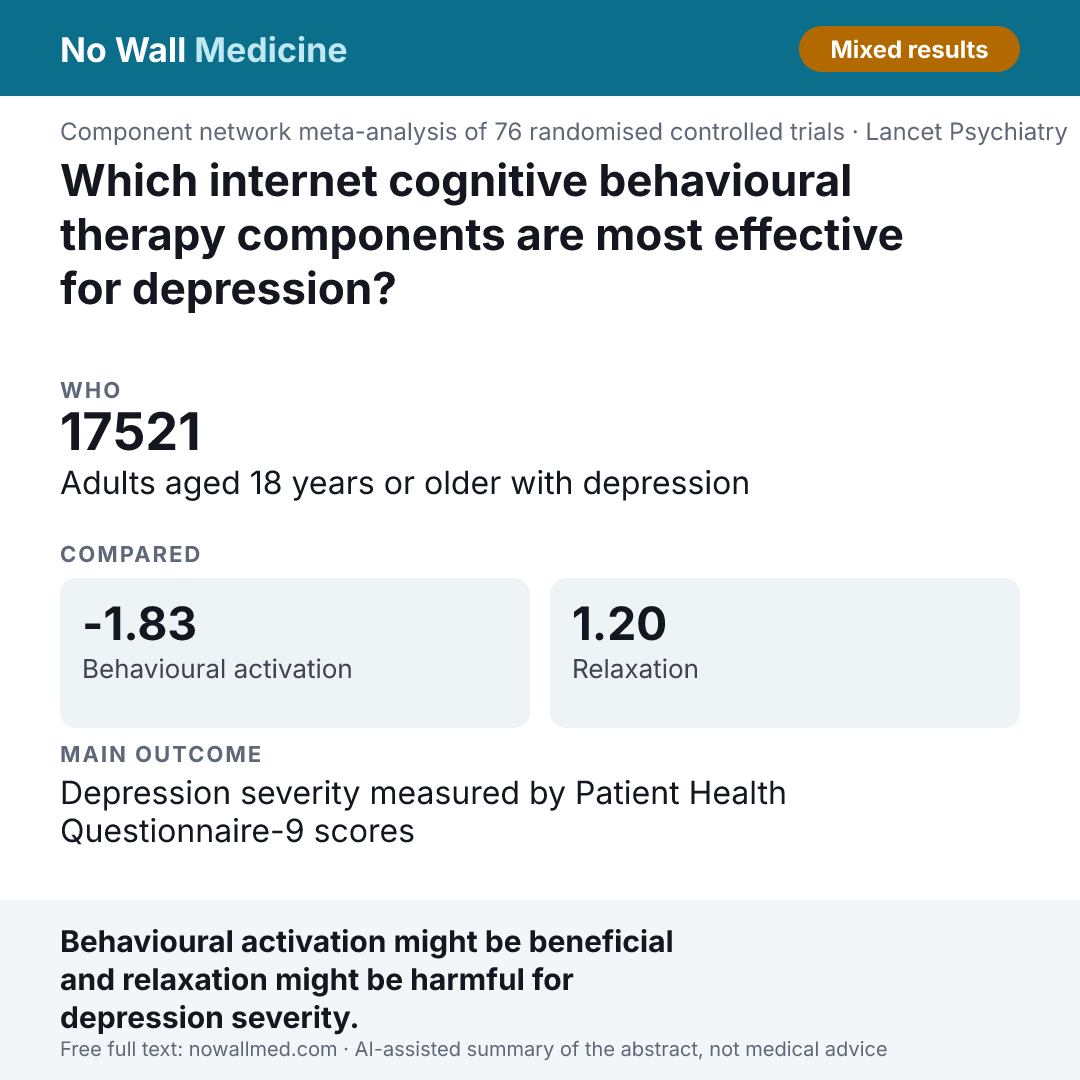
- Researchers analyzed 76 randomized controlled trials involving 17,521 participants to compare different parts of internet cognitive behavioural therapy for depression.
- Adding behavioural activation was associated with a reduction in depression scores (iMD -1.83), while relaxation was associated with higher scores (1.20).
- Combining human and automated encouragement was associated with a reduction in treatment dropouts (incremental odds ratio 0.32).
Limitation the authors note: The researchers noted moderate to high heterogeneity among the studies and their components, and a high risk of bias for the measurement of outcomes.
Discussion prompts
- Would these patients look like yours? Who was left out?
- Is the main outcome one that matters to patients?
- Is the difference large enough to change what you do?
Cite: Furukawa TA, Suganuma A, Ostinelli EG, et al. Dismantling, optimising, and personalising internet cognitive behavioural therapy for depression: a systematic review and component network meta-analysis using individual participant data. Lancet Psychiatry. 2021. doi:10.1016/S2215-0366(21)00077-8
Free full text: PubMed Central · Summary and visual abstract: nowallmed.com/a/dismantling-optimising-and-personalising-internet-cognitive-oyok4h/ (AI-assisted from the abstract; check the paper before relying on it).