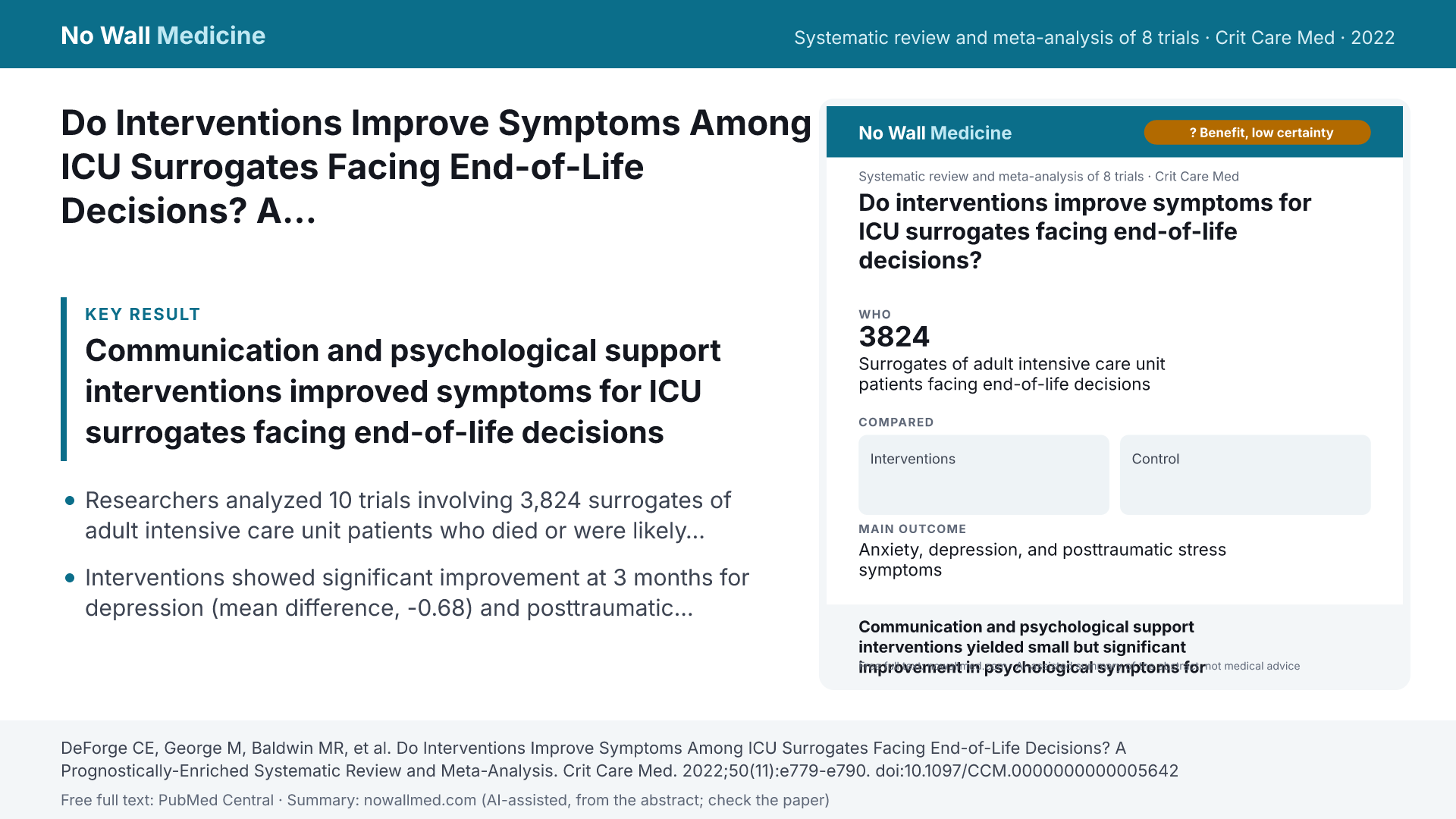
Do Interventions Improve Symptoms Among ICU Surrogates Facing End-of-Life Decisions? A Prognostically-Enriched Systematic Review and Meta-Analysis
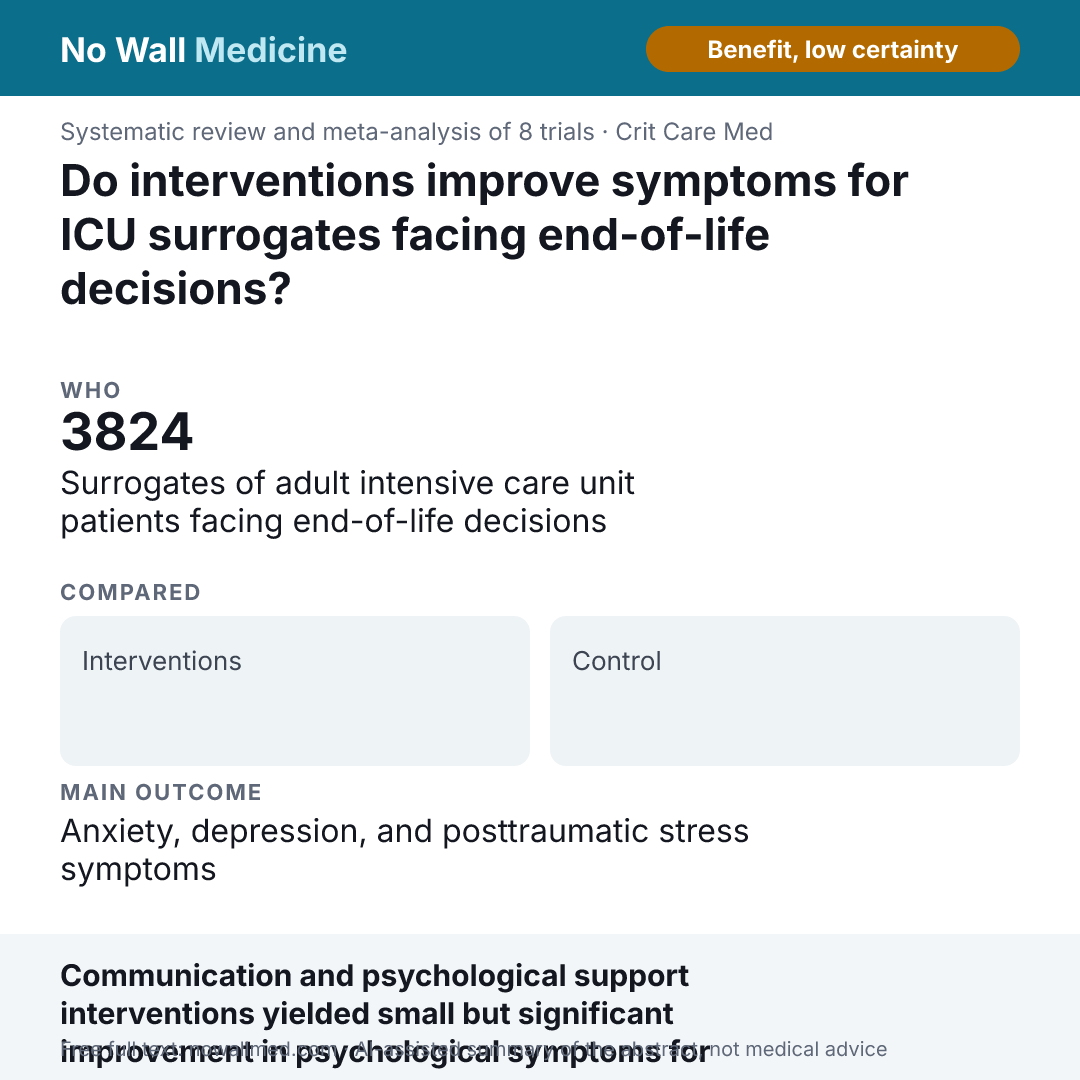
Key result: Communication and psychological support interventions improved symptoms for ICU surrogates facing end-of-life decisions
Key points
- Researchers analyzed 10 trials involving 3,824 surrogates of adult intensive care unit patients who died or were likely to die.
- Interventions showed significant improvement at 3 months for depression (mean difference, -0.68) and posttraumatic stress (standardized mean difference, -0.25).
- At 6 months, interventions were associated with improved anxiety (mean difference, -0.70).
Limitation the authors note: The authors noted that sensitivity analyses suggest the significant findings may be unstable and the overall risk of bias was rated as Some Concerns.
Discussion prompts
- Would these patients look like yours? Who was left out?
- Is the main outcome one that matters to patients?
- Is the difference large enough to change what you do?
Cite: DeForge CE, George M, Baldwin MR, et al. Do Interventions Improve Symptoms Among ICU Surrogates Facing End-of-Life Decisions? A Prognostically-Enriched Systematic Review and Meta-Analysis. Crit Care Med. 2022;50(11):e779-e790. doi:10.1097/CCM.0000000000005642
Free full text: PubMed Central · Summary and visual abstract: nowallmed.com/a/do-interventions-improve-symptoms-among-icu-surrogates-facing-end-of-3b6uag/ (AI-assisted from the abstract; check the paper before relying on it).