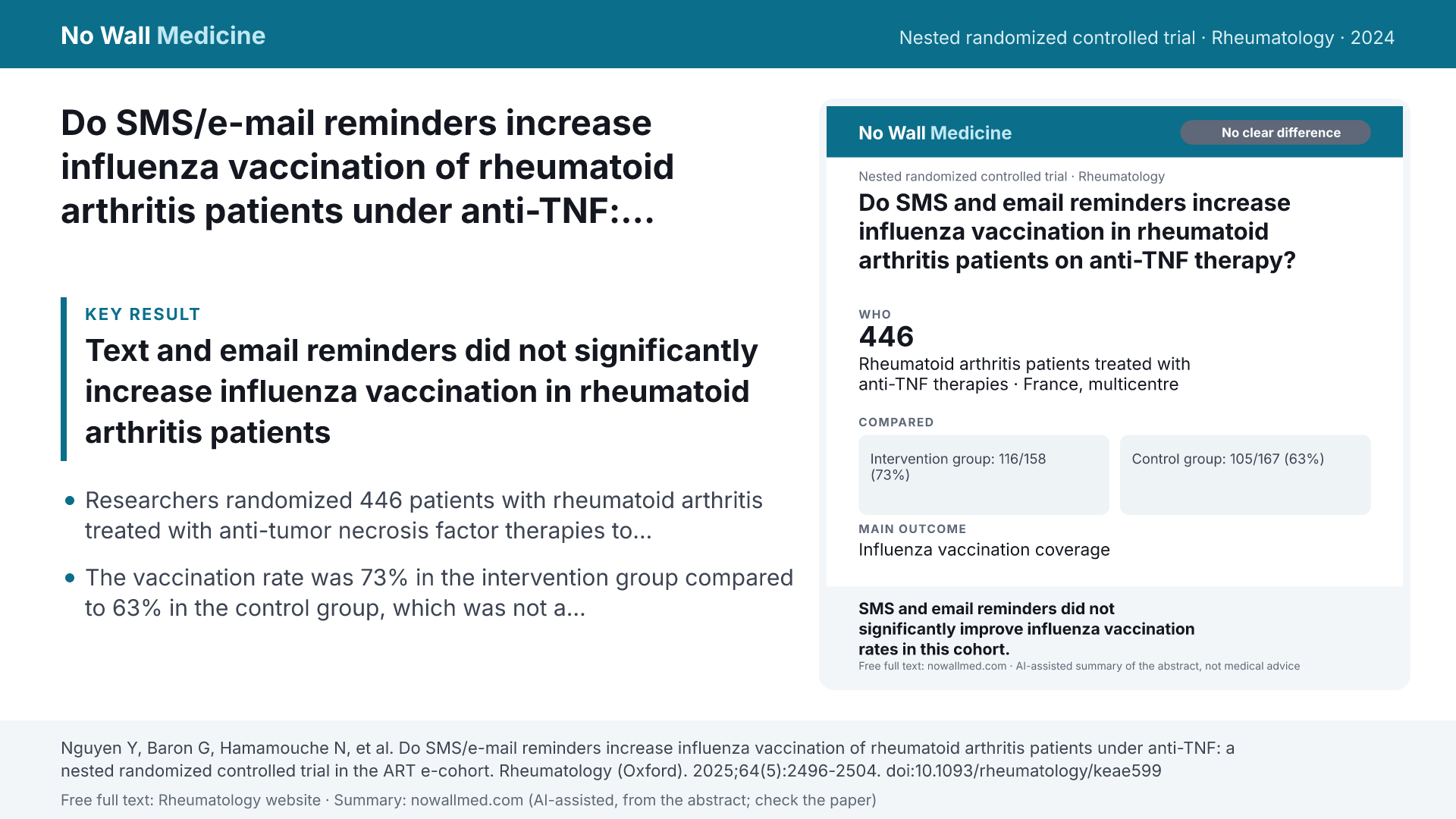
Do SMS/e-mail reminders increase influenza vaccination of rheumatoid arthritis patients under anti-TNF: a nested randomized controlled trial in the ART e-cohort
Key result: Text and email reminders did not significantly increase influenza vaccination in rheumatoid arthritis patients
Key points
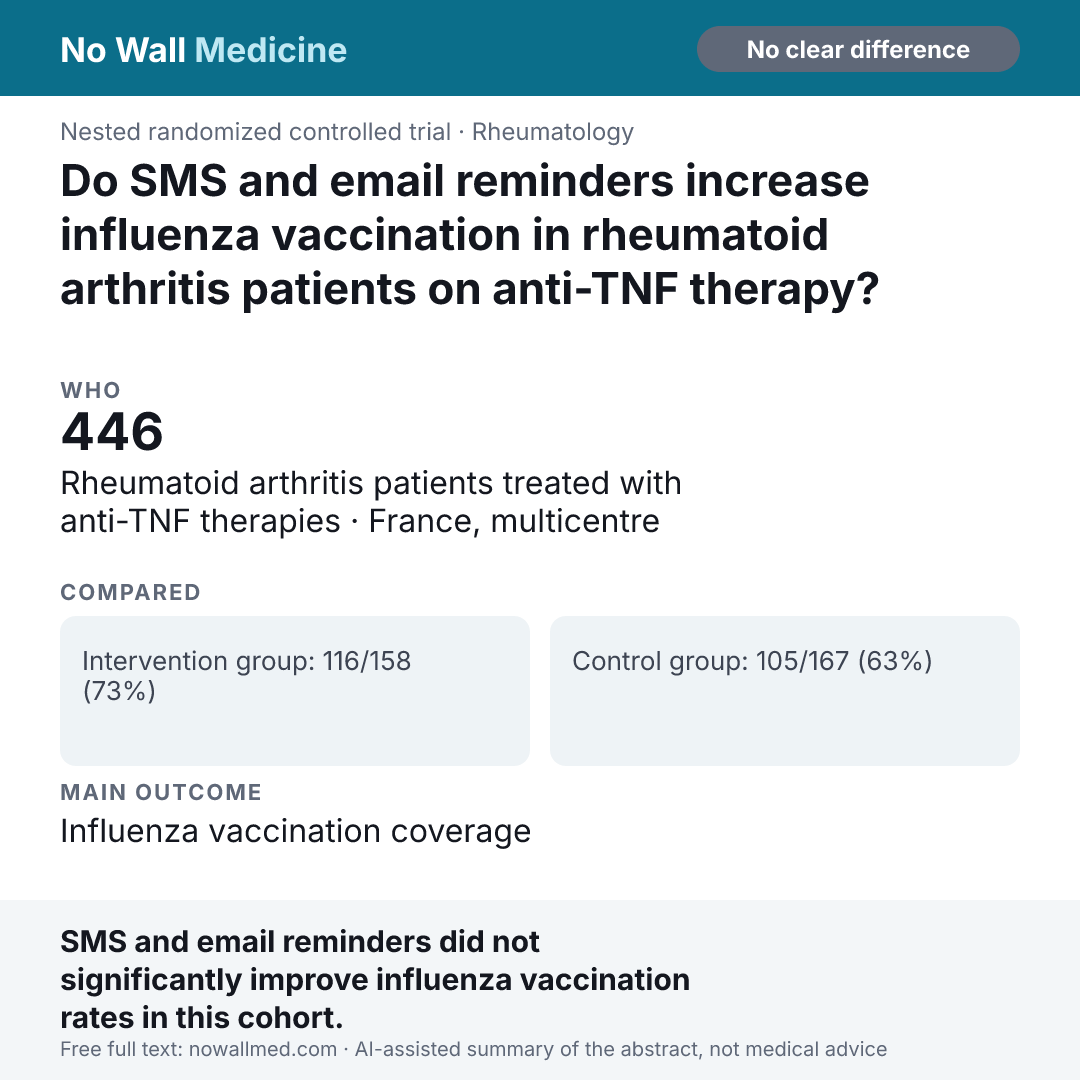
- Researchers randomized 446 patients with rheumatoid arthritis treated with anti-tumor necrosis factor therapies to receive either regular SMS and email reminders or no reminders.
- The vaccination rate was 73% in the intervention group compared to 63% in the control group, which was not a statistically significant difference (relative risk 1.08; 95% CI 0.95-1.23).
- Being age 65 years or older and having received a previous influenza vaccination were associated with higher vaccination rates.
Limitation the authors note: The authors stated that the results might be counterbalanced by an already high vaccination coverage.
Discussion prompts
- Would these patients look like yours? Who was left out?
- Is the main outcome one that matters to patients?
- Is the difference large enough to change what you do?
Cite: Nguyen Y, Baron G, Hamamouche N, et al. Do SMS/e-mail reminders increase influenza vaccination of rheumatoid arthritis patients under anti-TNF: a nested randomized controlled trial in the ART e-cohort. Rheumatology (Oxford). 2025;64(5):2496-2504. doi:10.1093/rheumatology/keae599
Free full text: Rheumatology website · Summary and visual abstract: nowallmed.com/a/do-sms-e-mail-reminders-increase-influenza-vaccination-of-rheumatoid-tc77h2/ (AI-assisted from the abstract; check the paper before relying on it).