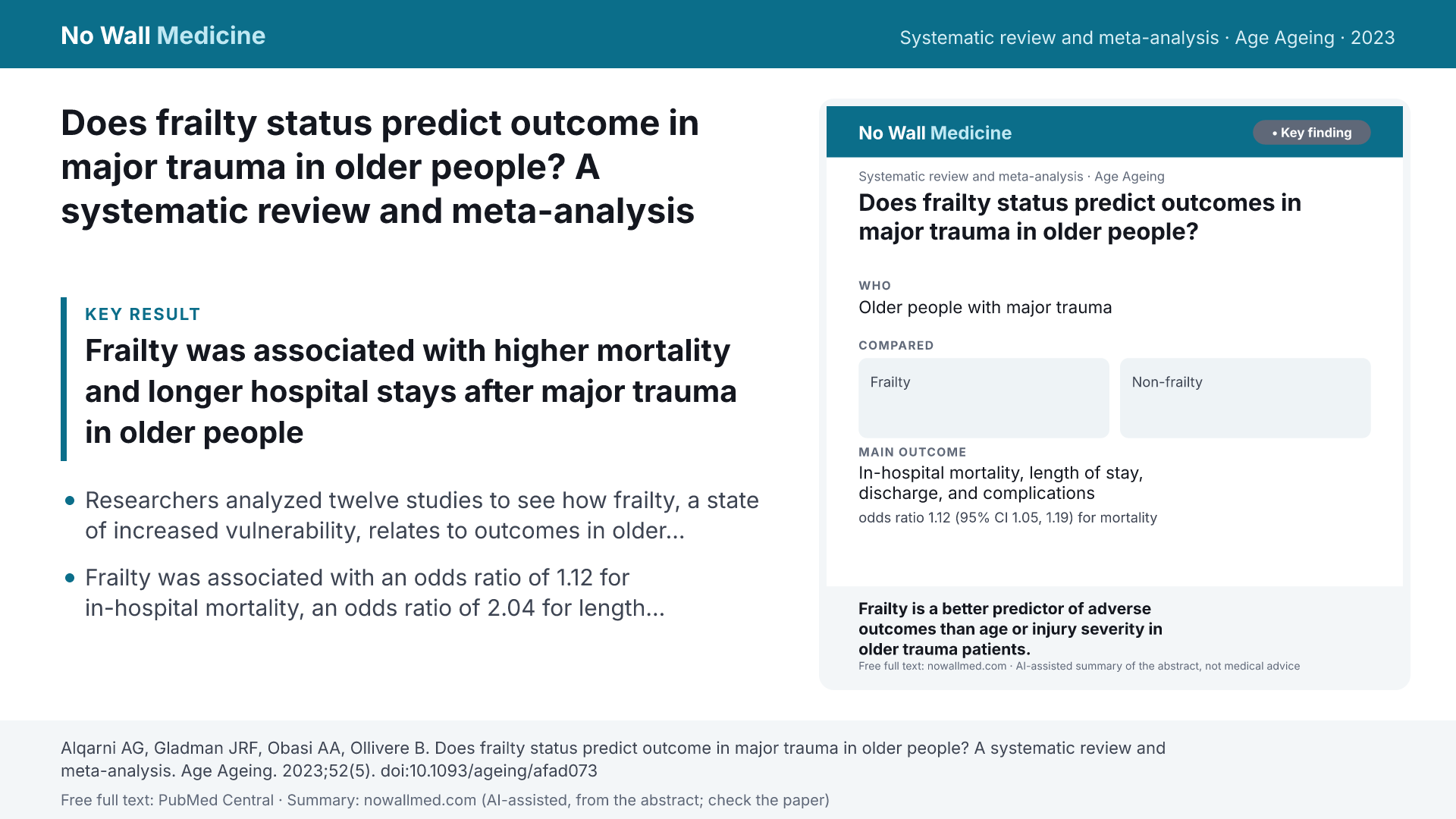
Frailty was associated with higher mortality and longer hospital stays after major trauma in older people
Does frailty status predict outcome in major trauma in older people? A systematic review and meta-analysis
Systematic review and meta-analysisBenefit found
Does frailty status predict outcomes in major trauma in older people?
Who
Older people with major trauma
Compared
Frailty
Non-frailty
Main outcome
In-hospital mortality, length of stay, discharge, and complications
Result: odds ratio 1.12 (95% CI 1.05, 1.19) for mortality
Bottom line: Frailty is a better predictor of adverse outcomes than age or injury severity in older trauma patients.
Age Ageing · 2023-05-29Download image
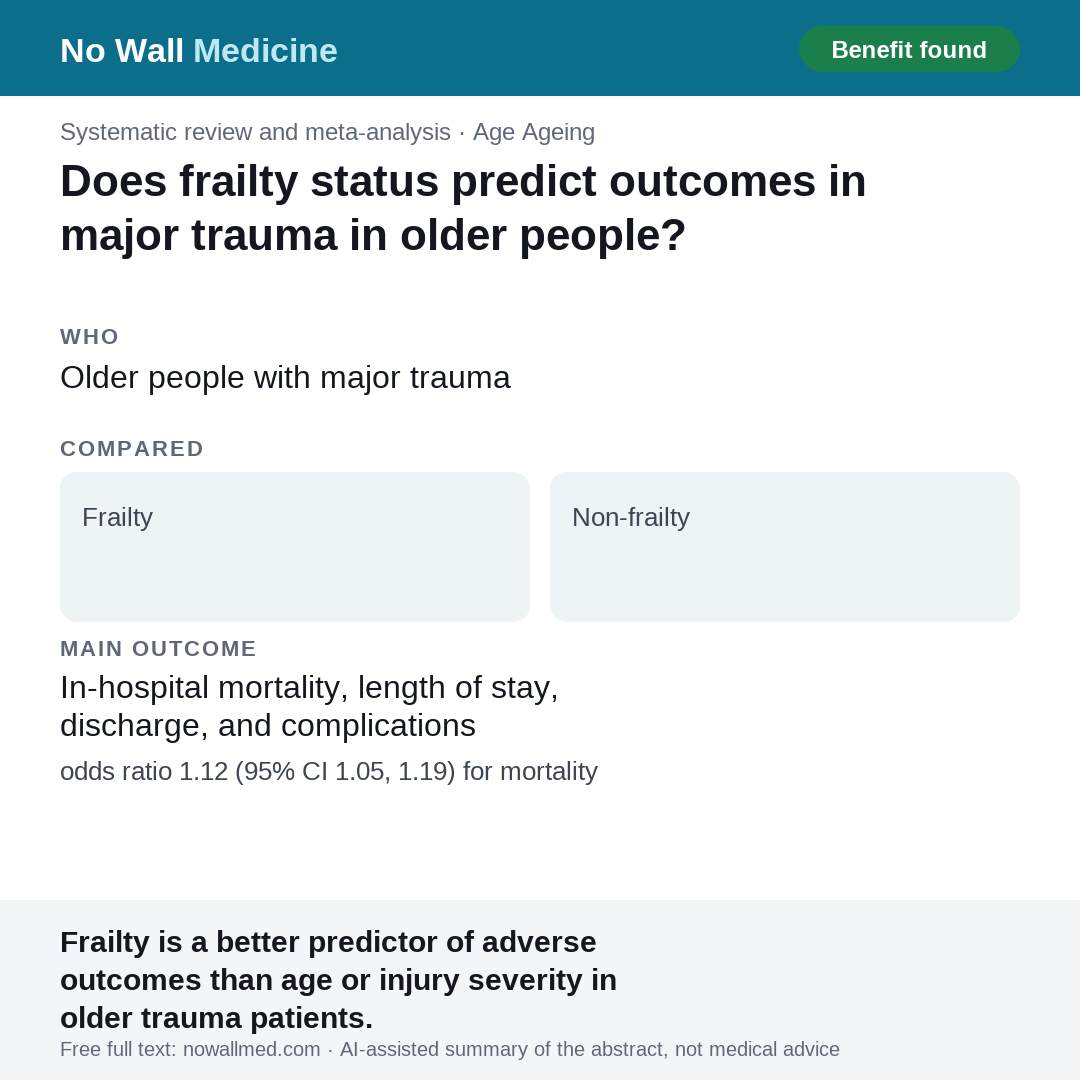
Clinical question: Does frailty status predict outcomes in major trauma in older people?
Why it matters: It was unknown if frailty status is a more accurate predictor of outcomes in older trauma patients than age or injury severity.
Key points
- Researchers analyzed twelve studies to see how frailty, a state of increased vulnerability, relates to outcomes in older people after major trauma.
- Frailty was associated with an odds ratio of 1.12 for in-hospital mortality, an odds ratio of 2.04 for length of stay, and an odds ratio of 1.17 for complications.
- In six studies using multivariate regression analysis, frailty was a more consistent predictor of mortality and adverse outcomes than age or injury severity.
Headline and key points written with AI from the paper’s abstract, with every number checked against it. Read the paper before relying on them.
Was this summary helpful?
Subject terms
Cite this article
Alqarni AG, Gladman JRF, Obasi AA, Ollivere B. Does frailty status predict outcome in major trauma in older people? A systematic review and meta-analysis. Age Ageing. 2023. doi:10.1093/ageing/afad073
Spotted a mistake? Suggest a correction