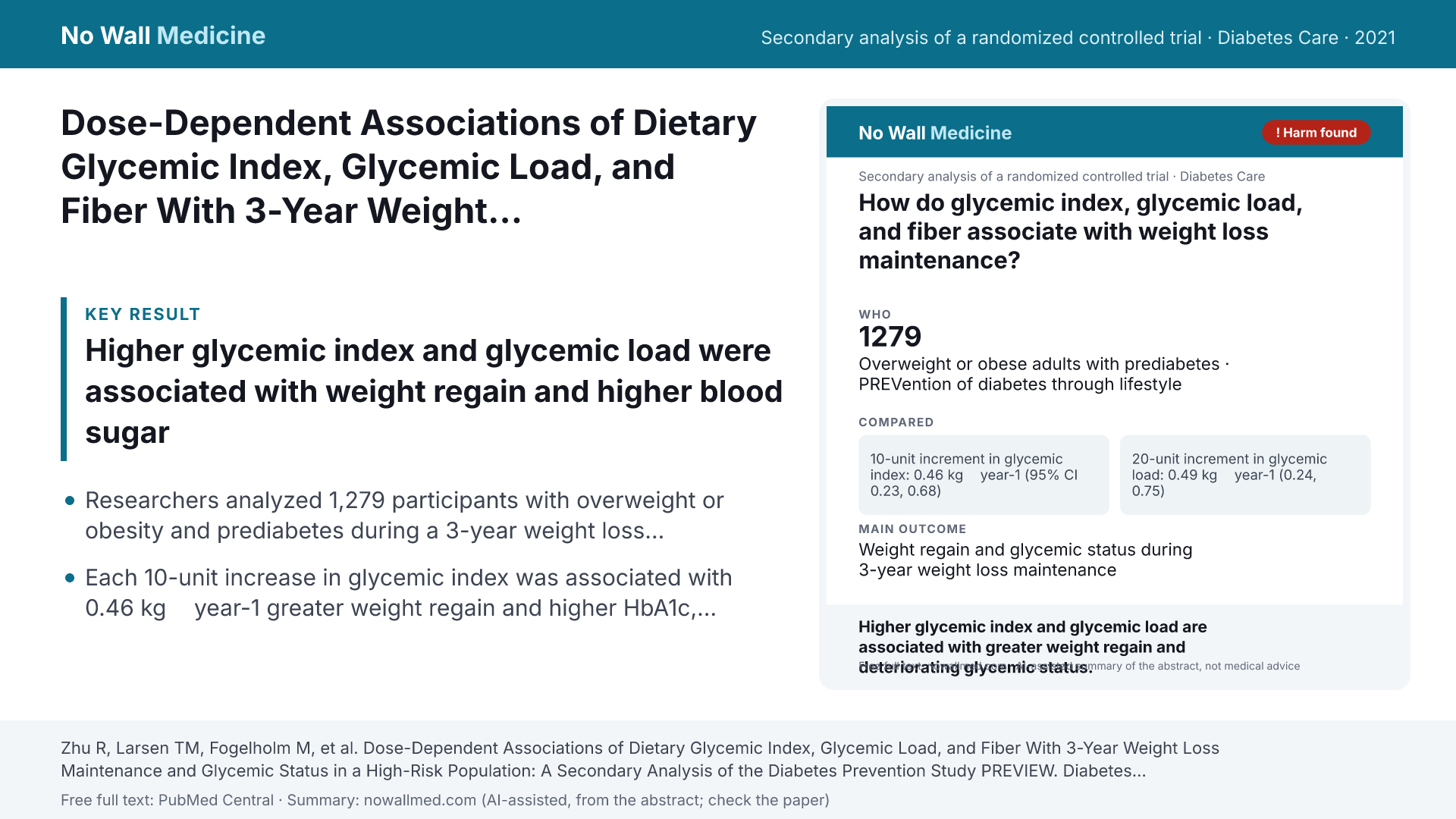
Higher glycemic index and glycemic load were associated with weight regain and higher blood sugar
Dose-Dependent Associations of Dietary Glycemic Index, Glycemic Load, and Fiber With 3-Year Weight Loss Maintenance and Glycemic Status in a High-Risk Population: A Secondary Analysis of the Diabetes Prevention Study PREVIEW
Secondary analysis of a randomized controlled trialHarm found
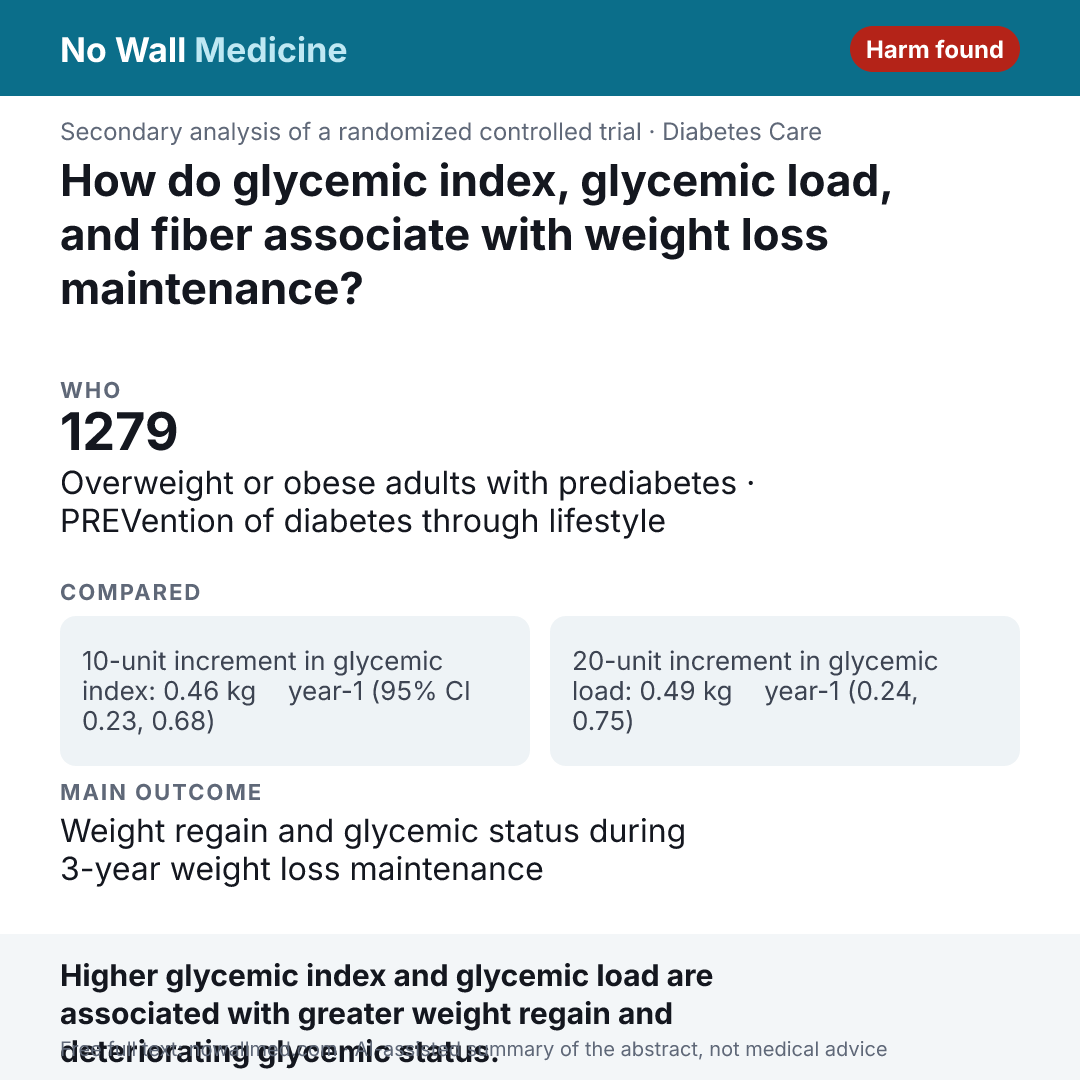
How do glycemic index, glycemic load, and fiber associate with weight loss maintenance?
Who
1279
Overweight or obese adults with prediabetes · PREVention of diabetes through lifestyle Intervention and population studies in Europe and around the World
Compared
10-unit increment in glycemic index: 0.46 kg ⋅ year-1 (95% CI 0.23, 0.68)
20-unit increment in glycemic load: 0.49 kg ⋅ year-1 (0.24, 0.75)
Main outcome
Weight regain and glycemic status during 3-year weight loss maintenance
Bottom line: Higher glycemic index and glycemic load are associated with greater weight regain and deteriorating glycemic status.
Diabetes Care · 2021-05-27 · Save PNG
Clinical question: How do glycemic index, glycemic load, and fiber associate with weight loss maintenance?
Key points
- Researchers analyzed 1,279 participants with overweight or obesity and prediabetes during a 3-year weight loss maintenance period.
- Each 10-unit increase in glycemic index was associated with 0.46 kg ⋅ year-1 greater weight regain and higher HbA1c, a measure of long-term blood sugar.
- Each 20-unit increase in glycemic load was associated with 0.49 kg ⋅ year-1 greater weight regain and higher HbA1c.
Headline and key points written with AI from the paper’s abstract, with every number checked against it. Read the paper before relying on them.
Was this summary helpful?
Subject terms
Headline, design, result, key points, caveat and citation as plain text.
Cite this article
Zhu R, Larsen TM, Fogelholm M, et al. Dose-Dependent Associations of Dietary Glycemic Index, Glycemic Load, and Fiber With 3-Year Weight Loss Maintenance and Glycemic Status in a High-Risk Population: A Secondary Analysis of the Diabetes Prevention Study PREVIEW. Diabetes Care. 2021;44(7):1672-1681. doi:10.2337/dc20-3092
Spotted a mistake? Suggest a correction