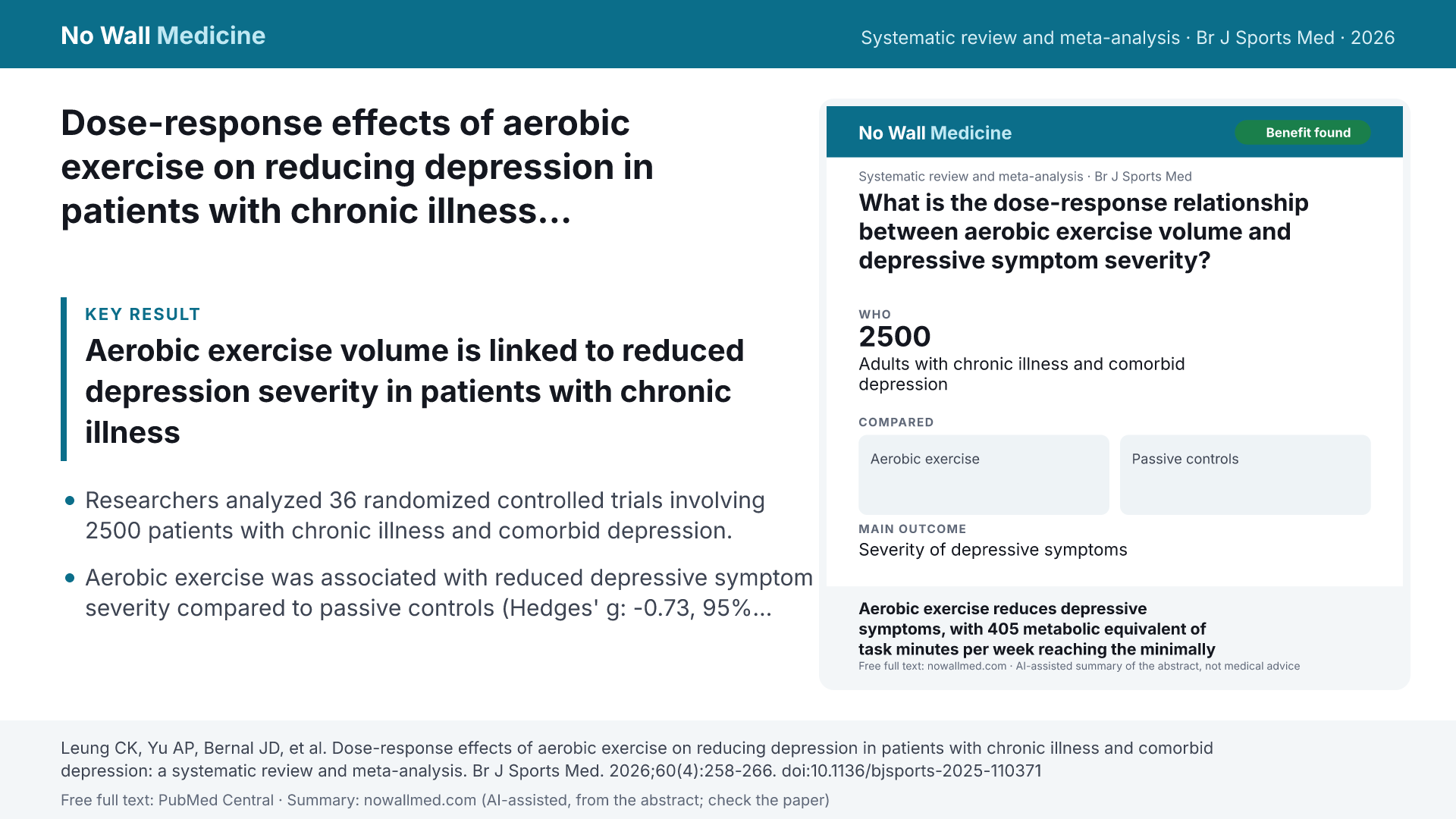
Dose-response effects of aerobic exercise on reducing depression in patients with chronic illness and comorbid depression: a systematic review and meta-analysis
Key result: Aerobic exercise volume is linked to reduced depression severity in patients with chronic illness
Key points
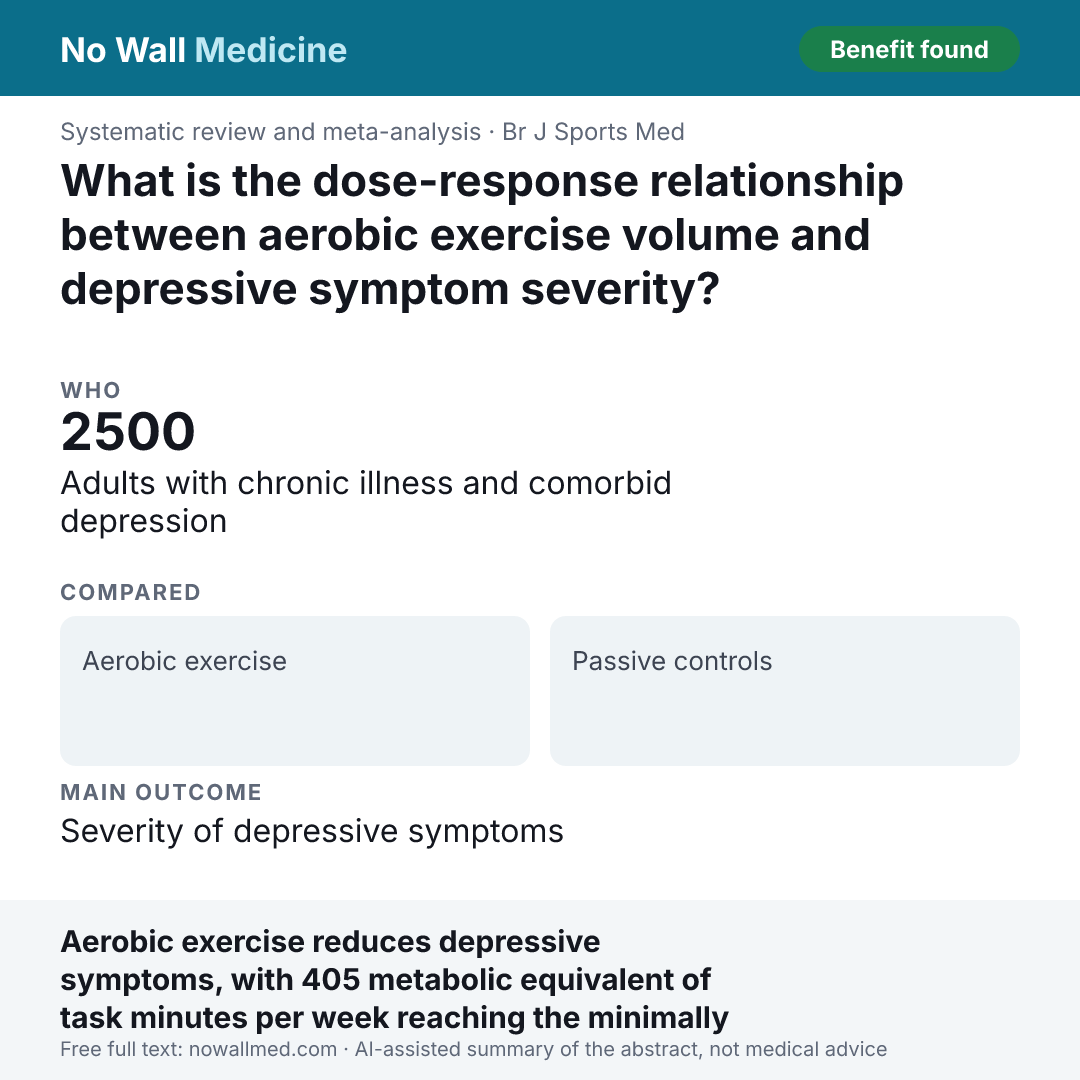
- Researchers analyzed 36 randomized controlled trials involving 2500 patients with chronic illness and comorbid depression.
- Aerobic exercise was associated with reduced depressive symptom severity compared to passive controls (Hedges' g: -0.73, 95% CI -0.99 to -0.46, p<0.001).
- A weekly volume of 405 MET-min/week, a measure of exercise intensity and duration, was associated with improvements perceived as important by patients.
Why it matters: Current exercise recommendations may not account for the limited functional capacity of patients with chronic illness and comorbid depression.
Discussion prompts
- Would these patients look like yours? Who was left out?
- Is the main outcome one that matters to patients?
- Is the difference large enough to change what you do?
Cite: Leung CK, Yu AP, Bernal JD, et al. Dose-response effects of aerobic exercise on reducing depression in patients with chronic illness and comorbid depression: a systematic review and meta-analysis. Br J Sports Med. 2026;60(4):258-266. doi:10.1136/bjsports-2025-110371
Free full text: PubMed Central · Summary and visual abstract: nowallmed.com/a/dose-response-effects-of-aerobic-exercise-on-reducing-depression-in-134u9dt/ (AI-assisted from the abstract; check the paper before relying on it).