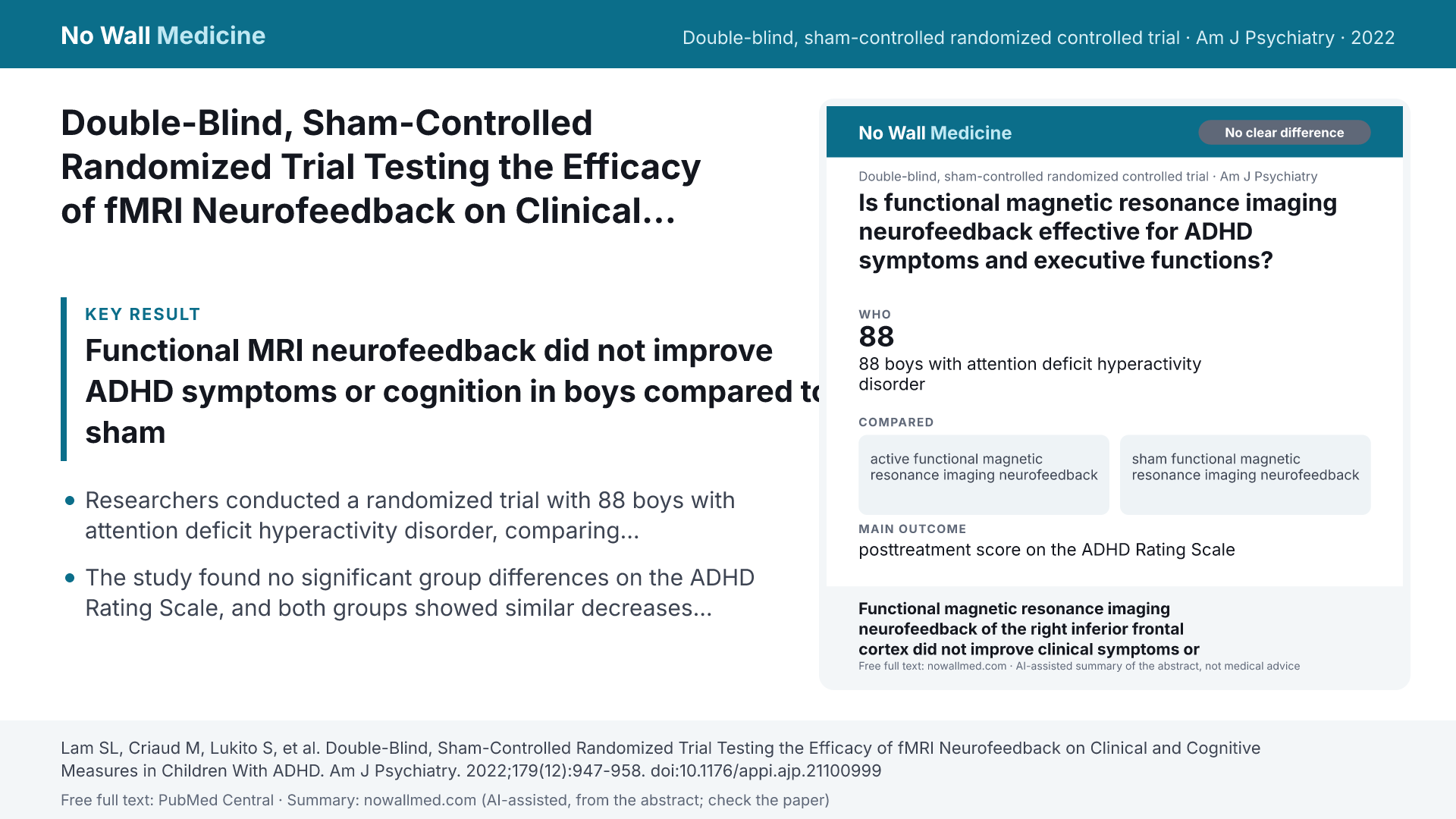
Double-Blind, Sham-Controlled Randomized Trial Testing the Efficacy of fMRI Neurofeedback on Clinical and Cognitive Measures in Children With ADHD
Key result: Functional MRI neurofeedback did not improve ADHD symptoms or cognition in boys compared to sham
Key points
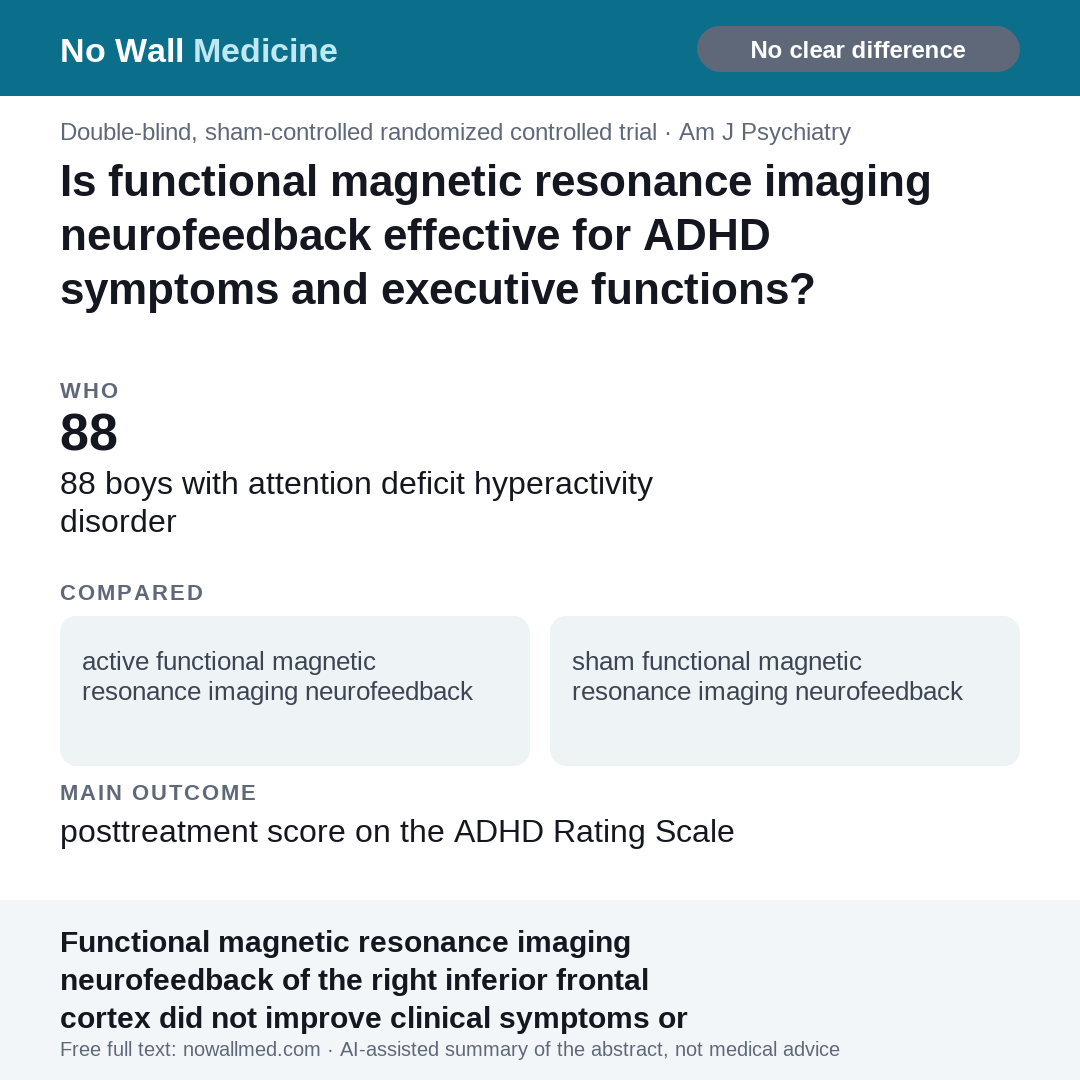
- Researchers conducted a randomized trial with 88 boys with attention deficit hyperactivity disorder, comparing functional magnetic resonance imaging neurofeedback to a sham or placebo condition.
- The study found no significant group differences on the ADHD Rating Scale, and both groups showed similar decreases in clinical and cognitive measures.
- The sham group showed a significantly greater decrease in irritability and improvement in motor inhibition compared to the active group at posttreatment assessment.
Why it matters: It was unknown if functional magnetic resonance imaging neurofeedback of the right inferior frontal cortex is more effective than a placebo for treating ADHD symptoms and executive functions.
Discussion prompts
- Would these patients look like yours? Who was left out?
- Is the main outcome one that matters to patients?
- Is the difference large enough to change what you do?
Cite: Lam SL, Criaud M, Lukito S, Westwood SJ, Agbedjro D, Kowalczyk OS. Double-Blind, Sham-Controlled Randomized Trial Testing the Efficacy of fMRI Neurofeedback on Clinical and Cognitive Measures in Children With ADHD. Am J Psychiatry. 2022. doi:10.1176/appi.ajp.21100999
Free full text: PubMed Central · Summary and visual abstract: nowallmed.com/a/double-blind-sham-controlled-randomized-trial-testing-the-efficacy-of-58wzx6/ (AI-assisted from the abstract; check the paper before relying on it).