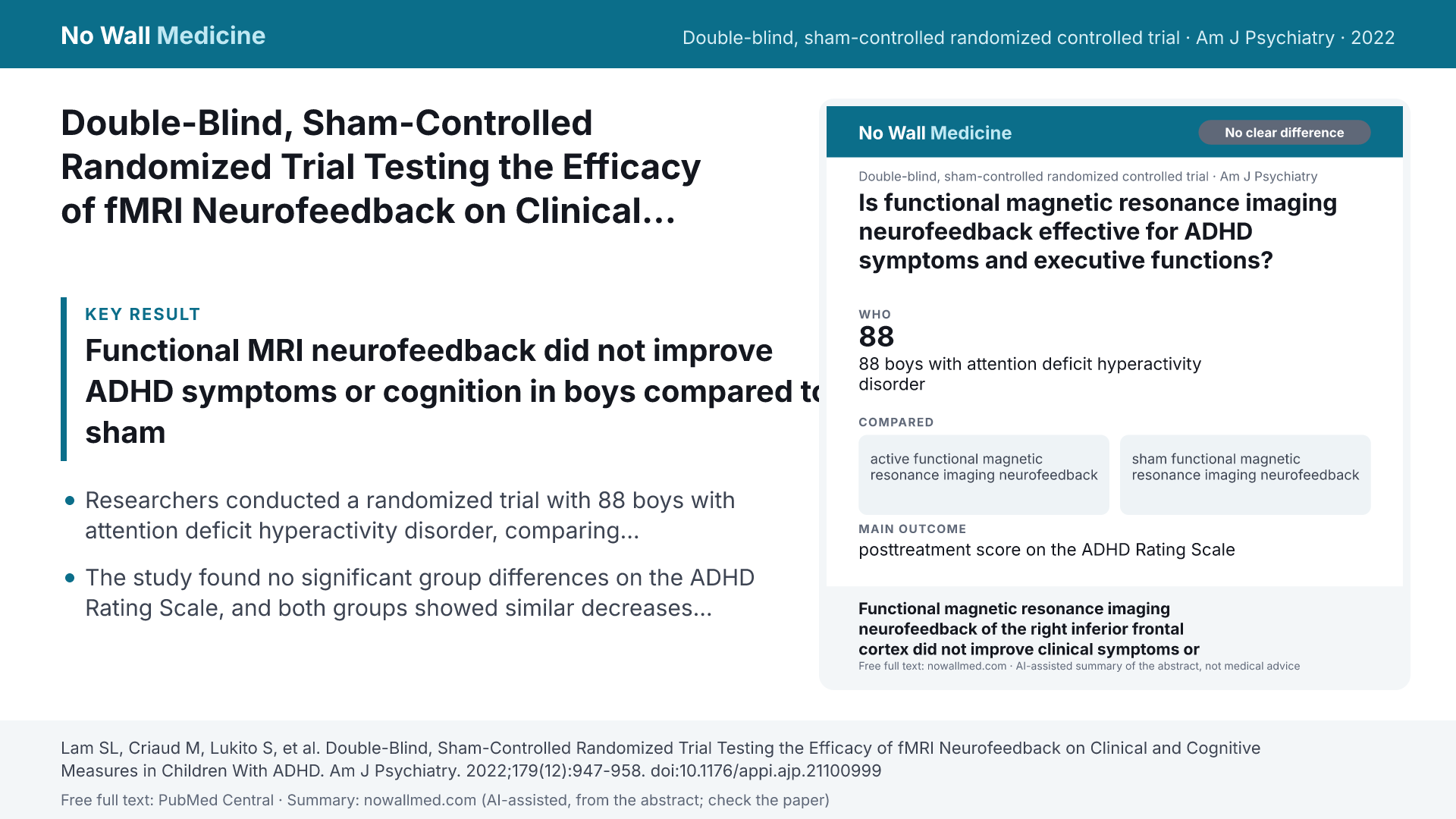
Functional MRI neurofeedback did not improve ADHD symptoms or cognition in boys compared to sham
Double-Blind, Sham-Controlled Randomized Trial Testing the Efficacy of fMRI Neurofeedback on Clinical and Cognitive Measures in Children With ADHD
Double-blind, sham-controlled randomized controlled trialNo clear difference
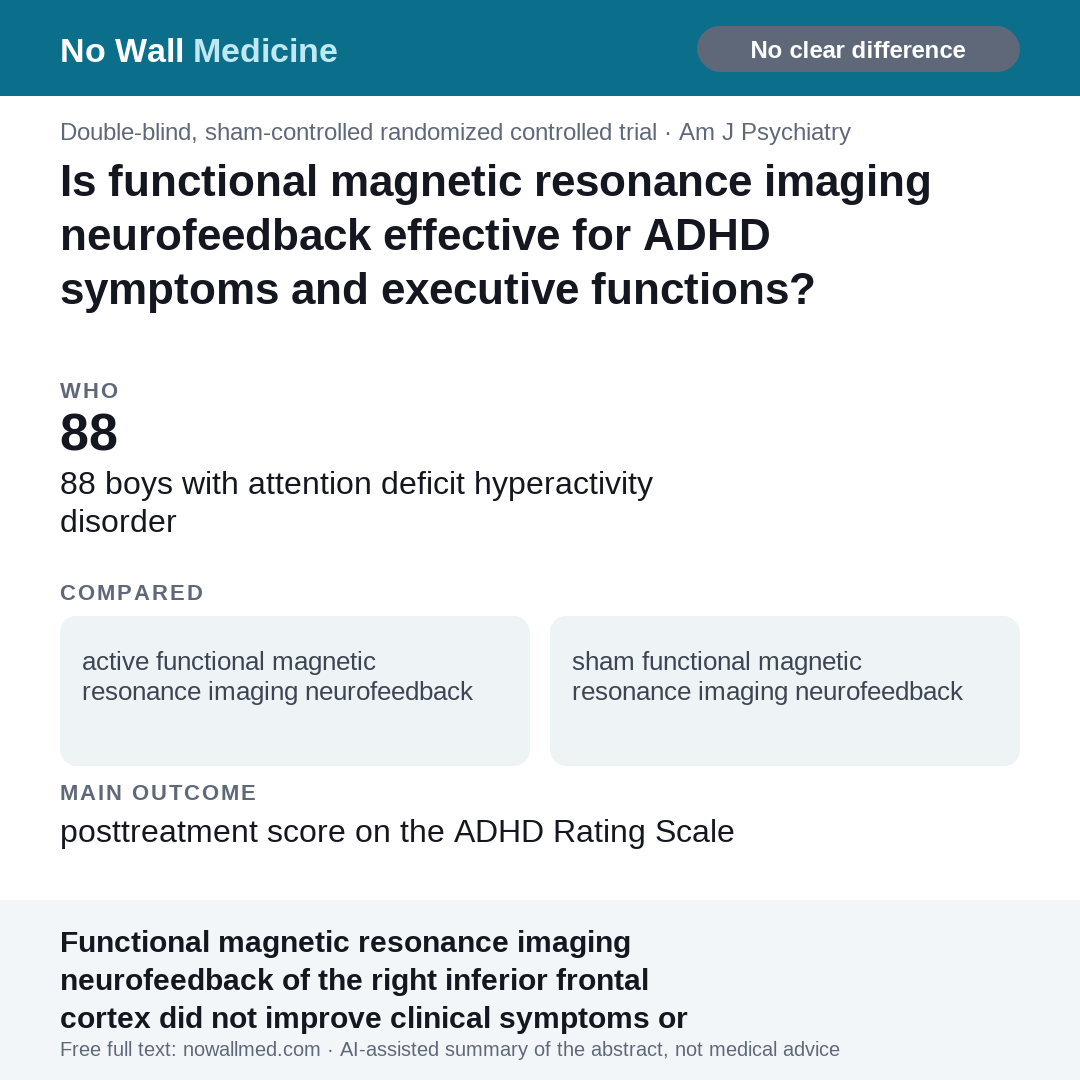
Is functional magnetic resonance imaging neurofeedback effective for ADHD symptoms and executive functions?
Who
88
88 boys with attention deficit hyperactivity disorder
Compared
active functional magnetic resonance imaging neurofeedback
sham functional magnetic resonance imaging neurofeedback
Main outcome
posttreatment score on the ADHD Rating Scale
Bottom line: Functional magnetic resonance imaging neurofeedback of the right inferior frontal cortex did not improve clinical symptoms or cognition.
Am J Psychiatry · 2022-11-09Download image
Clinical question: Is functional magnetic resonance imaging neurofeedback effective for ADHD symptoms and executive functions?
Why it matters: It was unknown if functional magnetic resonance imaging neurofeedback of the right inferior frontal cortex is more effective than a placebo for treating ADHD symptoms and executive functions.
Key points
- Researchers conducted a randomized trial with 88 boys with attention deficit hyperactivity disorder, comparing functional magnetic resonance imaging neurofeedback to a sham or placebo condition.
- The study found no significant group differences on the ADHD Rating Scale, and both groups showed similar decreases in clinical and cognitive measures.
- The sham group showed a significantly greater decrease in irritability and improvement in motor inhibition compared to the active group at posttreatment assessment.
Headline and key points written with AI from the paper’s abstract, with every number checked against it. Read the paper before relying on them.
Was this summary helpful?
Subject terms
Cite this article
Lam SL, Criaud M, Lukito S, Westwood SJ, Agbedjro D, Kowalczyk OS. Double-Blind, Sham-Controlled Randomized Trial Testing the Efficacy of fMRI Neurofeedback on Clinical and Cognitive Measures in Children With ADHD. Am J Psychiatry. 2022. doi:10.1176/appi.ajp.21100999
Spotted a mistake? Suggest a correction
Top studies every Monday
The week’s key trials and guidelines in your specialties, plus any topics you follow. By email, free.
Get the weekly digest