Diabetes medication increases norepinephrine without raising blood pressure during sustained ACE inhibitor treatment
DPP4 (Dipeptidyl Peptidase-4) Inhibition Increases Catecholamines Without Increasing Blood Pressure During Sustained ACE (Angiotensin-Converting Enzyme) Inhibitor Treatment
Randomized, double-blinded crossover studyMixed results
Does dipeptidyl peptidase-4 inhibition increase catecholamines without increasing blood pressure during sustained angiotensin-converting enzyme inhibition?
Who
100
Adults with type 2 diabetes and hypertension
Compared
Sitagliptin with ramipril: increased norepinephrine but did not increase blood pressure
Neutral comparator (valsartan or amlodipine)
Main outcome
norepinephrine levels and blood pressure
Bottom line: Dipeptidyl peptidase-4 inhibition increases norepinephrine during sustained angiotensin-converting enzyme inhibition without increasing blood pressure.
Hypertension · 2022-01-20Download image
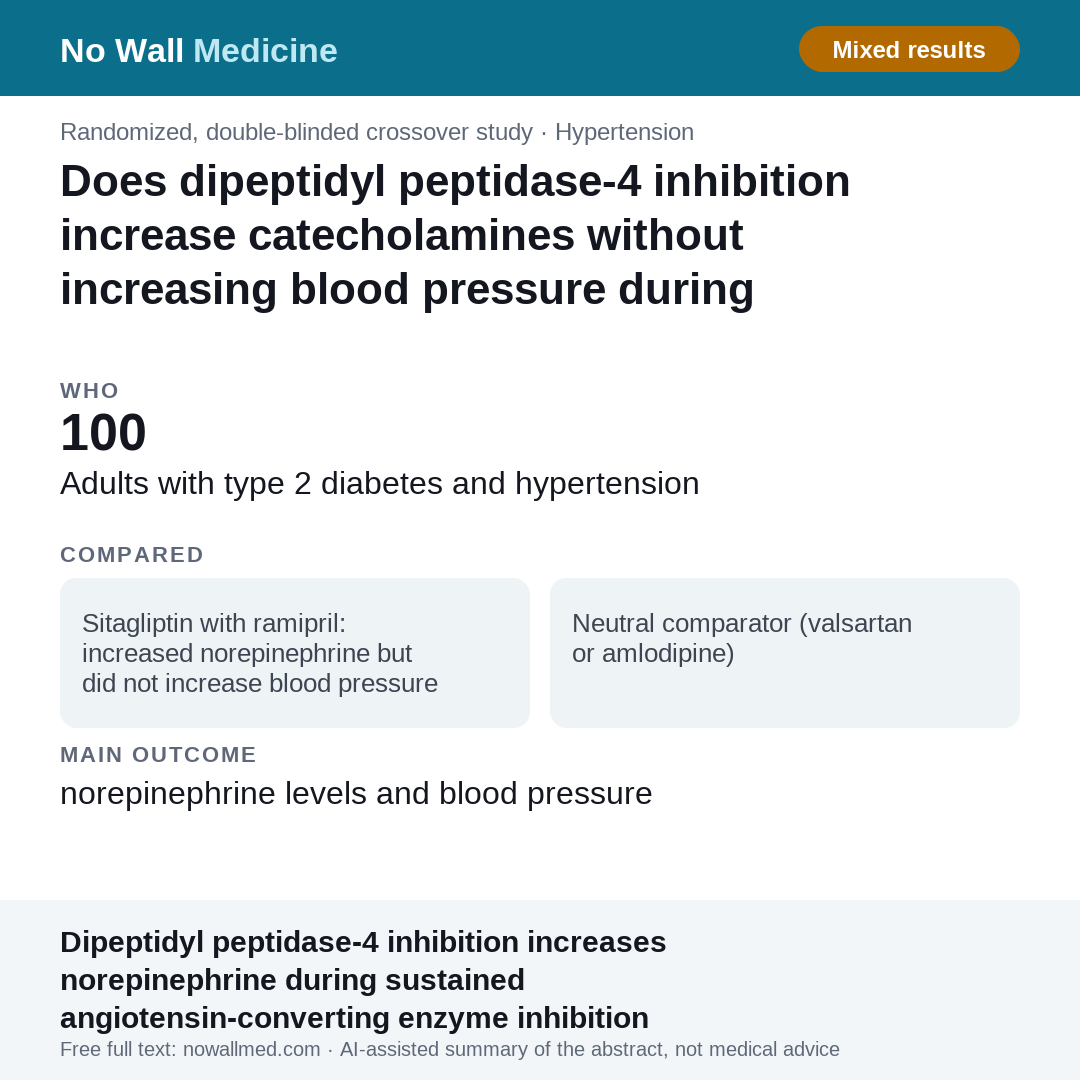
Clinical question: Does dipeptidyl peptidase-4 inhibition increase catecholamines without increasing blood pressure during sustained angiotensin-converting enzyme inhibition?
Why it matters: It was unknown if dipeptidyl peptidase-4 inhibition affects catecholamine levels and blood pressure during long-term treatment with angiotensin-converting enzyme inhibitors.
Key points
- The study involved 106 adults with type 2 diabetes and hypertension who were randomized to receive ramipril, valsartan, or amlodipine for 15 weeks.
- Dipeptidyl peptidase-4 inhibition increased norepinephrine during ramipril treatment but did not increase blood pressure.
- The substance P receptor blocker aprepitant lowered standing heart rate during renin-angiotensin-aldosterone system blockade with ramipril or valsartan.
Headline and key points written with AI from the paper’s abstract, with every number checked against it. Read the paper before relying on them.
Was this summary helpful?
Subject terms
Cite this article
Wilson JR, Garner EM, Mashayekhi M, Hubers SA, Ramirez Bustamante CE, Kerman SJ. DPP4 (Dipeptidyl Peptidase-4) Inhibition Increases Catecholamines Without Increasing Blood Pressure During Sustained ACE (Angiotensin-Converting Enzyme) Inhibitor Treatment. Hypertension. 2022. doi:10.1161/HYPERTENSIONAHA.121.18348
Spotted a mistake? Suggest a correction
Top studies every Monday
The week’s key trials and guidelines in your specialties, plus any topics you follow. By email, free.
Get the weekly digest