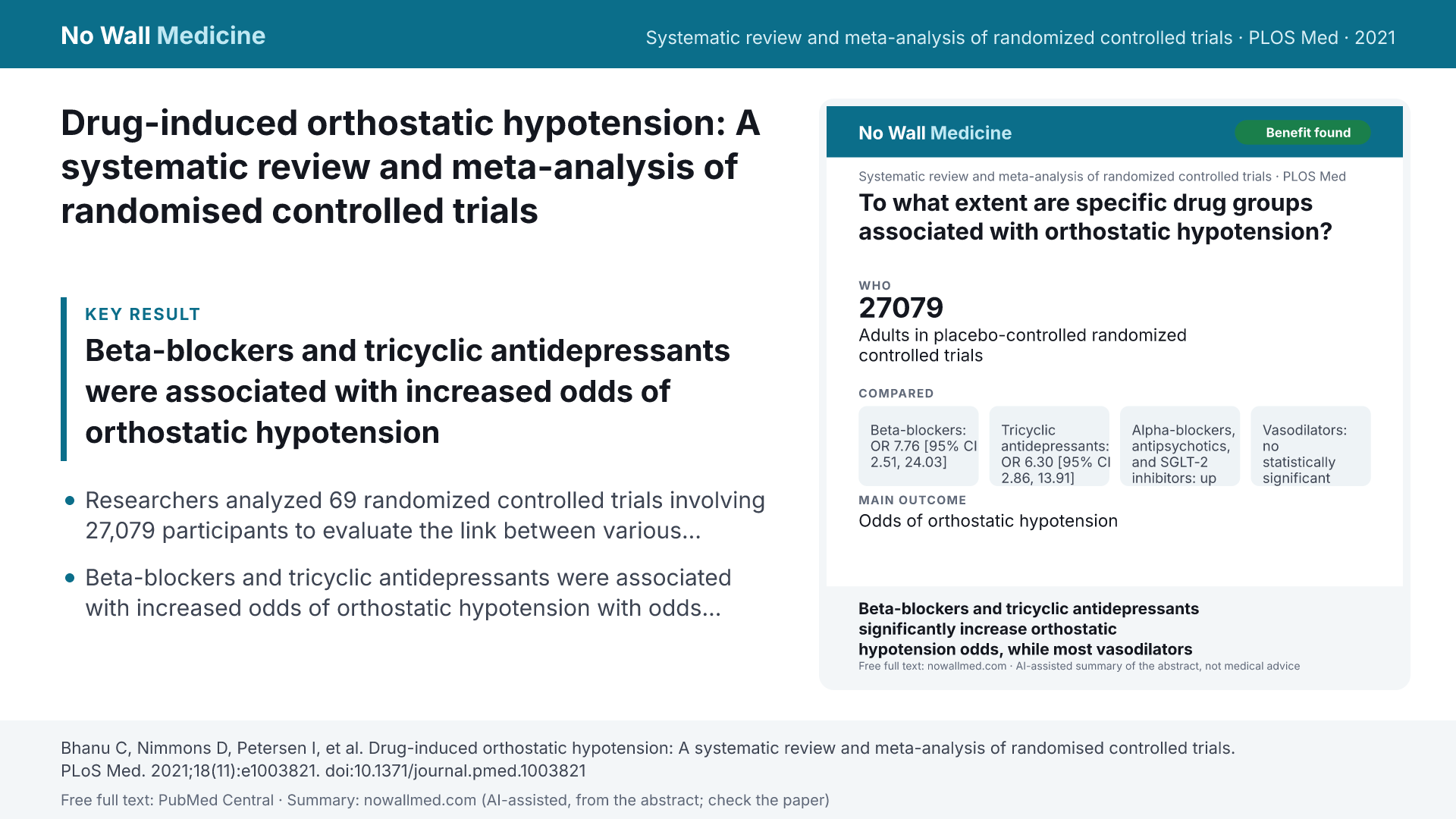
Beta-blockers and tricyclic antidepressants were associated with increased odds of orthostatic hypotension
Drug-induced orthostatic hypotension: A systematic review and meta-analysis of randomised controlled trials
Systematic review and meta-analysis of randomized controlled trialsBenefit found
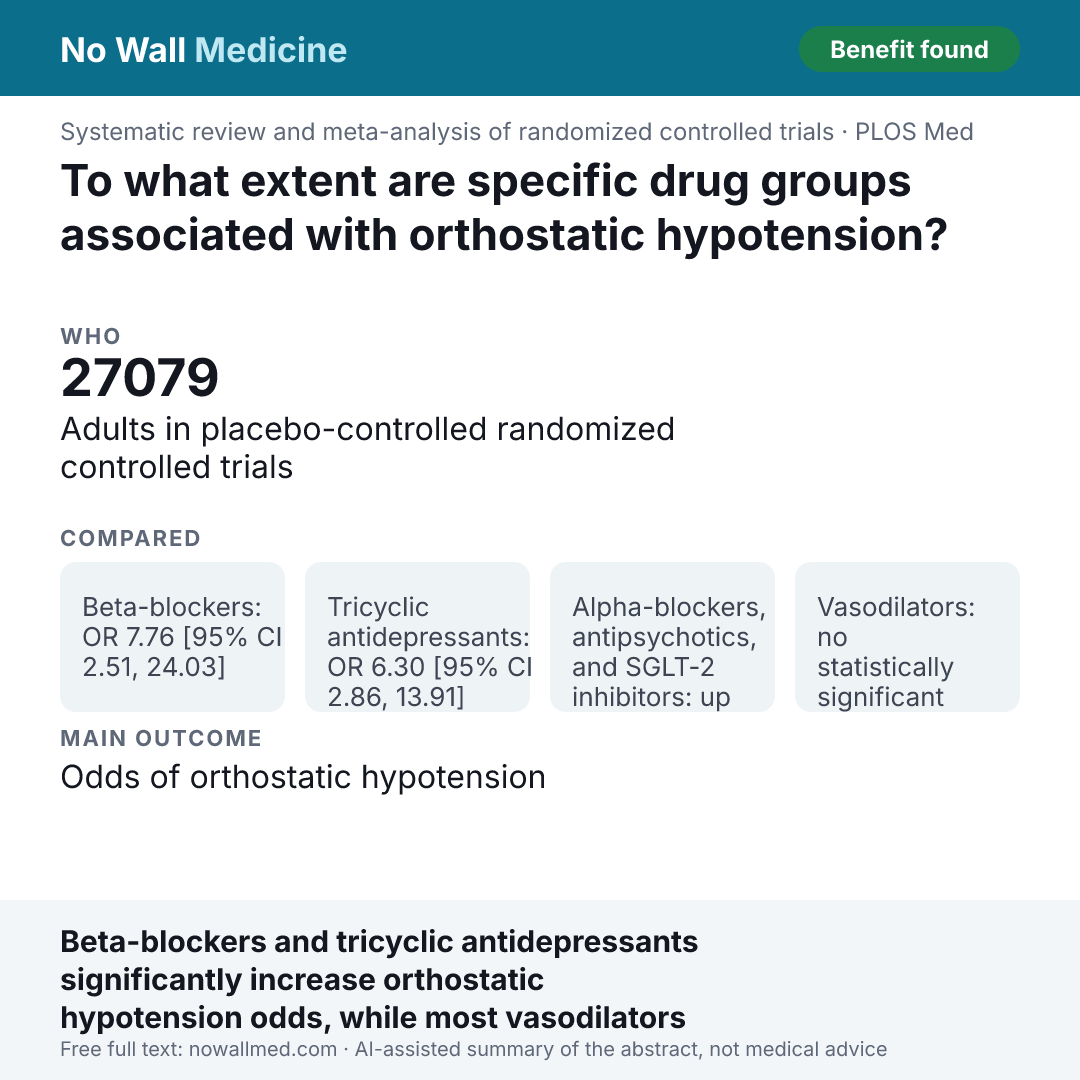
To what extent are specific drug groups associated with orthostatic hypotension?
Who
27079
Adults in placebo-controlled randomized controlled trials
Compared
Beta-blockers: OR 7.76 [95% CI 2.51, 24.03]
Tricyclic antidepressants: OR 6.30 [95% CI 2.86, 13.91]
Alpha-blockers, antipsychotics, and SGLT-2 inhibitors: up to 2-fold increased odds
Vasodilators: no statistically significant difference
Main outcome
Odds of orthostatic hypotension
Bottom line: Beta-blockers and tricyclic antidepressants significantly increase orthostatic hypotension odds, while most vasodilators show no significant difference.
Limitation: Data limited to placebo-controlled studies and many trials excluded older participants.
PLOS Med · 2021-11-09 · Save PNG
Clinical question: To what extent are specific drug groups associated with orthostatic hypotension?
Key points
- Researchers analyzed 69 randomized controlled trials involving 27,079 participants to evaluate the link between various drug groups and orthostatic hypotension, which is a sudden drop in blood pressure when standing up.
- Beta-blockers and tricyclic antidepressants were associated with increased odds of orthostatic hypotension with odds ratios of 7.76 and 6.30 respectively, while alpha-blockers, antipsychotics, and SGLT-2 inhibitors showed up to 2-fold increased odds.
- No statistically significant difference in the odds of orthostatic hypotension was found for vasodilators such as calcium channel blockers, ACE inhibitors, angiotensin receptor blockers, or SSRIs compared to placebo.
Limitation the authors note: The data were limited to placebo-controlled studies and many trials excluded older participants, meaning results may be amplified in older patients in clinical settings.
Headline and key points written with AI from the paper’s abstract, with every number checked against it. Read the paper before relying on them.
Was this summary helpful?
Subject terms
Headline, design, result, key points, caveat and citation as plain text.
Cite this article
Bhanu C, Nimmons D, Petersen I, et al. Drug-induced orthostatic hypotension: A systematic review and meta-analysis of randomised controlled trials. PLoS Med. 2021;18(11):e1003821. doi:10.1371/journal.pmed.1003821
Spotted a mistake? Suggest a correction