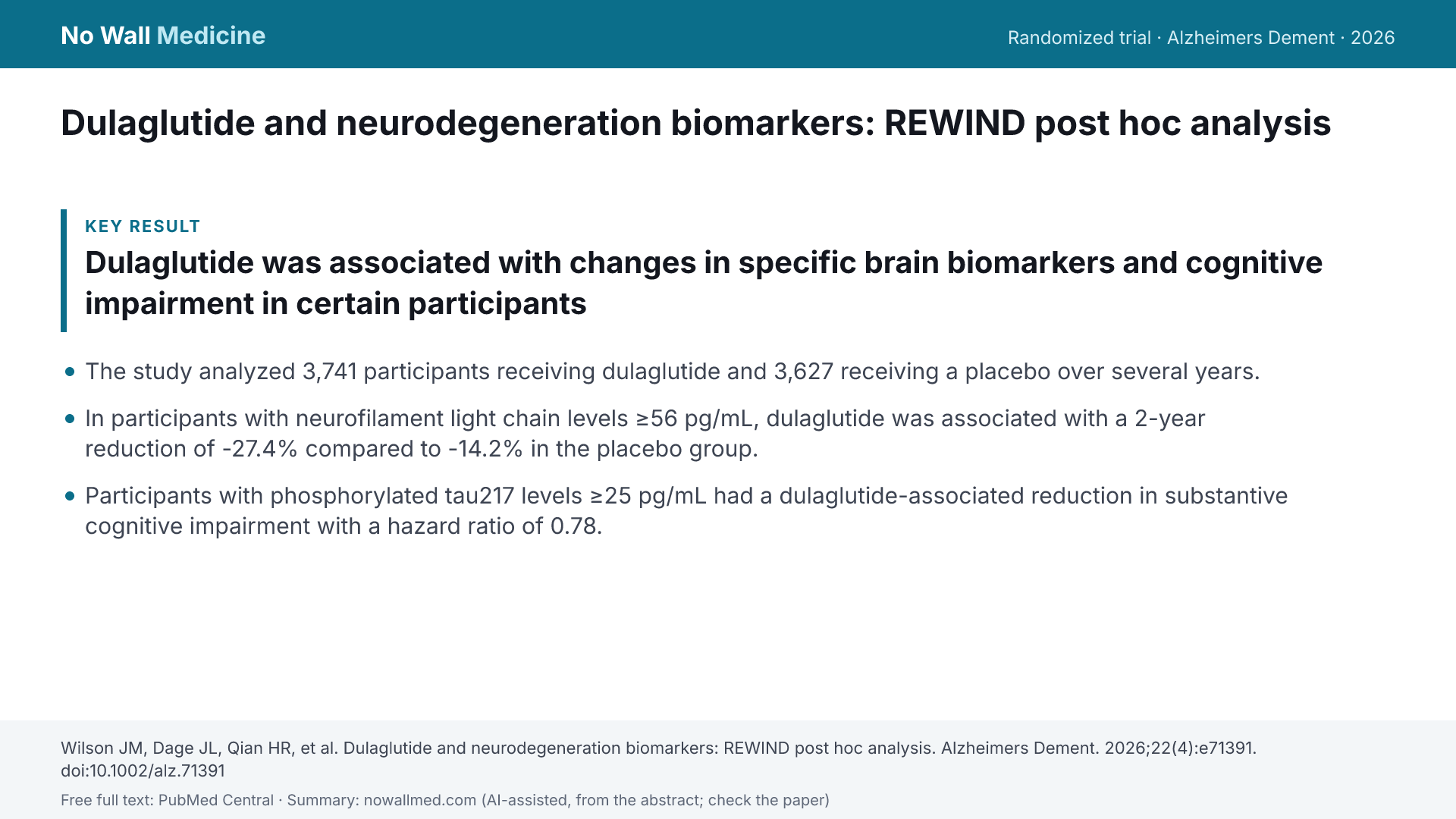
Dulaglutide was associated with changes in specific brain biomarkers and cognitive impairment in certain participants
Dulaglutide and neurodegeneration biomarkers: REWIND post hoc analysis
Same trial (NCT01394952)
Papers we list that report this registered trial, oldest first. Read a secondary analysis alongside the main results.
- Secondary analysis Benefit found
Dulaglutide was associated with fewer total cardiovascular or fatal events in people with type 2 diabetes Cardiovasc Diabetol 2020-11 - Secondary analysis Benefit found
Changes in blood sugar and urine protein levels partly explain dulaglutide cardiovascular benefits Cardiovasc Diabetol 2021-09 - Secondary analysis
This paper Alzheimers Dement 2026-04
Key points
- The study analyzed 3,741 participants receiving dulaglutide and 3,627 receiving a placebo over several years.
- In participants with neurofilament light chain levels ≥56 pg/mL, dulaglutide was associated with a 2-year reduction of -27.4% compared to -14.2% in the placebo group.
- Participants with phosphorylated tau217 levels ≥25 pg/mL had a dulaglutide-associated reduction in substantive cognitive impairment with a hazard ratio of 0.78.
Limitation the authors note: The authors suggest that future studies with longer follow-up are needed to explore cognitive changes.
Headline and key points written with AI from the paper’s abstract, with every number checked against it. Read the paper before relying on them.
Was this summary helpful?
Subject terms
Headline, design, result, key points, caveat and citation as plain text.
Cite this article
Wilson JM, Dage JL, Qian HR, et al. Dulaglutide and neurodegeneration biomarkers: REWIND post hoc analysis. Alzheimers Dement. 2026;22(4):e71391. doi:10.1002/alz.71391
Spotted a mistake? Suggest a correction