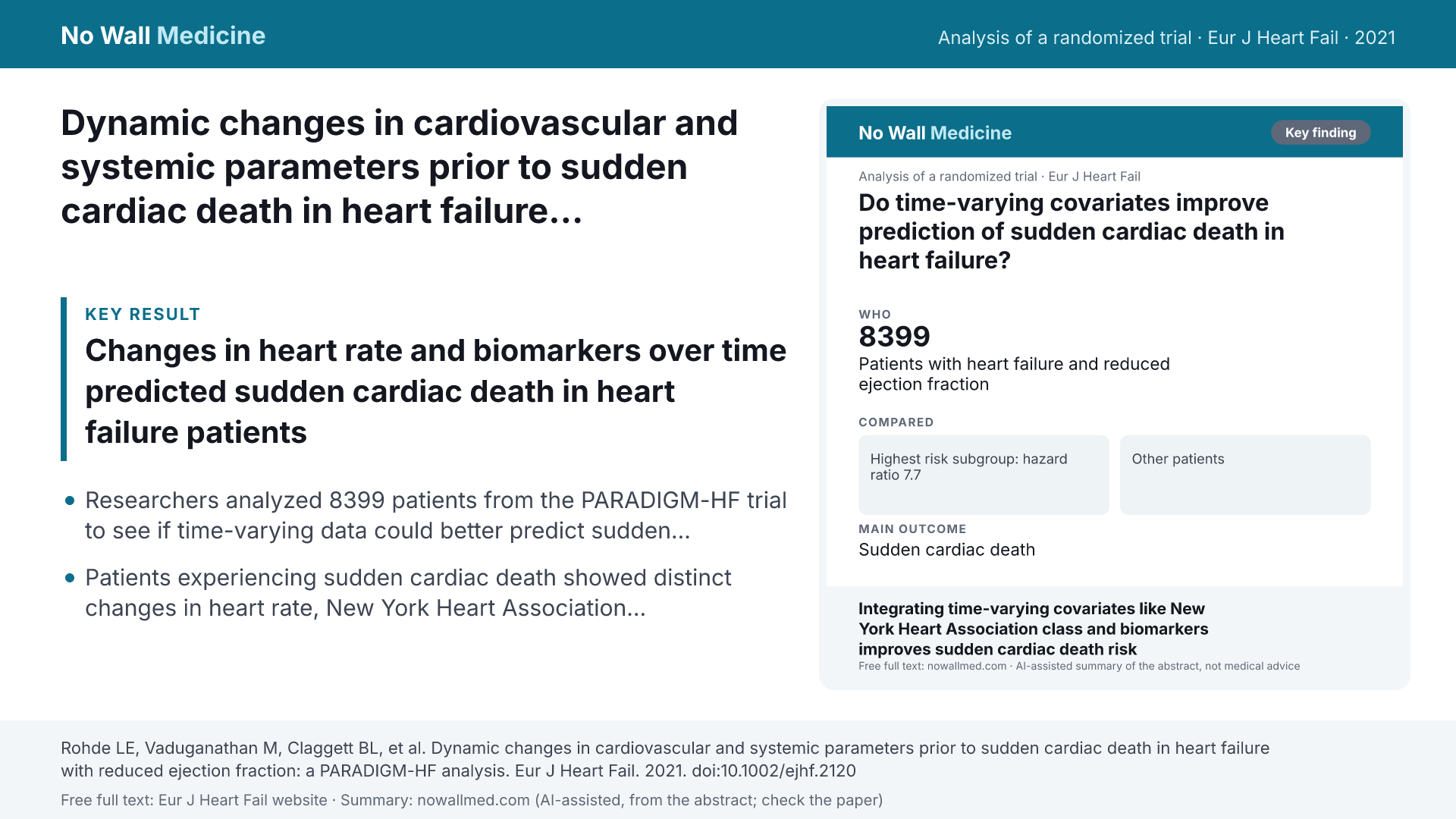
Dynamic changes in cardiovascular and systemic parameters prior to sudden cardiac death in heart failure with reduced ejection fraction: a PARADIGM-HF analysis
Key result: Changes in heart rate and biomarkers over time predicted sudden cardiac death in heart failure patients
Key points
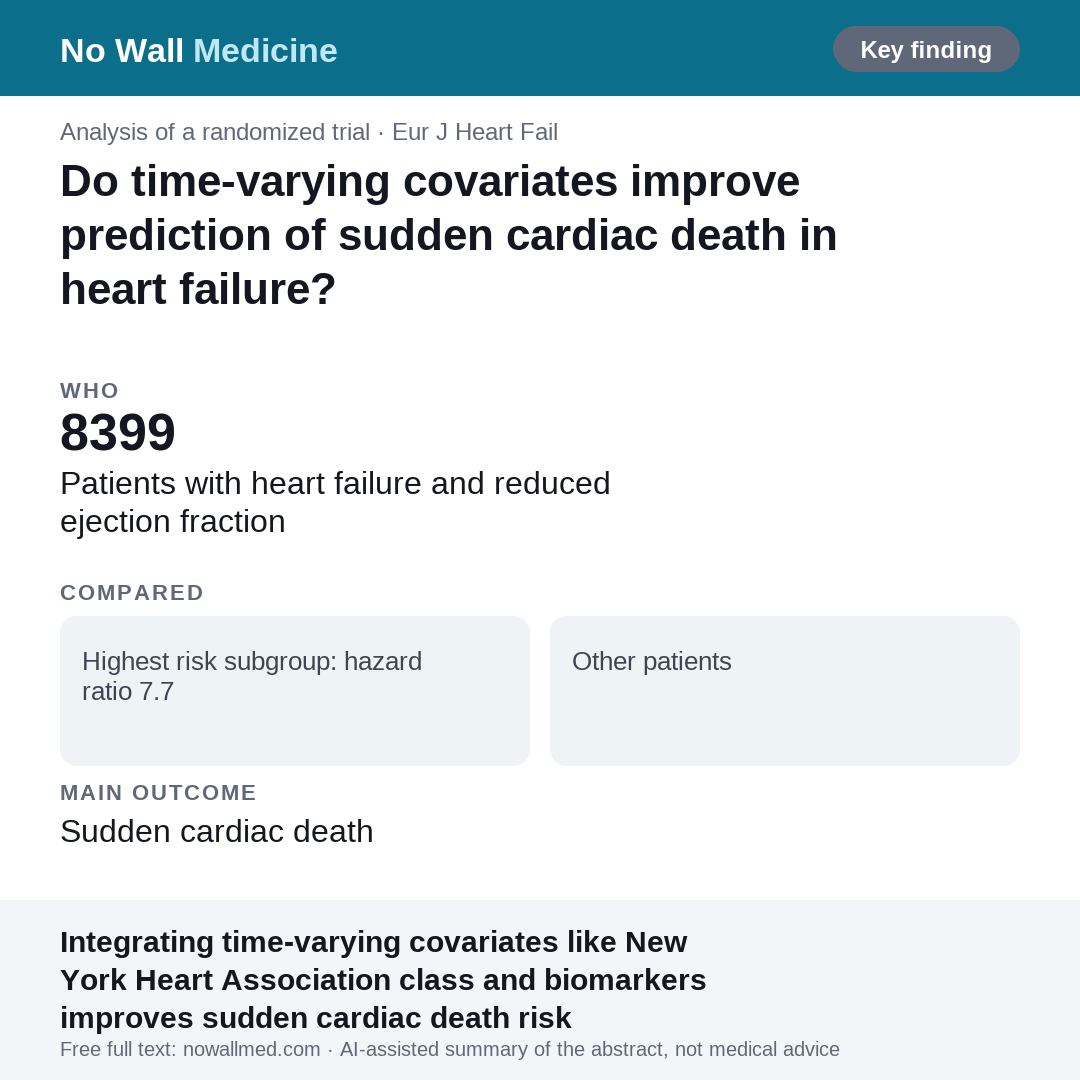
- Researchers analyzed 8399 patients from the PARADIGM-HF trial to see if time-varying data could better predict sudden cardiac death, which accounted for 561 deaths.
- Patients experiencing sudden cardiac death showed distinct changes in heart rate, New York Heart Association functional class, albumin, uric acid, and total bilirubin levels more than 1 year before the event.
- A high-risk subgroup identified by classification and regression tree analysis showed a hazard ratio of 7.7 for sudden cardiac death.
Why it matters: Prognostic models for sudden cardiac death typically use data from only a single time-point rather than tracking how health markers change over time.
Discussion prompts
- Would these patients look like yours? Who was left out?
- Is the main outcome one that matters to patients?
- Is the difference large enough to change what you do?
Cite: Rohde LE, Vaduganathan M, Claggett BL, et al. Dynamic changes in cardiovascular and systemic parameters prior to sudden cardiac death in heart failure with reduced ejection fraction: a PARADIGM-HF analysis. Eur J Heart Fail. 2021. doi:10.1002/ejhf.2120
Free full text: Eur J Heart Fail website · Summary and visual abstract: nowallmed.com/a/dynamic-changes-in-cardiovascular-and-systemic-parameters-prior-to-vdw370/ (AI-assisted from the abstract; check the paper before relying on it).