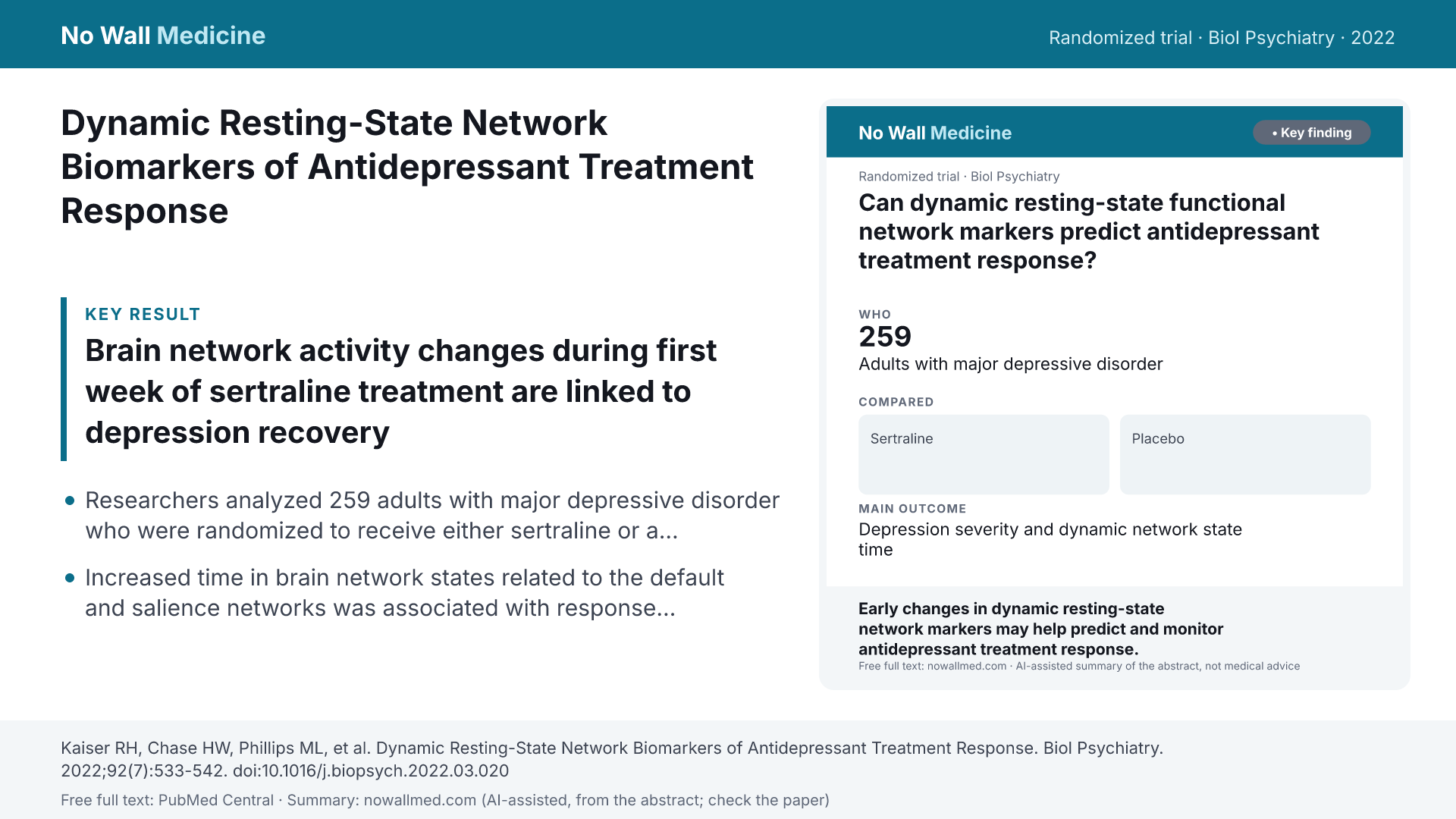
Brain network activity changes during first week of sertraline treatment are linked to depression recovery
Dynamic Resting-State Network Biomarkers of Antidepressant Treatment Response
Randomized trialKey finding
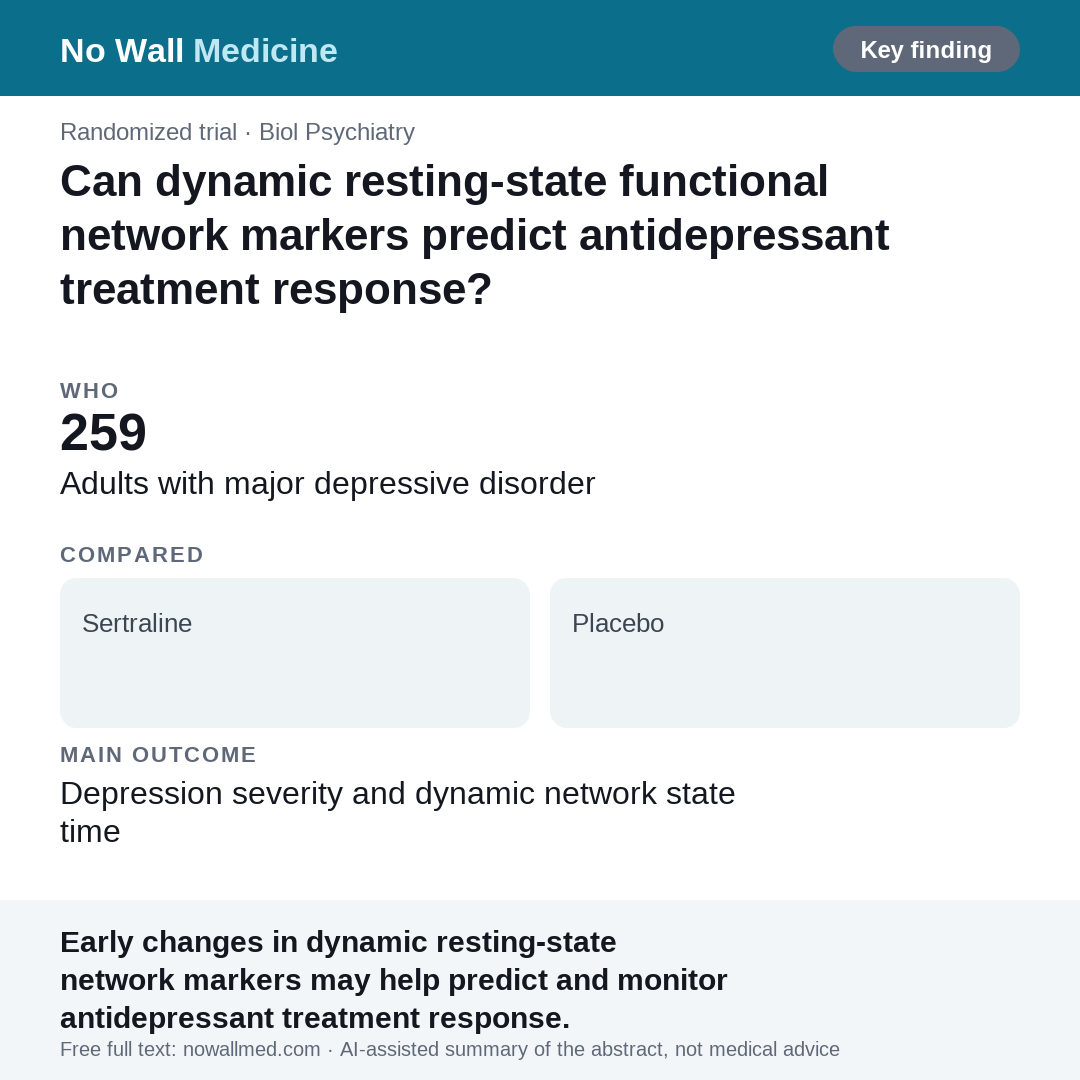
Can dynamic resting-state functional network markers predict antidepressant treatment response?
Who
259
Adults with major depressive disorder
Compared
Sertraline
Placebo
Main outcome
Depression severity and dynamic network state time
Bottom line: Early changes in dynamic resting-state network markers may help predict and monitor antidepressant treatment response.
Biol Psychiatry · 2022-04-06Download image
Clinical question: Can dynamic resting-state functional network markers predict antidepressant treatment response?
Why it matters: A lack of objective tools makes it difficult to predict or monitor how patients will respond to antidepressant treatment.
Key points
- Researchers analyzed 259 adults with major depressive disorder who were randomized to receive either sertraline or a placebo for 8 weeks.
- Increased time in brain network states related to the default and salience networks was associated with response to sertraline.
- Changes in the dynamic functioning of corticolimbic and frontoinsular-default networks were associated with symptom recovery patterns common across both treatment groups.
Headline and key points written with AI from the paper’s abstract, with every number checked against it. Read the paper before relying on them.
Was this summary helpful?
Subject terms
Headline, design, result, key points, caveat and citation as plain text.
Cite this article
Kaiser RH, Chase HW, Phillips ML, et al. Dynamic Resting-State Network Biomarkers of Antidepressant Treatment Response. Biol Psychiatry. 2022. doi:10.1016/j.biopsych.2022.03.020
Spotted a mistake? Suggest a correction