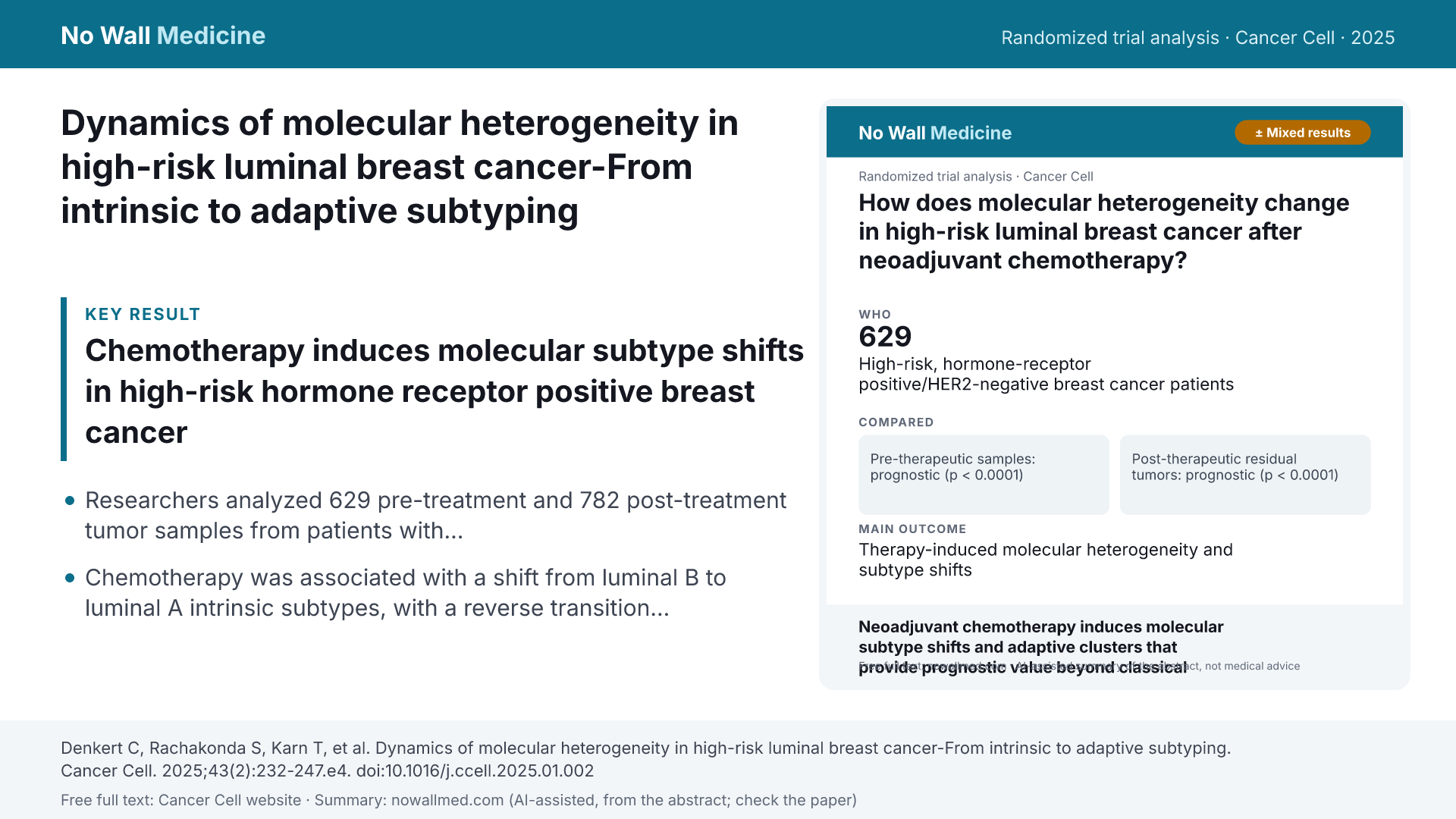
Chemotherapy induces molecular subtype shifts in high-risk hormone receptor positive breast cancer
Dynamics of molecular heterogeneity in high-risk luminal breast cancer-From intrinsic to adaptive subtyping
Randomized trial analysisMixed results
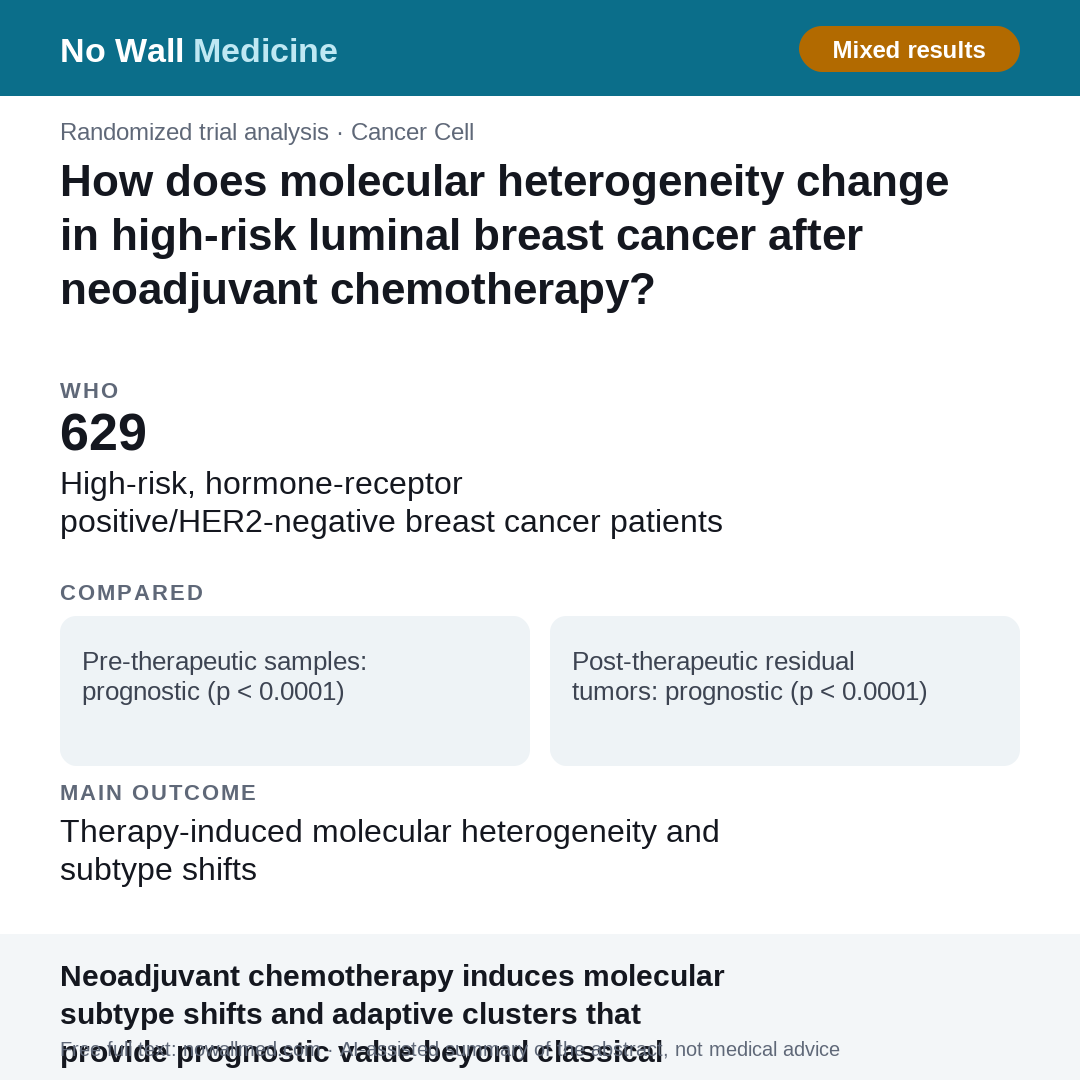
How does molecular heterogeneity change in high-risk luminal breast cancer after neoadjuvant chemotherapy?
Who
629
High-risk, hormone-receptor positive/HER2-negative breast cancer patients · Penelope-B trial
Compared
Pre-therapeutic samples: prognostic (p < 0.0001)
Post-therapeutic residual tumors: prognostic (p < 0.0001)
Main outcome
Therapy-induced molecular heterogeneity and subtype shifts
Bottom line: Neoadjuvant chemotherapy induces molecular subtype shifts and adaptive clusters that provide prognostic value beyond classical subtyping.
Cancer Cell · 2025-02-12Download image
Clinical question: How does molecular heterogeneity change in high-risk luminal breast cancer after neoadjuvant chemotherapy?
Key points
- Researchers analyzed 629 pre-treatment and 782 post-treatment tumor samples from patients with hormone-receptor positive/HER2-negative breast cancer.
- Chemotherapy was associated with a shift from luminal B to luminal A intrinsic subtypes, with a reverse transition to luminal B in metastases.
- Five adaptive clusters based on transcriptomic changes were identified, which were prognostic for different levels of patient outcomes.
Headline and key points written with AI from the paper’s abstract, with every number checked against it. Read the paper before relying on them.
Was this summary helpful?
Subject terms
Headline, design, result, key points, caveat and citation as plain text.
Cite this article
Denkert C, Rachakonda S, Karn T, et al. Dynamics of molecular heterogeneity in high-risk luminal breast cancer-From intrinsic to adaptive subtyping. Cancer Cell. 2025. doi:10.1016/j.ccell.2025.01.002
Spotted a mistake? Suggest a correction