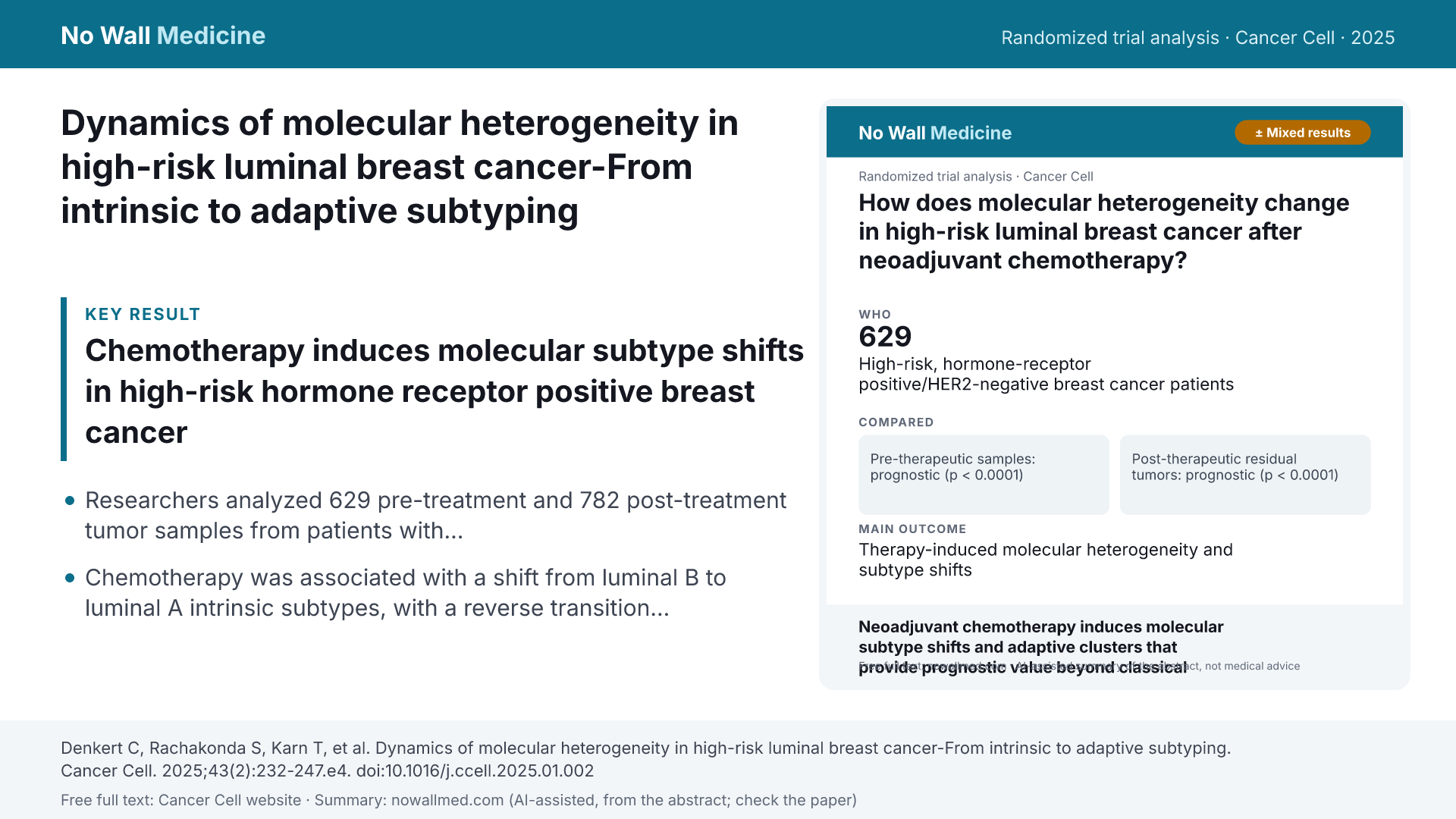
Dynamics of molecular heterogeneity in high-risk luminal breast cancer-From intrinsic to adaptive subtyping
Key result: Chemotherapy induces molecular subtype shifts in high-risk hormone receptor positive breast cancer
Randomized trial analysisMixed results
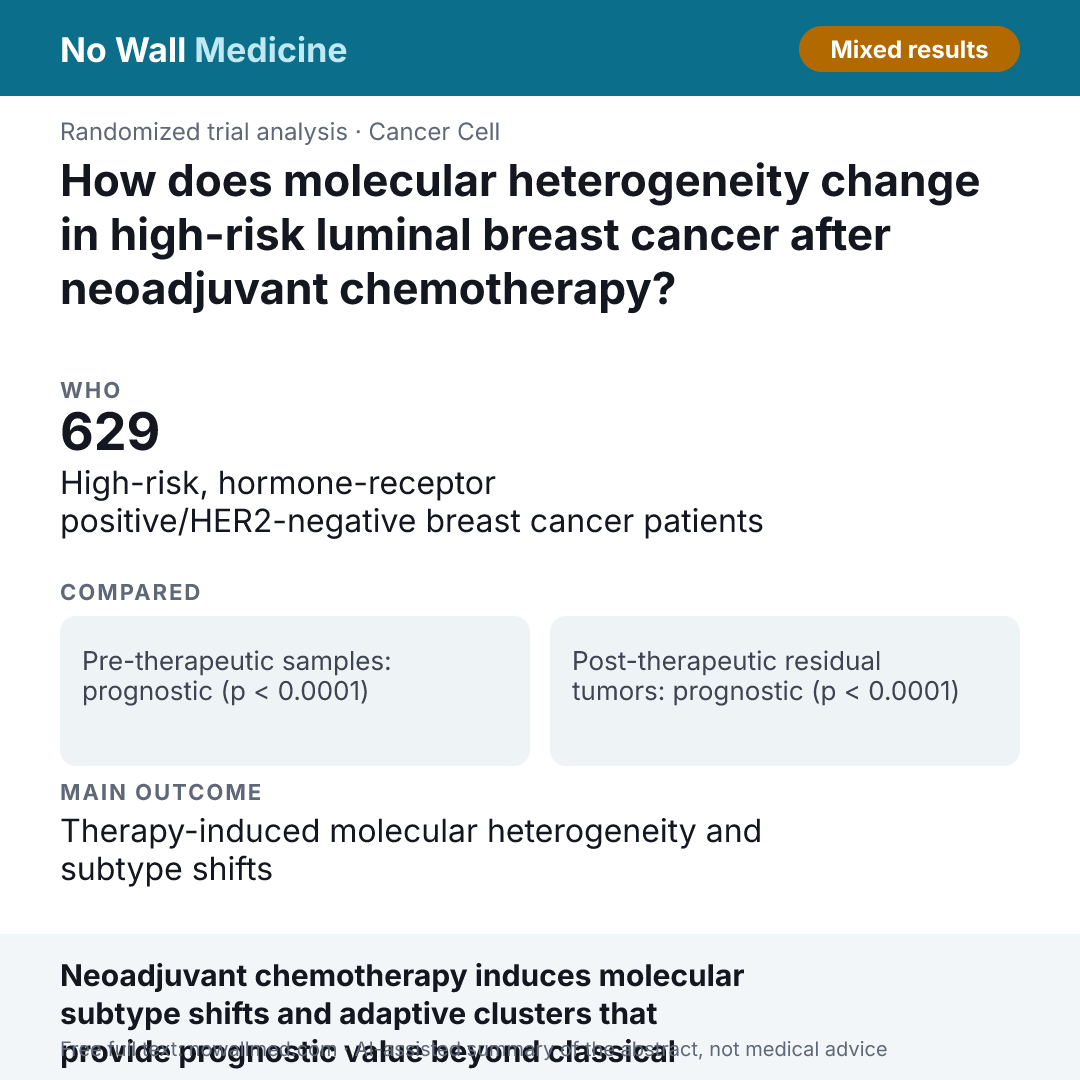
How does molecular heterogeneity change in high-risk luminal breast cancer after neoadjuvant chemotherapy?
Who
629
High-risk, hormone-receptor positive/HER2-negative breast cancer patients · Penelope-B trial
Compared
Pre-therapeutic samples: prognostic (p < 0.0001)
Post-therapeutic residual tumors: prognostic (p < 0.0001)
Main outcome
Therapy-induced molecular heterogeneity and subtype shifts
Bottom line: Neoadjuvant chemotherapy induces molecular subtype shifts and adaptive clusters that provide prognostic value beyond classical subtyping.
Cancer Cell · 2025-02-12 · Save PNG
Key points
- Researchers analyzed 629 pre-treatment and 782 post-treatment tumor samples from patients with hormone-receptor positive/HER2-negative breast cancer.
- Chemotherapy was associated with a shift from luminal B to luminal A intrinsic subtypes, with a reverse transition to luminal B in metastases.
- Five adaptive clusters based on transcriptomic changes were identified, which were prognostic for different levels of patient outcomes.
Discussion prompts
- Would these patients look like yours? Who was left out?
- Is the main outcome one that matters to patients?
- Is the difference large enough to change what you do?
Cite: Denkert C, Rachakonda S, Karn T, et al. Dynamics of molecular heterogeneity in high-risk luminal breast cancer-From intrinsic to adaptive subtyping. Cancer Cell. 2025;43(2):232-247.e4. doi:10.1016/j.ccell.2025.01.002
Free full text: Cancer Cell website · Summary and visual abstract: nowallmed.com/a/dynamics-of-molecular-heterogeneity-in-high-risk-luminal-breast-h0k5c4/ (AI-assisted from the abstract; check the paper before relying on it).