Intensive early follow-up after hospital discharge did not change outcomes for acute heart failure patients
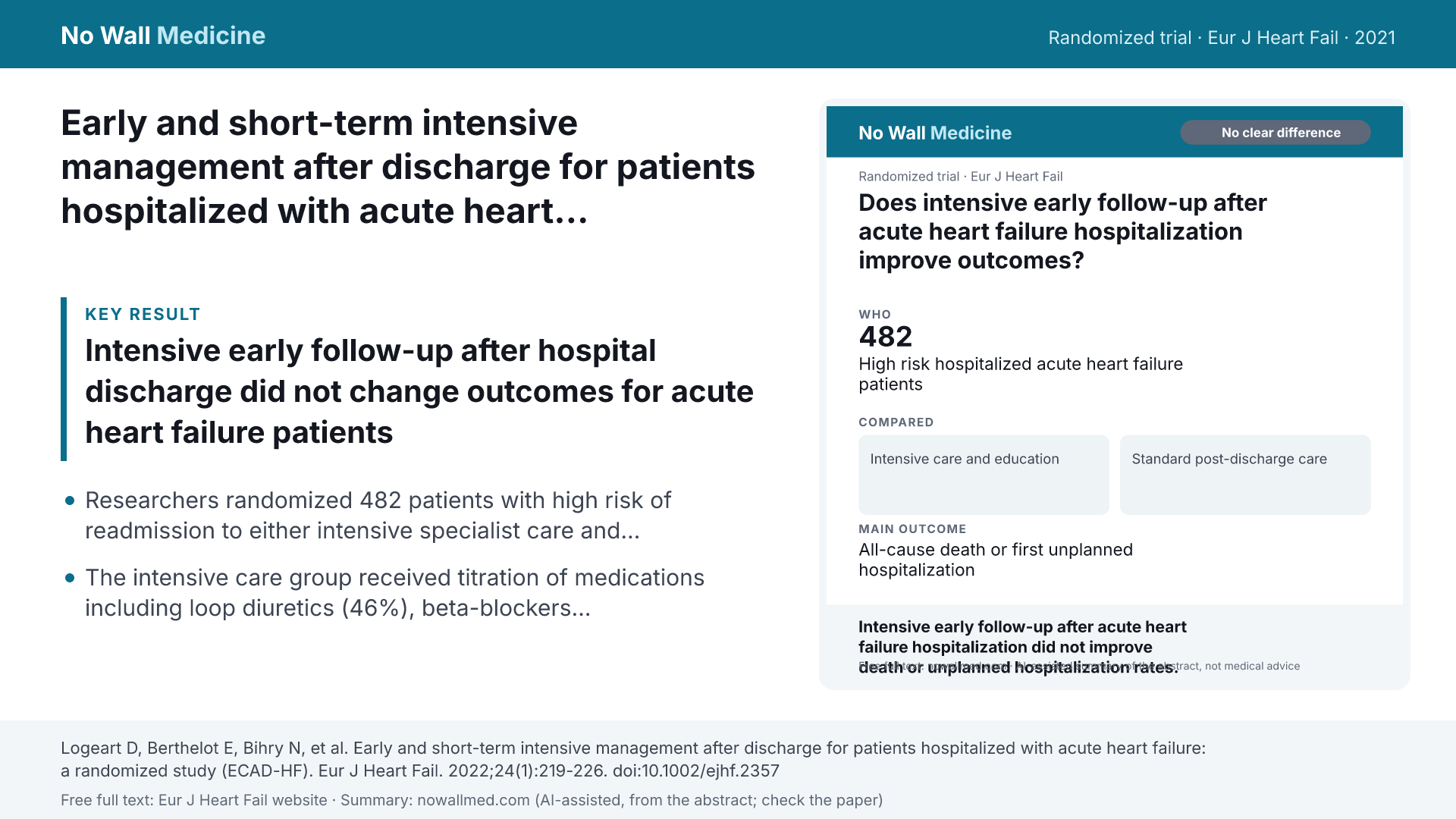
Early and short-term intensive management after discharge for patients hospitalized with acute heart failure: a randomized study (ECAD-HF)
Randomized trialNo clear difference
Does intensive early follow-up after acute heart failure hospitalization improve outcomes?
Who
482
High risk hospitalized acute heart failure patients
Compared
Intensive care and education
Standard post-discharge care
Main outcome
All-cause death or first unplanned hospitalization
Result: hazard ratio 0.97 (95% confidence interval 0.74-1.26)
Bottom line: Intensive early follow-up after acute heart failure hospitalization did not improve death or unplanned hospitalization rates.
Eur J Heart Fail · 2021-10-21Download image
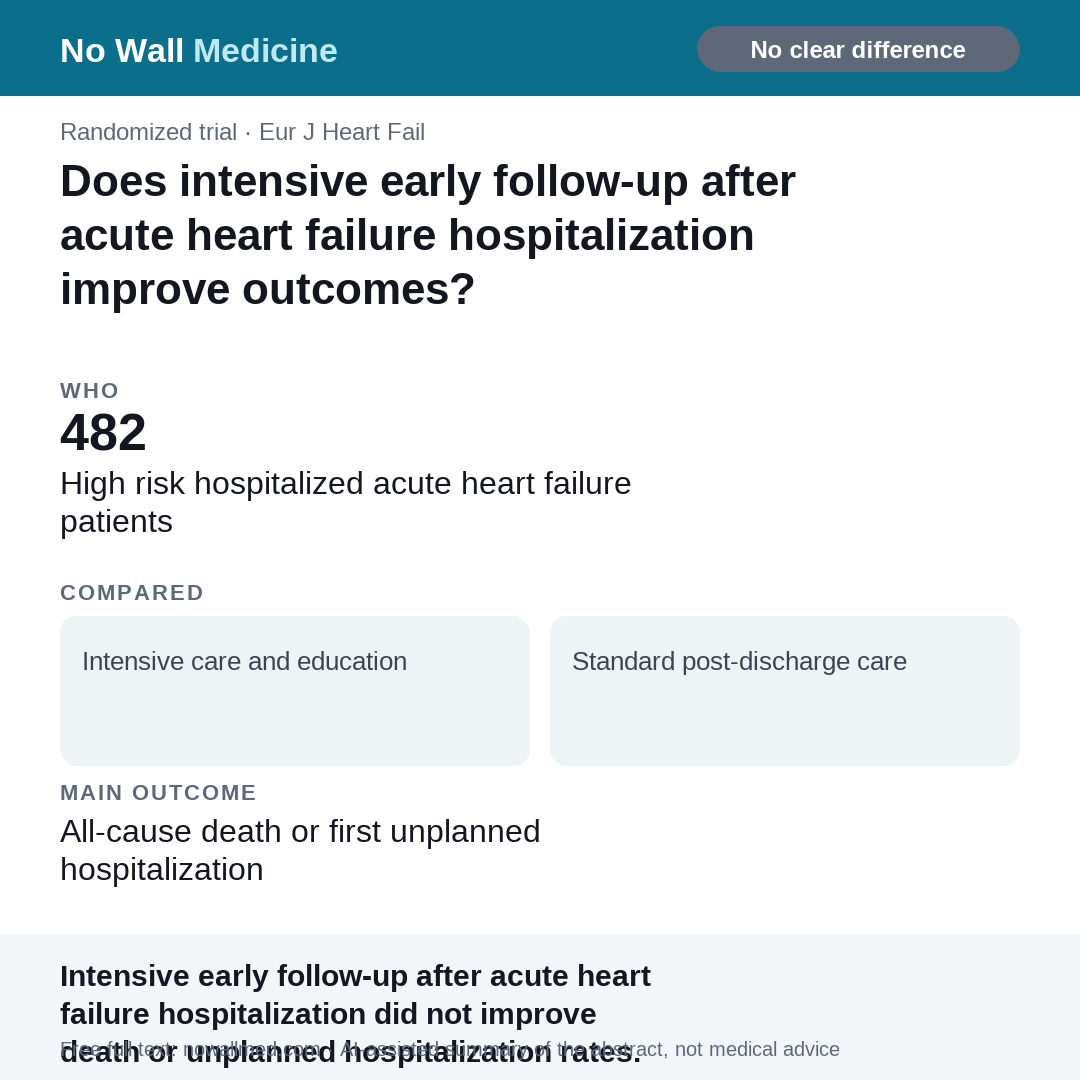
Clinical question: Does intensive early follow-up after acute heart failure hospitalization improve outcomes?
Why it matters: It is unknown if intensive, early follow-up with specialists and dieticians improves outcomes for patients at high risk of readmission after acute heart failure hospitalization.
Key points
- Researchers randomized 482 patients with high risk of readmission to either intensive specialist care and education or standard care following acute heart failure hospitalization.
- The intensive care group received titration of medications including loop diuretics (46%), beta-blockers (49%), angiotensin-converting enzyme inhibitors or angiotensin receptor blockers (39%), and mineralocorticoid receptor antagonists (47%).
- There was no difference between groups for the primary endpoint of all-cause death or first unplanned hospitalization (hazard ratio 0.97; 95% confidence interval 0.74-1.26) during 6-month follow-up.
Headline and key points written with AI from the paper’s abstract, with every number checked against it. Read the paper before relying on them.
Was this summary helpful?
Subject terms
Cite this article
Logeart D, Berthelot E, Bihry N, et al. Early and short-term intensive management after discharge for patients hospitalized with acute heart failure: a randomized study (ECAD-HF). Eur J Heart Fail. 2021. doi:10.1002/ejhf.2357
Spotted a mistake? Suggest a correction