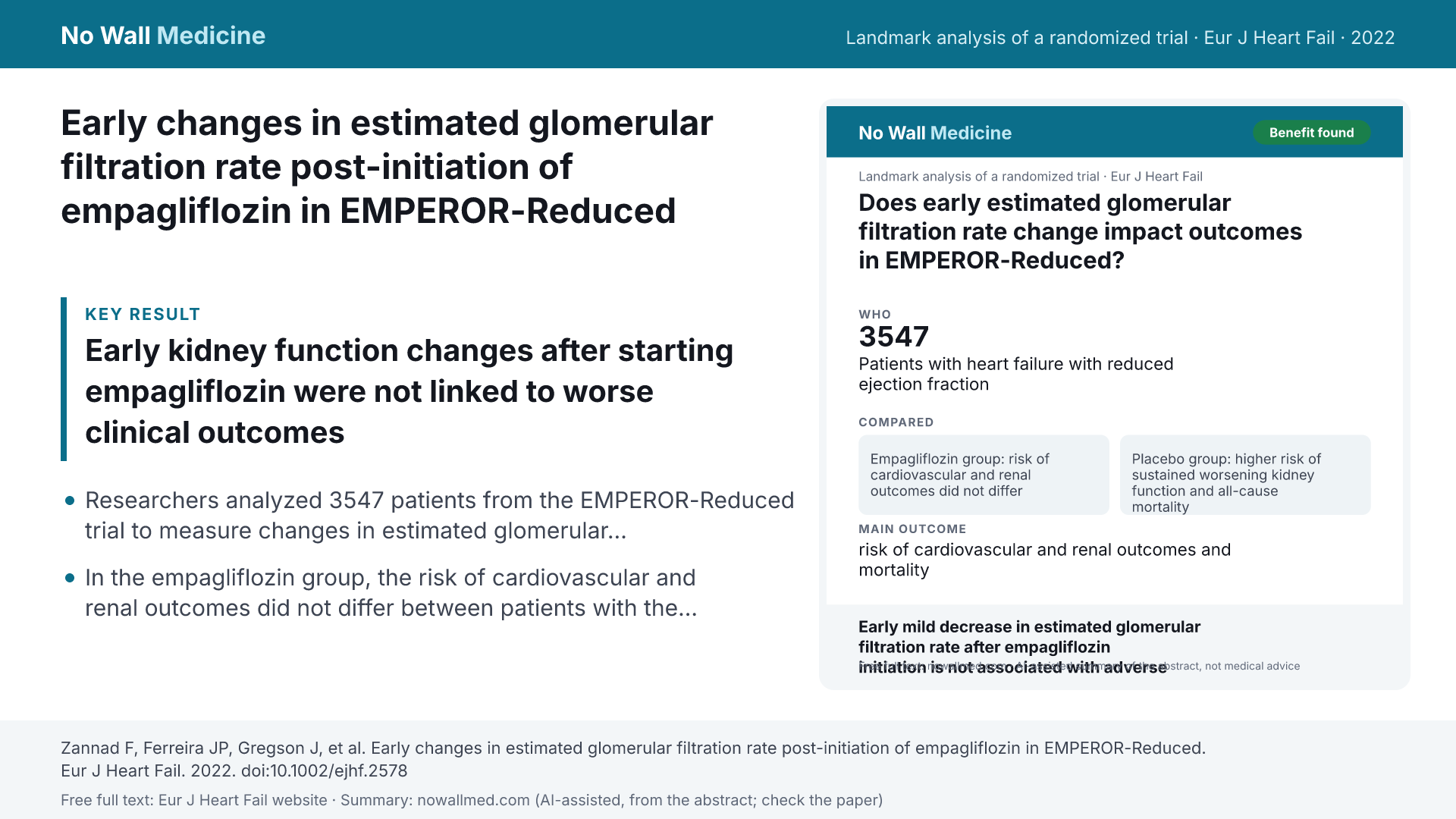
Early changes in estimated glomerular filtration rate post-initiation of empagliflozin in EMPEROR-Reduced
Key result: Early kidney function changes after starting empagliflozin were not linked to worse clinical outcomes
Key points
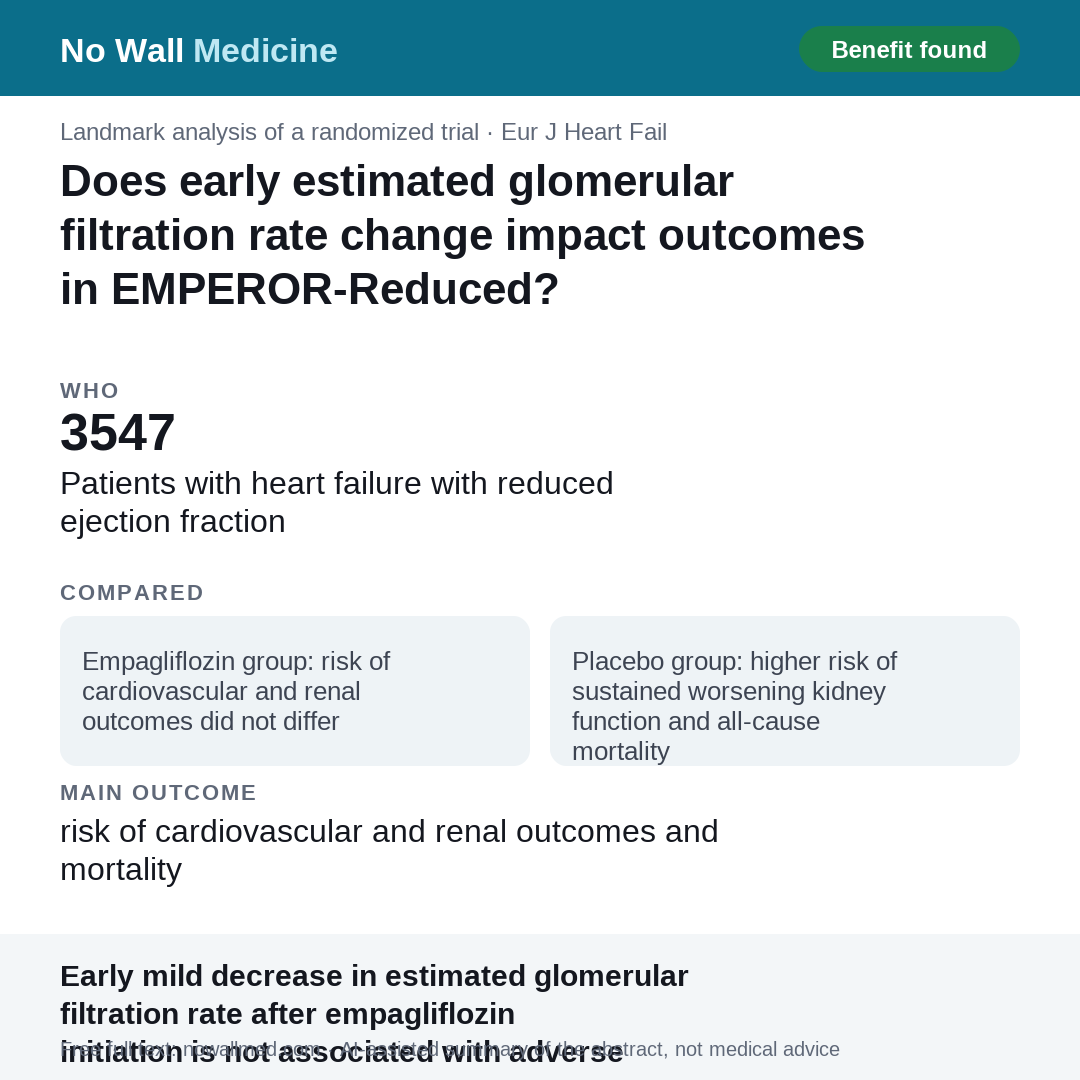
- Researchers analyzed 3547 patients from the EMPEROR-Reduced trial to measure changes in estimated glomerular filtration rate, a measure of kidney function, during the first 4 weeks of treatment.
- In the empagliflozin group, the risk of cardiovascular and renal outcomes did not differ between patients with the largest decrease in kidney function and those with an increase.
- In the placebo group, patients with the largest early decrease in kidney function had a higher risk of sustained worsening kidney function (hazard ratio 2.38) and all-cause mortality (hazard ratio 1.37).
Why it matters: It was unknown how early changes in kidney function after starting sodium-glucose cotransporter 2 inhibitors affect clinical outcomes in patients with heart failure and reduced ejection fraction.
Discussion prompts
- Would these patients look like yours? Who was left out?
- Is the main outcome one that matters to patients?
- Is the difference large enough to change what you do?
Cite: Zannad F, Ferreira JP, Gregson J, et al. Early changes in estimated glomerular filtration rate post-initiation of empagliflozin in EMPEROR-Reduced. Eur J Heart Fail. 2022. doi:10.1002/ejhf.2578
Free full text: Eur J Heart Fail website · Summary and visual abstract: nowallmed.com/a/early-changes-in-estimated-glomerular-filtration-rate-post-initiation-e00n4t/ (AI-assisted from the abstract; check the paper before relying on it).