Cold-stored platelets showed similar 6-month outcomes compared to room temperature platelets in brain injury patients
Early Cold-stored Platelet Transfusion following Traumatic Brain Injury: A Randomized Clinical Trial
Phase 2, randomized, open-label clinical trialMixed results
Is cold storage compared to room temperature platelet transfusion feasible and effective for traumatic brain injury?
Who
Traumatic brain-injured patients needing platelet transfusion · Single United States trauma center
Compared
Cold stored platelets
Room temperature platelets
Main outcome
6-month Glasgow Coma Scale-extended score
Result: odds ratio 1.58 (95% CI 0.71 to 3.54)
Bottom line: Cold stored platelets did not improve 6-month scores but were associated with lower neurosurgical intervention rates.
Ann Surg · 2025-01-22Download image
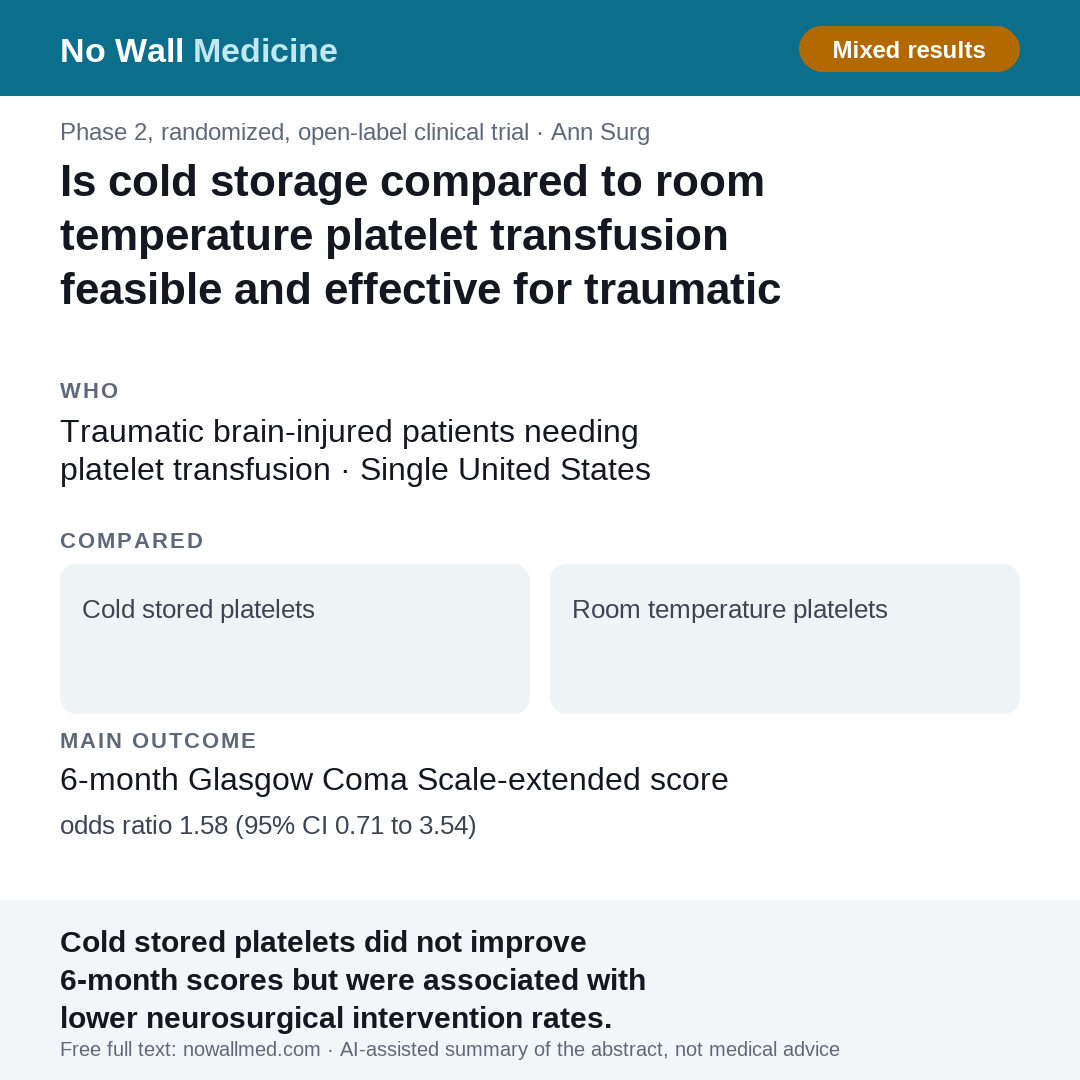
Clinical question: Is cold storage compared to room temperature platelet transfusion feasible and effective for traumatic brain injury?
Why it matters: Data demonstrating the safety and efficacy of cold-stored platelet transfusion are lacking after traumatic brain injury.
Key points
- Researchers conducted a phase 2 randomized trial at one U.S. trauma center comparing cold-stored platelets to room temperature platelets in patients with traumatic brain injury.
- The 6-month Glasgow Coma Scale-extended score, a measure of neurological recovery, was not different between the cold-stored and room temperature groups (odds ratio: 1.58, 95% CI: 0.71 to 3.54, P = 0.27).
- Cold-stored platelet transfusion was associated with a lower rate of neurosurgical craniotomy or craniectomy, which are surgical procedures to open the skull (difference: -14.4%, 95% CI: -26.5% to -2.3%, P = 0.03).
Headline and key points written with AI from the paper’s abstract, with every number checked against it. Read the paper before relying on them.
Was this summary helpful?
Subject terms
Cite this article
Neal MD, Okonkwo DO, Guyette FX, Luther JF, Vincent LE, Puccio AM. Early Cold-stored Platelet Transfusion following Traumatic Brain Injury: A Randomized Clinical Trial. Ann Surg. 2025. doi:10.1097/SLA.0000000000006640
Spotted a mistake? Suggest a correction
Top studies every Monday
The week’s key trials and guidelines in your specialties, plus any topics you follow. By email, free.
Get the weekly digest