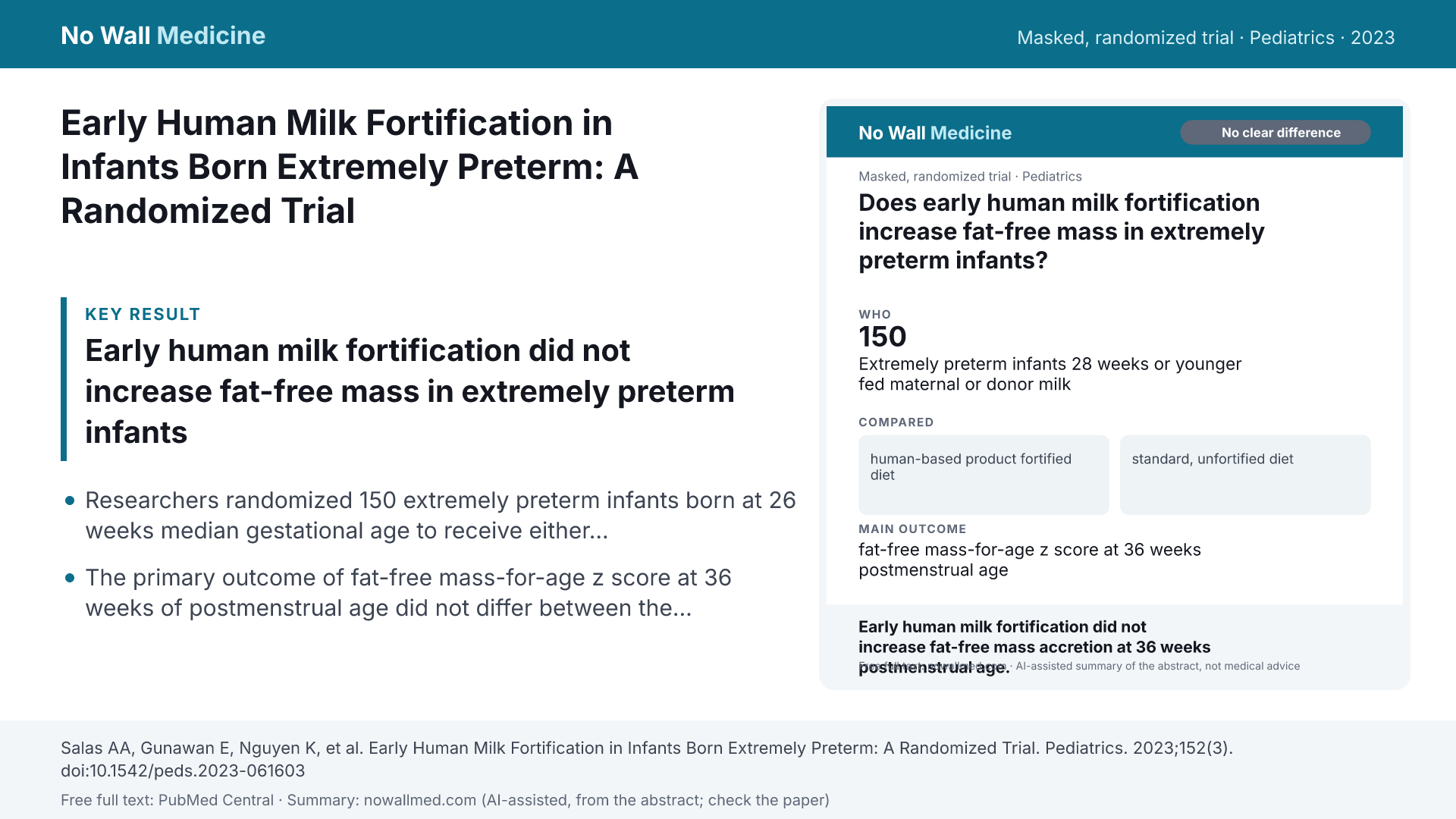
Early human milk fortification did not increase fat-free mass in extremely preterm infants
Early Human Milk Fortification in Infants Born Extremely Preterm: A Randomized Trial
Masked, randomized trialNo clear difference
Does early human milk fortification increase fat-free mass in extremely preterm infants?
Who
150
Extremely preterm infants 28 weeks or younger fed maternal or donor milk
Compared
human-based product fortified diet
standard, unfortified diet
Main outcome
fat-free mass-for-age z score at 36 weeks postmenstrual age
Bottom line: Early human milk fortification did not increase fat-free mass accretion at 36 weeks postmenstrual age.
Pediatrics · 2023-08-08Download image
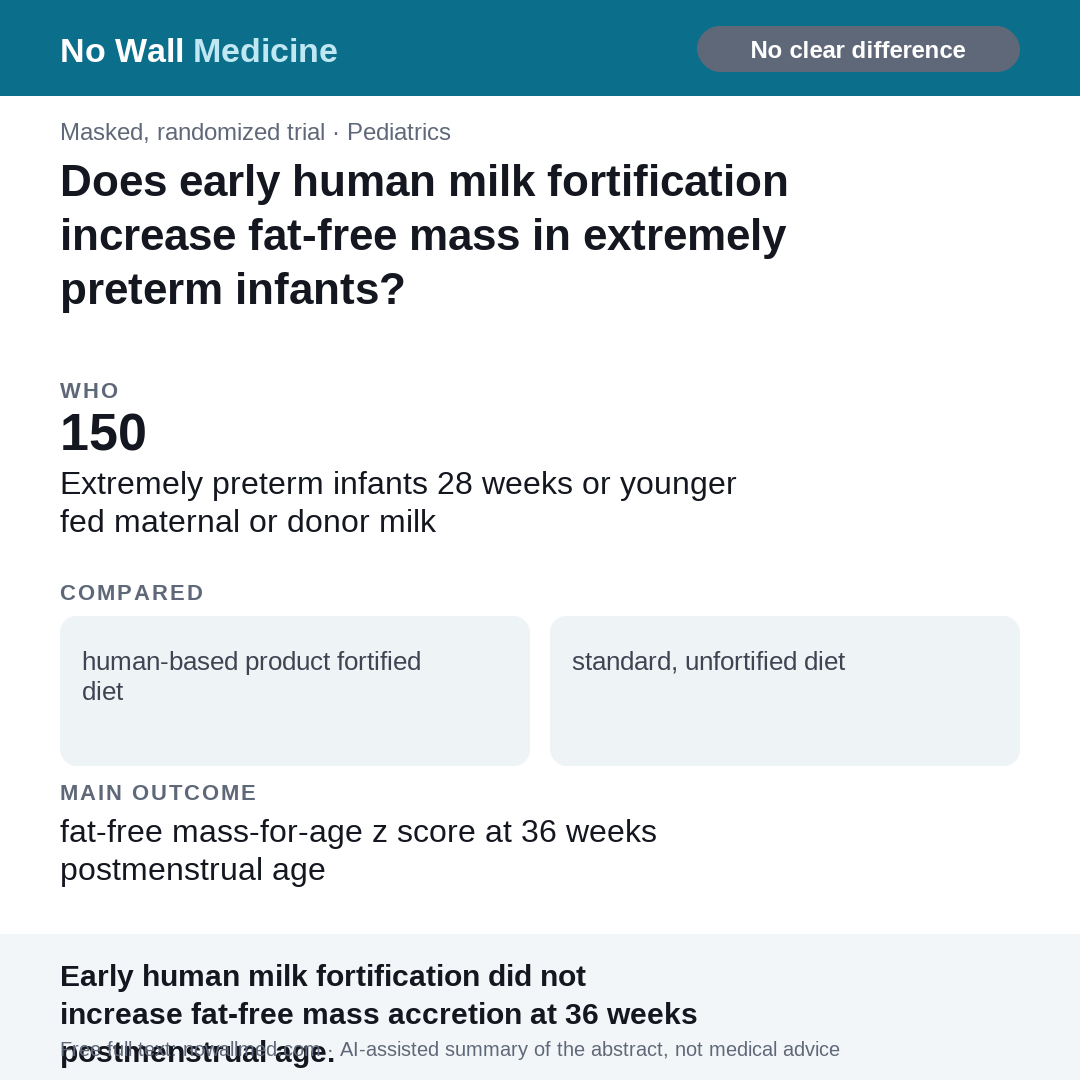
Clinical question: Does early human milk fortification increase fat-free mass in extremely preterm infants?
Why it matters: It is unknown if adding human-based fortifiers to milk early in life increases fat-free mass, which is the weight of the body excluding fat, in extremely preterm infants.
Key points
- Researchers randomized 150 extremely preterm infants born at 26 weeks median gestational age to receive either human-based fortified milk or unfortified milk starting on feeding day 2.
- The primary outcome of fat-free mass-for-age z score at 36 weeks of postmenstrual age did not differ between the two groups.
- Infants receiving the fortified diet had higher length gain velocities and less pronounced declines in head circumference-for-age z scores from birth to 36 weeks of postmenstrual age.
Headline and key points written with AI from the paper’s abstract, with every number checked against it. Read the paper before relying on them.
Was this summary helpful?
Subject terms
Cite this article
Salas AA, Gunawan E, Nguyen K, Reeves A, Argent V, Finck A. Early Human Milk Fortification in Infants Born Extremely Preterm: A Randomized Trial. Pediatrics. 2023. doi:10.1542/peds.2023-061603
Spotted a mistake? Suggest a correction
Top studies every Monday
The week’s key trials and guidelines in your specialties, plus any topics you follow. By email, free.
Get the weekly digest