Early Human Milk Fortification in Infants Born Extremely Preterm: A Randomized Trial
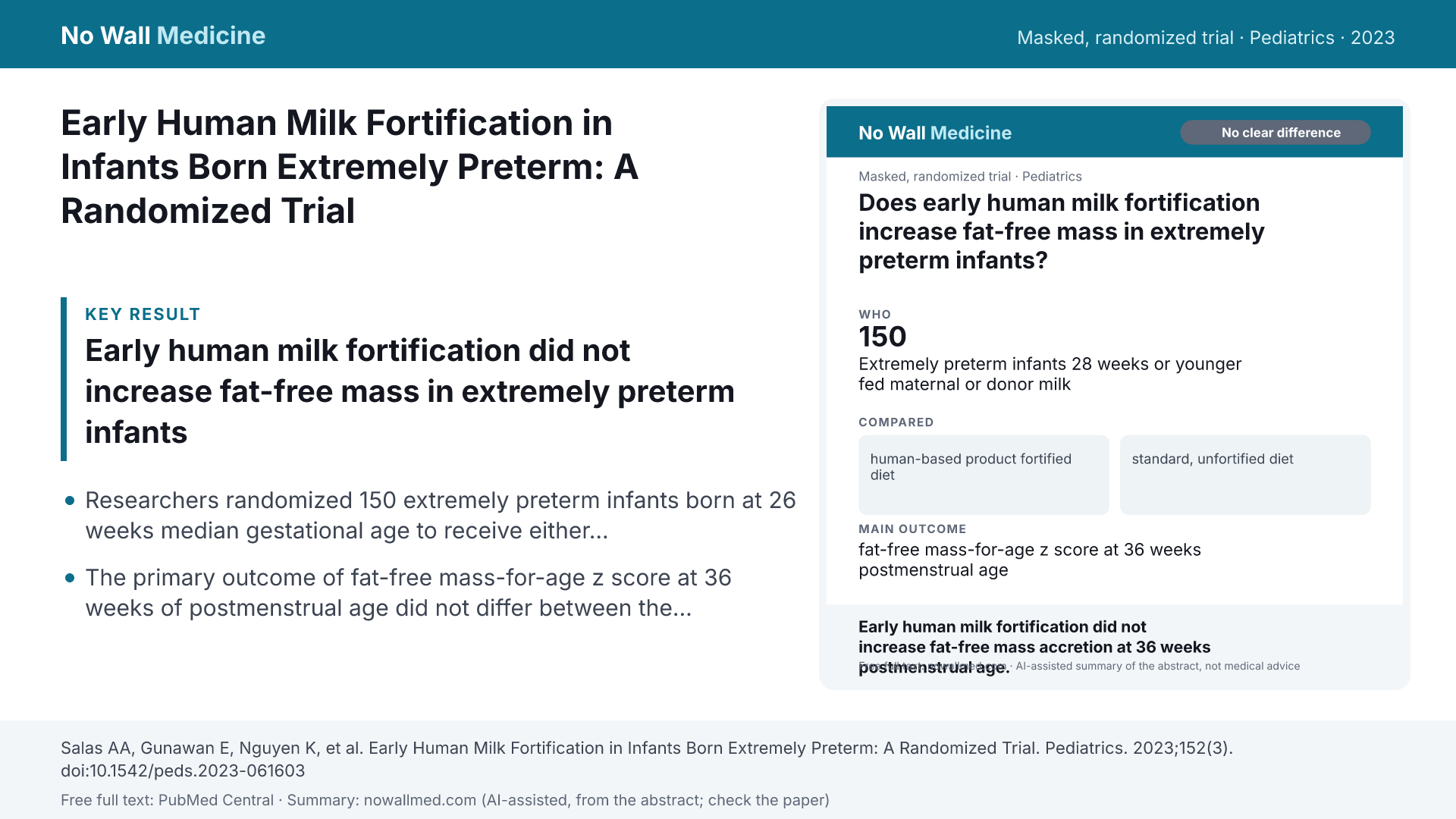
Key result: Early human milk fortification did not increase fat-free mass in extremely preterm infants
Masked, randomized trialNo clear difference
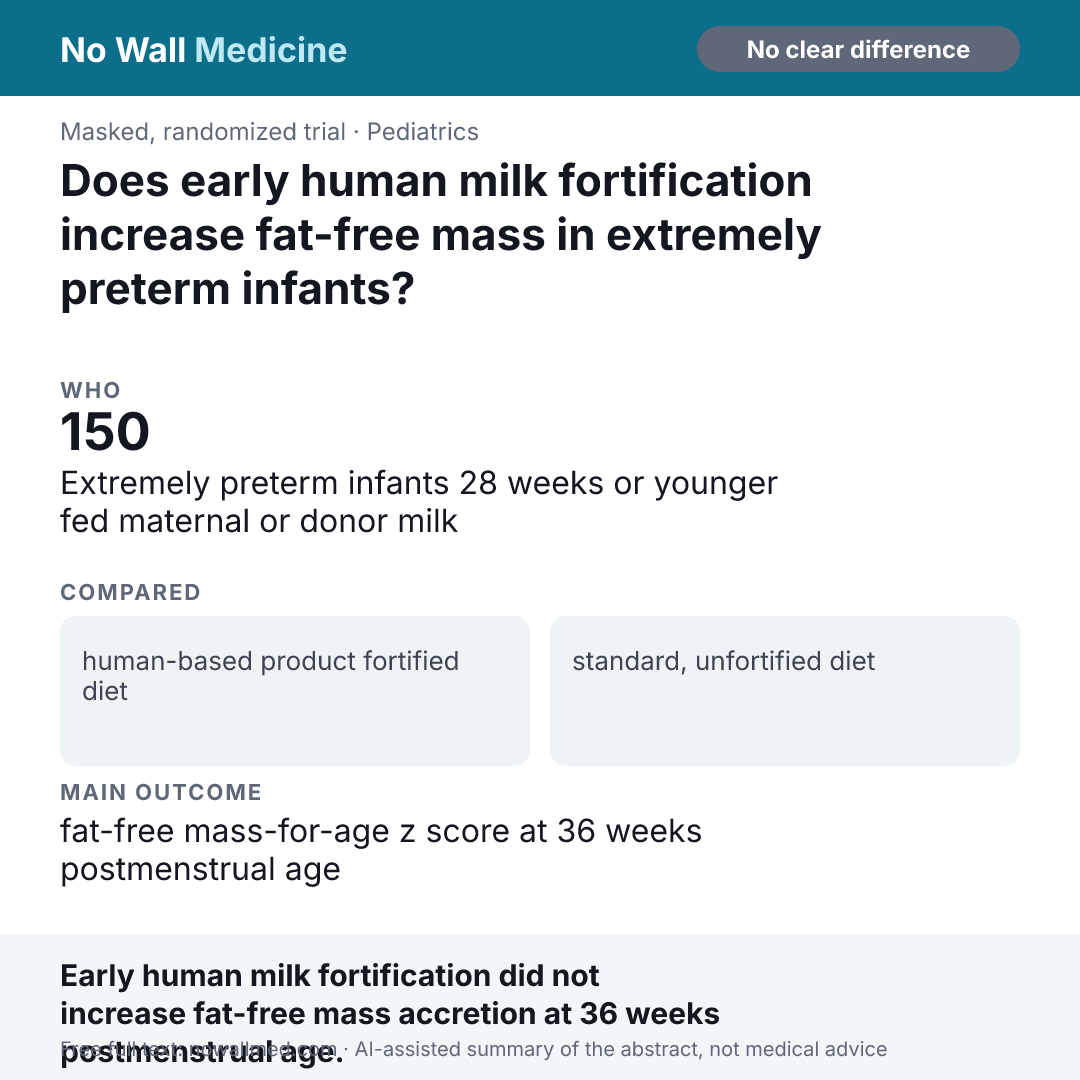
Does early human milk fortification increase fat-free mass in extremely preterm infants?
Who
150
Extremely preterm infants 28 weeks or younger fed maternal or donor milk
Compared
human-based product fortified diet
standard, unfortified diet
Main outcome
fat-free mass-for-age z score at 36 weeks postmenstrual age
Bottom line: Early human milk fortification did not increase fat-free mass accretion at 36 weeks postmenstrual age.
Pediatrics · 2023-08-08 · Save PNG
Key points
- Researchers randomized 150 extremely preterm infants born at 26 weeks median gestational age to receive either human-based fortified milk or unfortified milk starting on feeding day 2.
- The primary outcome of fat-free mass-for-age z score at 36 weeks of postmenstrual age did not differ between the two groups.
- Infants receiving the fortified diet had higher length gain velocities and less pronounced declines in head circumference-for-age z scores from birth to 36 weeks of postmenstrual age.
Discussion prompts
- Would these patients look like yours? Who was left out?
- Is the main outcome one that matters to patients?
- Is the difference large enough to change what you do?
Cite: Salas AA, Gunawan E, Nguyen K, et al. Early Human Milk Fortification in Infants Born Extremely Preterm: A Randomized Trial. Pediatrics. 2023;152(3). doi:10.1542/peds.2023-061603
Free full text: PubMed Central · Summary and visual abstract: nowallmed.com/a/early-human-milk-fortification-in-infants-born-extremely-preterm-a-1gngot3/ (AI-assisted from the abstract; check the paper before relying on it).