Early individualized positive end-expiratory pressure guided by electrical impedance tomography in acute respiratory distress syndrome: a randomized controlled clinical trial
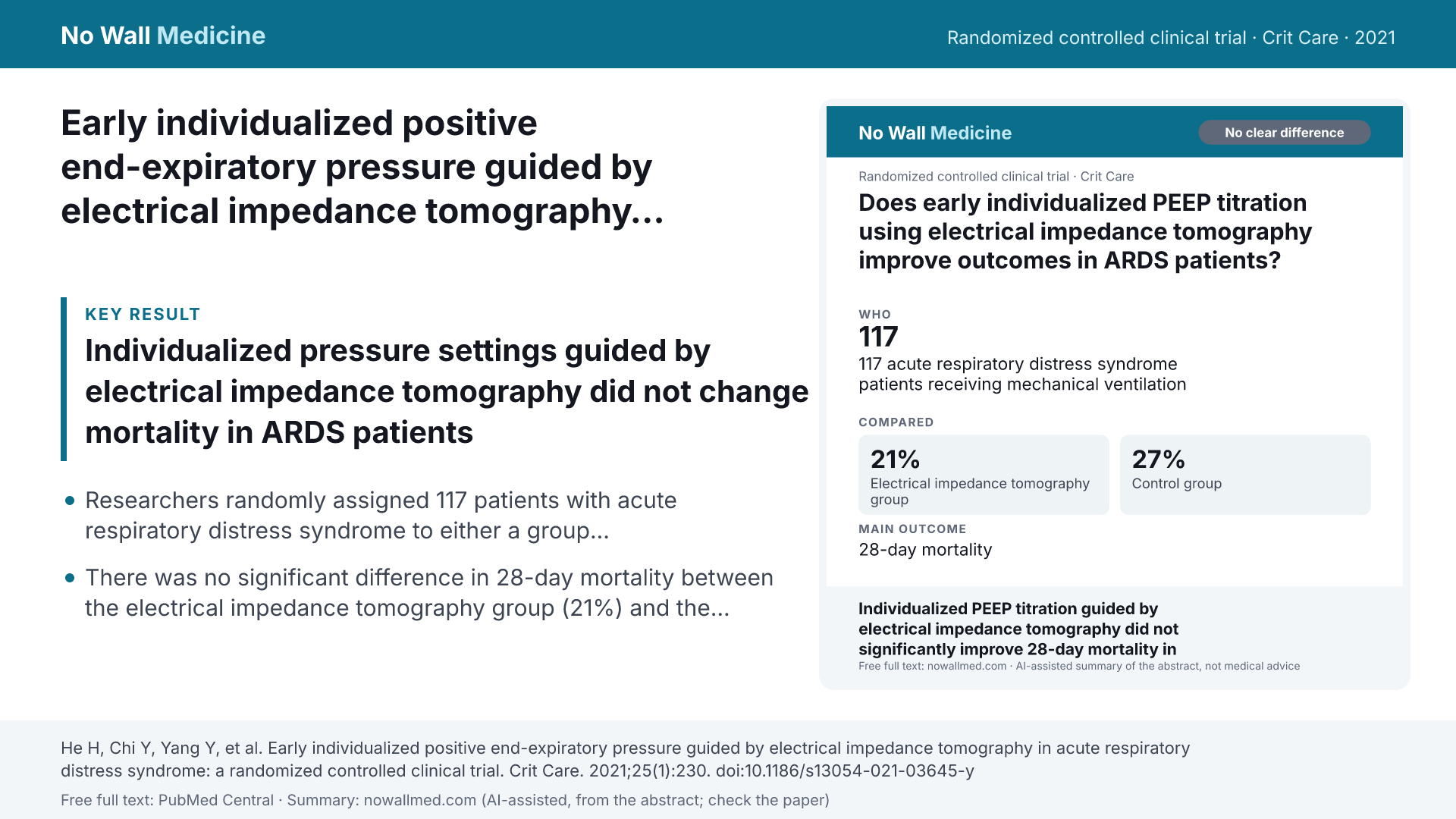
Key result: Individualized pressure settings guided by electrical impedance tomography did not change mortality in ARDS patients
Key points
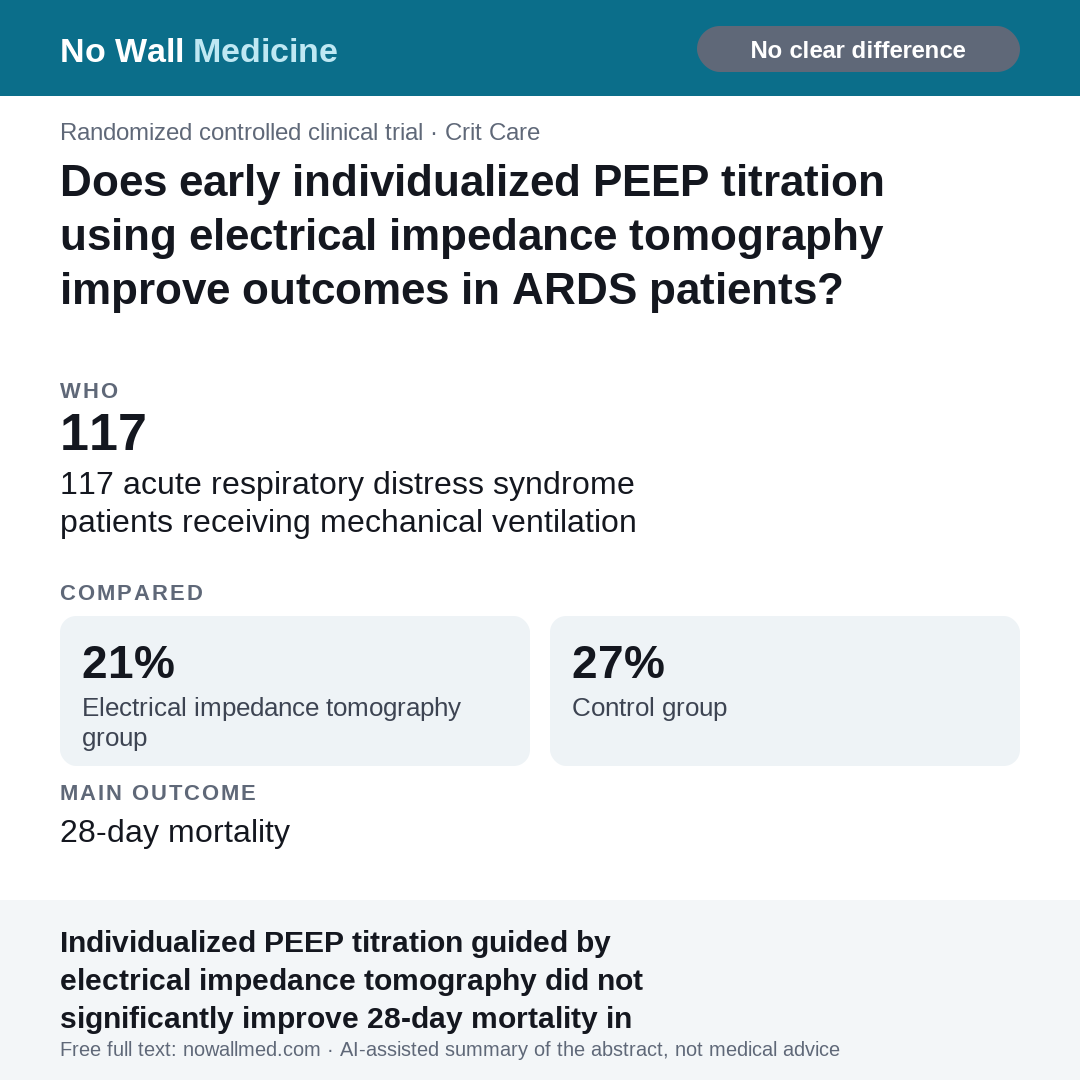
- Researchers randomly assigned 117 patients with acute respiratory distress syndrome to either a group receiving pressure settings guided by electrical impedance tomography or a control group using a standard table.
- There was no significant difference in 28-day mortality between the electrical impedance tomography group (21%) and the control group (27%), nor in ICU length of stay or ventilator-free days.
- In a post hoc comparison, the electrical impedance tomography group showed significantly lower changes in Sequential Organ Failure Assessment scores at day 1 and day 2 compared to the control group.
Why it matters: It was unknown whether using electrical impedance tomography to tailor positive end-expiratory pressure settings improves clinical outcomes for patients with acute respiratory distress syndrome.
Discussion prompts
- Would these patients look like yours? Who was left out?
- Is the main outcome one that matters to patients?
- Is the difference large enough to change what you do?
Cite: He H, Chi Y, Yang Y, et al. Early individualized positive end-expiratory pressure guided by electrical impedance tomography in acute respiratory distress syndrome: a randomized controlled clinical trial. Crit Care. 2021. doi:10.1186/s13054-021-03645-y
Free full text: PubMed Central · Summary and visual abstract: nowallmed.com/a/early-individualized-positive-end-expiratory-pressure-guided-by-8duxzc/ (AI-assisted from the abstract; check the paper before relying on it).