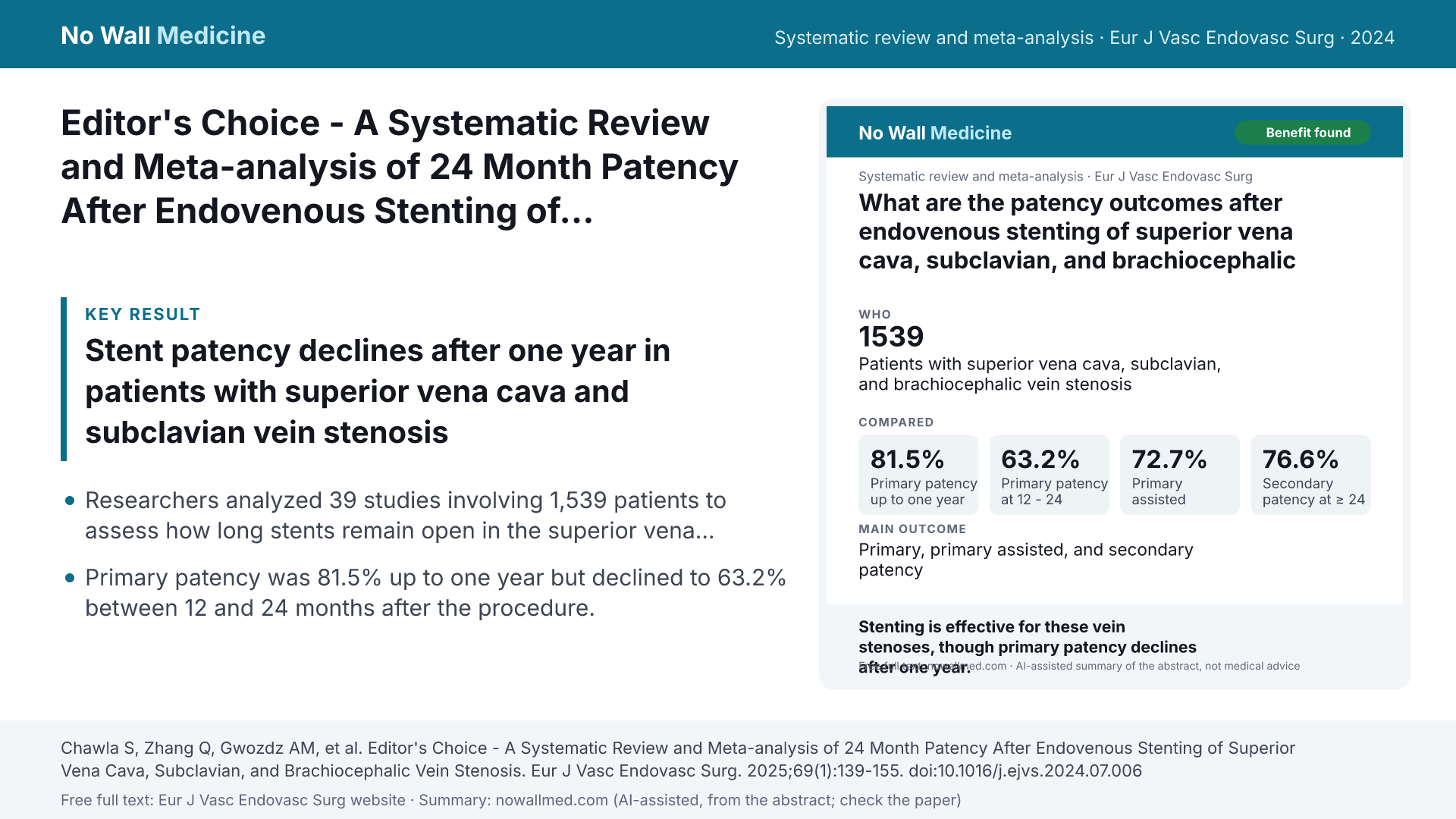
Stent patency declines after one year in patients with superior vena cava and subclavian vein stenosis
Editor's Choice - A Systematic Review and Meta-analysis of 24 Month Patency After Endovenous Stenting of Superior Vena Cava, Subclavian, and Brachiocephalic Vein Stenosis
Systematic review and meta-analysisBenefit found
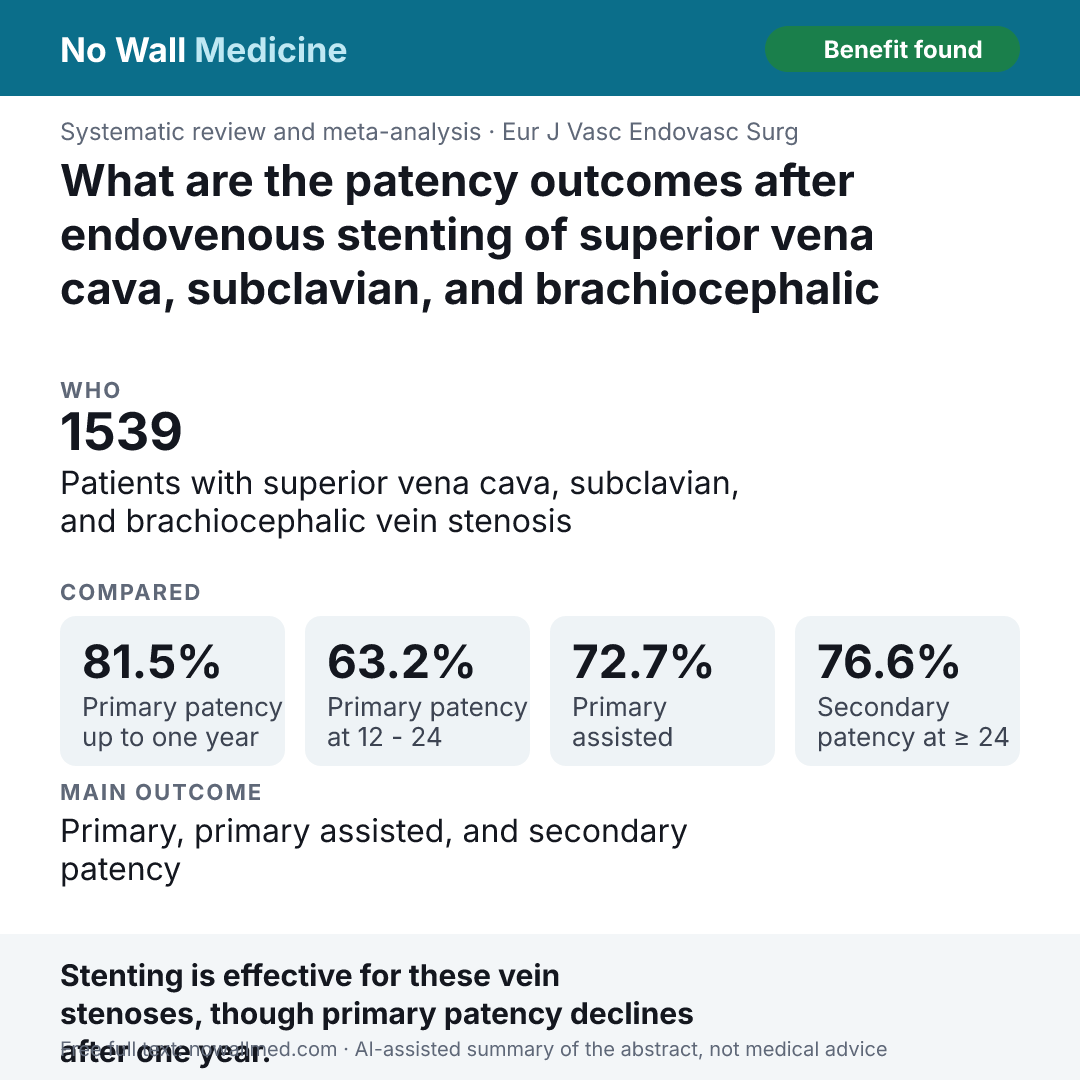
What are the patency outcomes after endovenous stenting of superior vena cava, subclavian, and brachiocephalic vein stenosis?
Who
1539
Patients with superior vena cava, subclavian, and brachiocephalic vein stenosis
Compared
81.5%Primary patency up to one year (95% CI 74.5 - 86.9%)
63.2%Primary patency at 12 - 24 months (95% CI 51.9 - 73.1%)
72.7%Primary assisted patency at ≥ 24 months (95% CI 49.1 - 88.0%)
76.6%Secondary patency at ≥ 24 months (95% CI 51.1 - 91.1%)
Main outcome
Primary, primary assisted, and secondary patency
Bottom line: Stenting is effective for these vein stenoses, though primary patency declines after one year.
Eur J Vasc Endovasc Surg · 2024-07-06 · Save PNG
Clinical question: What are the patency outcomes after endovenous stenting of superior vena cava, subclavian, and brachiocephalic vein stenosis?
Why it matters: The long-term effectiveness and patency rates of stenting for various types of upper body vein narrowing were not clearly established.
Key points
- Researchers analyzed 39 studies involving 1,539 patients to assess how long stents remain open in the superior vena cava, subclavian, and brachiocephalic veins.
- Primary patency was 81.5% up to one year but declined to 63.2% between 12 and 24 months after the procedure.
- Primary patency was significantly higher in patients with malignant stenosis compared to benign stenosis at 1-3 and 12-24 months.
Headline and key points written with AI from the paper’s abstract, with every number checked against it. Read the paper before relying on them.
Was this summary helpful?
Subject terms
Headline, design, result, key points, caveat and citation as plain text.
Cite this article
Chawla S, Zhang Q, Gwozdz AM, et al. Editor's Choice - A Systematic Review and Meta-analysis of 24 Month Patency After Endovenous Stenting of Superior Vena Cava, Subclavian, and Brachiocephalic Vein Stenosis. Eur J Vasc Endovasc Surg. 2025;69(1):139-155. doi:10.1016/j.ejvs.2024.07.006
Spotted a mistake? Suggest a correction