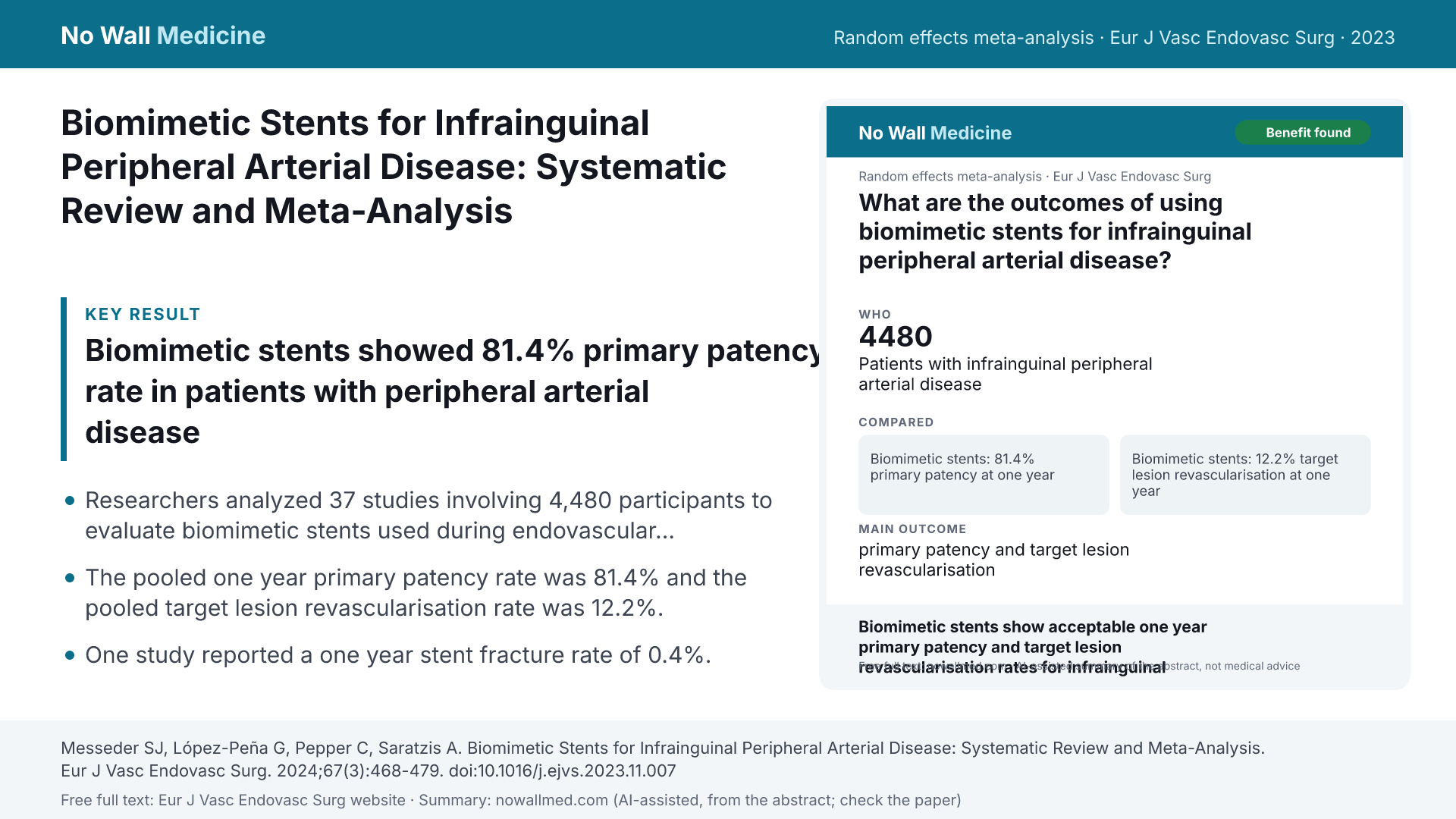
Biomimetic stents showed 81.4% primary patency rate in patients with peripheral arterial disease
Biomimetic Stents for Infrainguinal Peripheral Arterial Disease: Systematic Review and Meta-Analysis
Random effects meta-analysisBenefit found
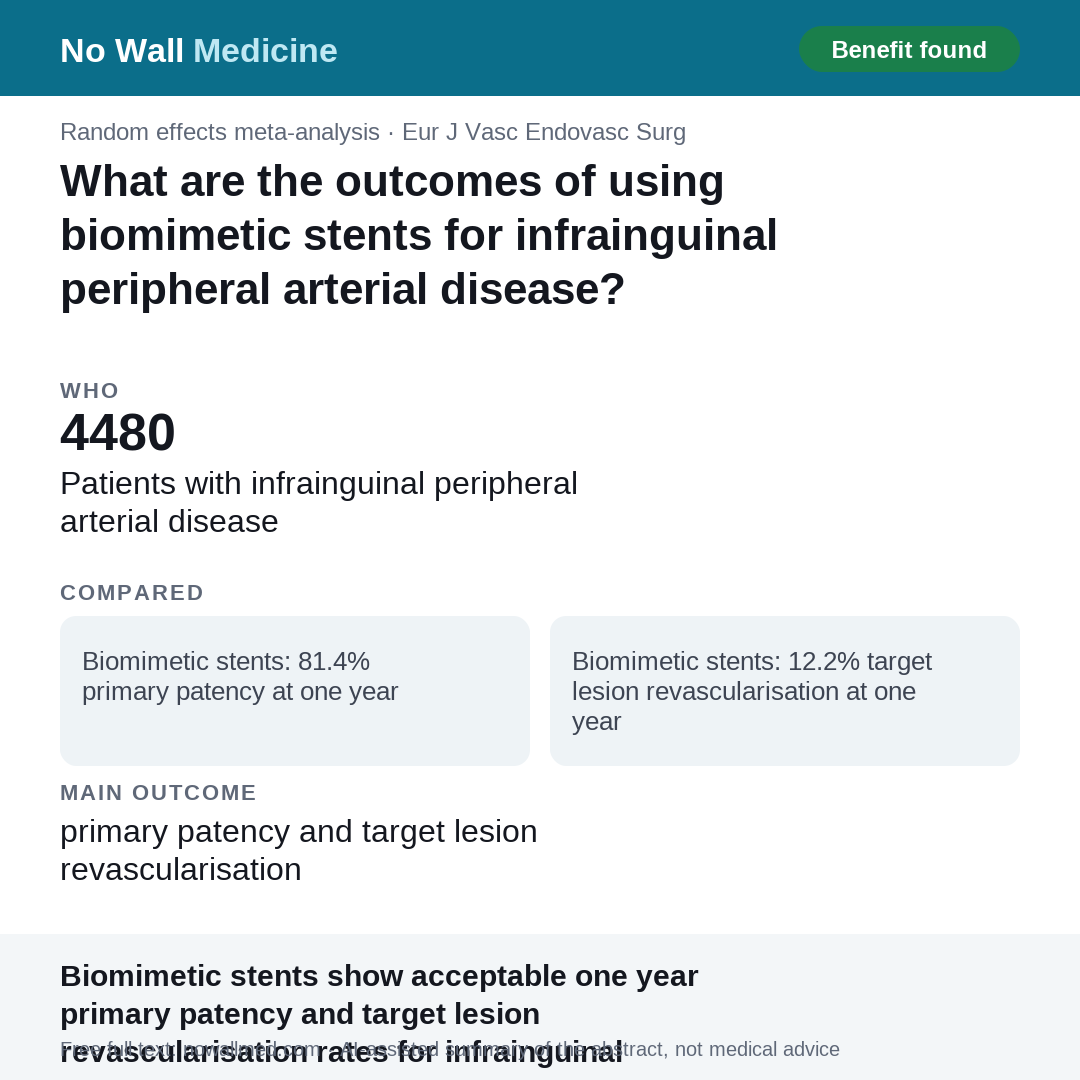
What are the outcomes of using biomimetic stents for infrainguinal peripheral arterial disease?
Who
4480
Patients with infrainguinal peripheral arterial disease
Compared
Biomimetic stents: 81.4% primary patency at one year
Biomimetic stents: 12.2% target lesion revascularisation at one year
Main outcome
primary patency and target lesion revascularisation
Result: primary patency 81.4% (95% CI 78.7 - 83.9%)
Bottom line: Biomimetic stents show acceptable one year primary patency and target lesion revascularisation rates for infrainguinal peripheral arterial disease.
Eur J Vasc Endovasc Surg · 2023-11-04Download image
Clinical question: What are the outcomes of using biomimetic stents for infrainguinal peripheral arterial disease?
Why it matters: It was unknown how biomimetic stents perform regarding patency and revascularisation when used as adjuncts for endovascular treatment of infrainguinal peripheral arterial disease.
Key points
- Researchers analyzed 37 studies involving 4,480 participants to evaluate biomimetic stents used during endovascular treatment for peripheral arterial disease in the leg arteries.
- The pooled one year primary patency rate was 81.4% and the pooled target lesion revascularisation rate was 12.2%.
- One study reported a one year stent fracture rate of 0.4%.
Headline and key points written with AI from the paper’s abstract, with every number checked against it. Read the paper before relying on them.
Was this summary helpful?
Subject terms
Cite this article
Messeder SJ, López-Peña G, Pepper C, Saratzis A. Biomimetic Stents for Infrainguinal Peripheral Arterial Disease: Systematic Review and Meta-Analysis. Eur J Vasc Endovasc Surg. 2023. doi:10.1016/j.ejvs.2023.11.007
Spotted a mistake? Suggest a correction