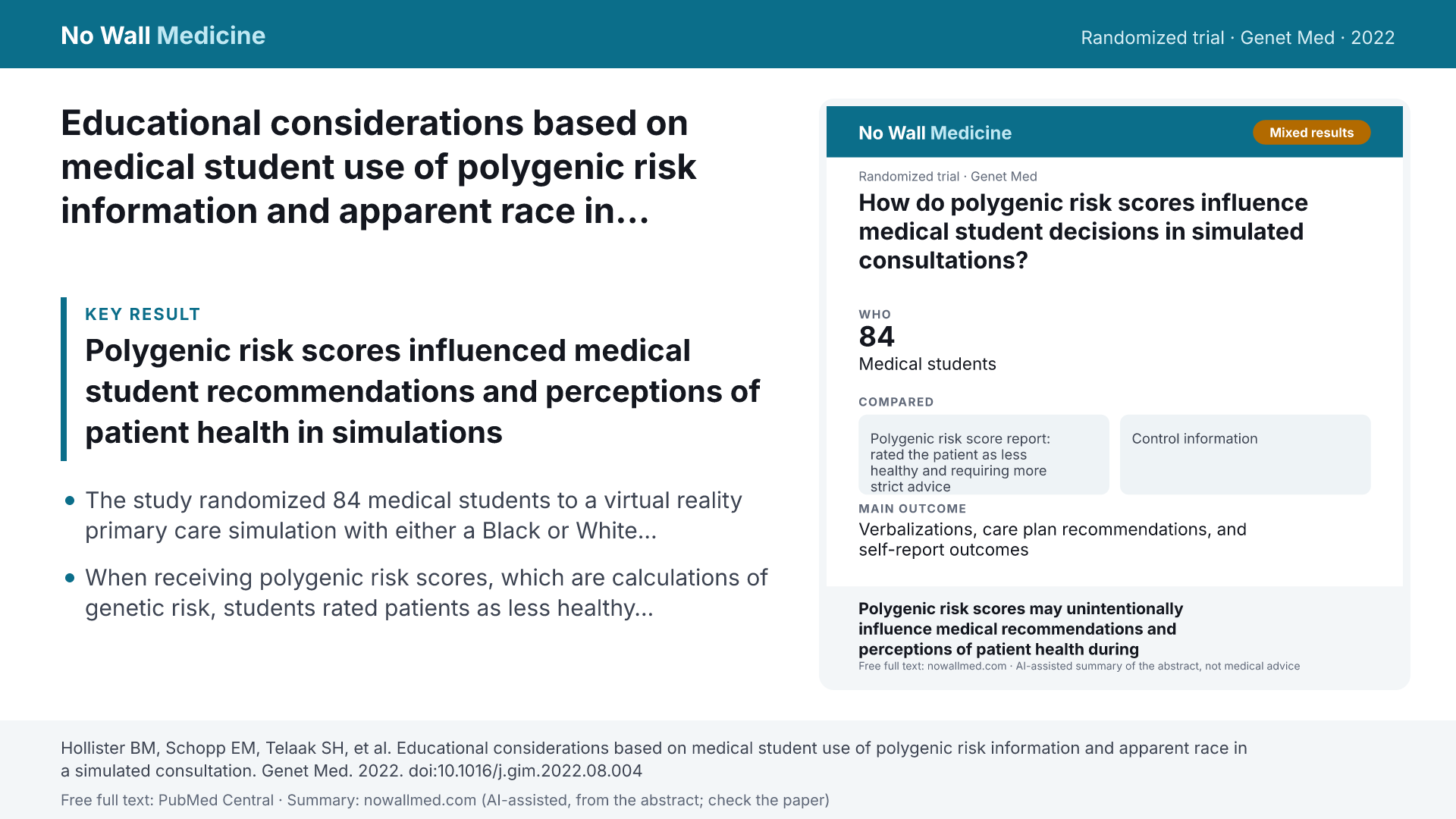
Polygenic risk scores influenced medical student recommendations and perceptions of patient health in simulations
Educational considerations based on medical student use of polygenic risk information and apparent race in a simulated consultation
Randomized trialMixed results
How do polygenic risk scores influence medical student decisions in simulated consultations?
Who
84
Medical students
Compared
Polygenic risk score report: rated the patient as less healthy and requiring more strict advice
Control information
Main outcome
Verbalizations, care plan recommendations, and self-report outcomes
Bottom line: Polygenic risk scores may unintentionally influence medical recommendations and perceptions of patient health during clinical encounters.
Genet Med · 2022-09-02Download image
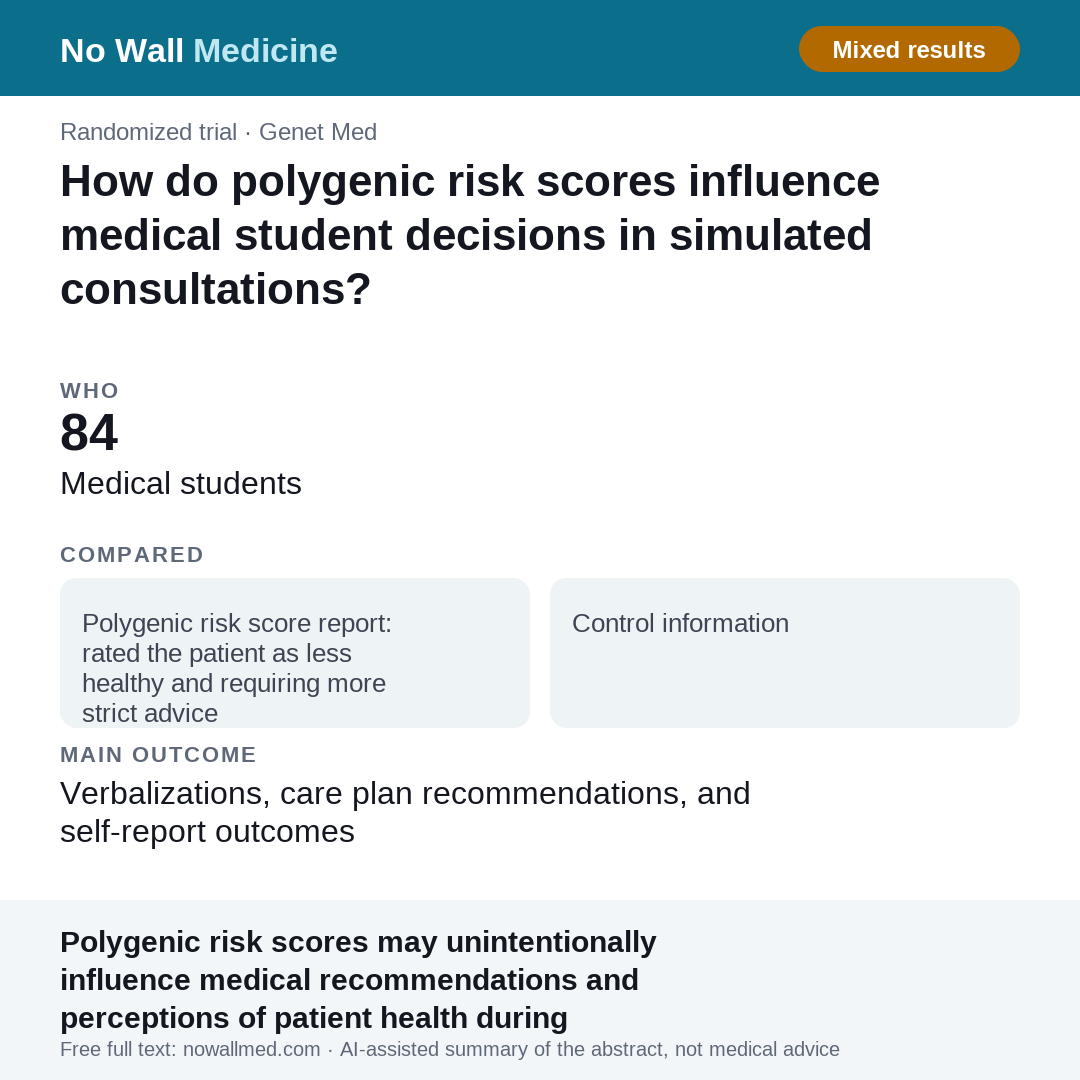
Clinical question: How do polygenic risk scores influence medical student decisions in simulated consultations?
Why it matters: It is unknown how the introduction of polygenic risk scores into clinical care might influence medical decision-making or create biases regarding patient race.
Key points
- The study randomized 84 medical students to a virtual reality primary care simulation with either a Black or White patient and a polygenic risk score report.
- When receiving polygenic risk scores, which are calculations of genetic risk, students rated patients as less healthy and provided more strict advice.
- Polygenic risk scores influenced specific medical recommendations despite students reporting they did not use the information for that purpose.
Headline and key points written with AI from the paper’s abstract, with every number checked against it. Read the paper before relying on them.
Was this summary helpful?
Subject terms
Cite this article
Hollister BM, Schopp EM, Telaak SH, et al. Educational considerations based on medical student use of polygenic risk information and apparent race in a simulated consultation. Genet Med. 2022. doi:10.1016/j.gim.2022.08.004
Spotted a mistake? Suggest a correction