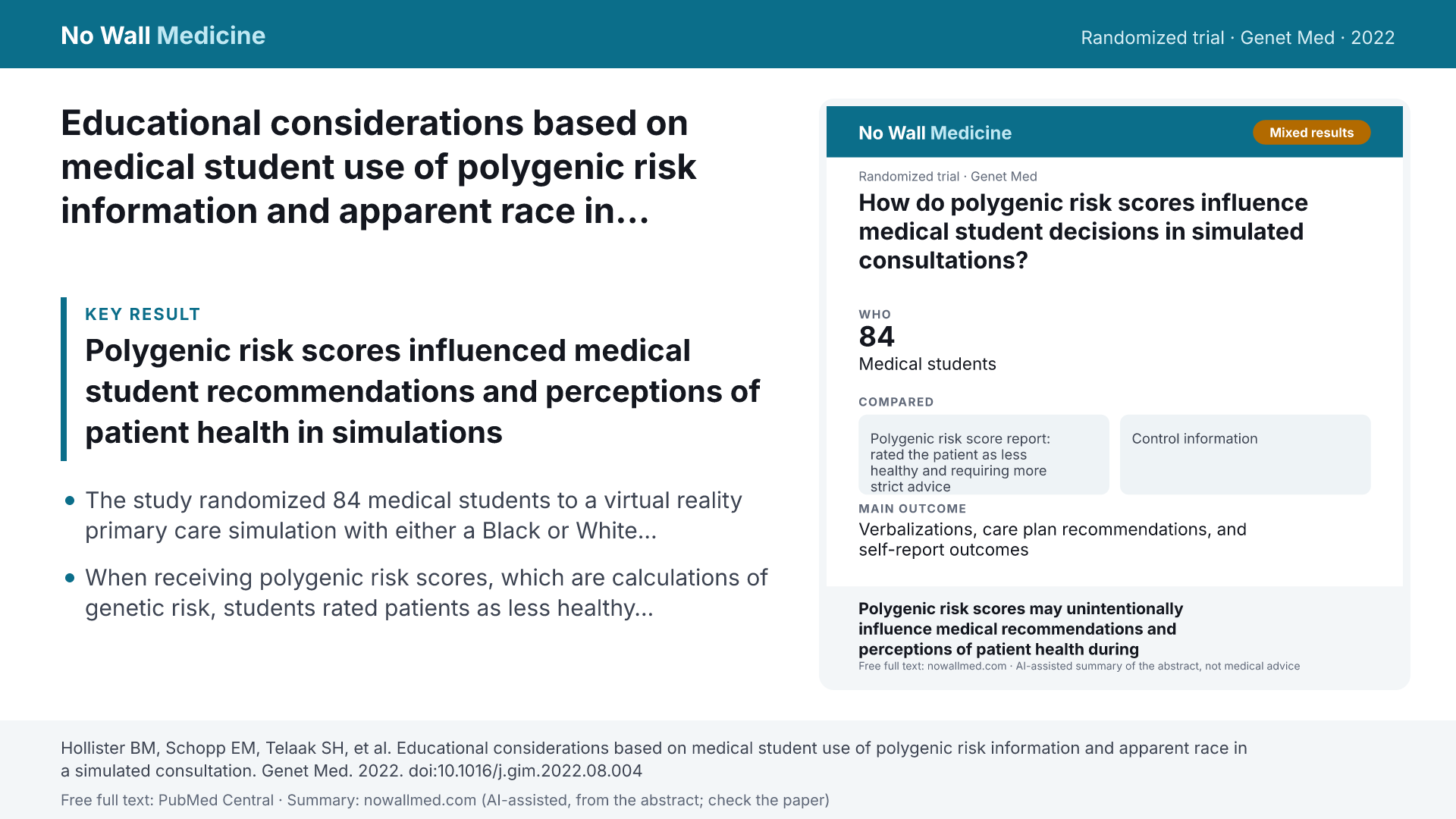
Educational considerations based on medical student use of polygenic risk information and apparent race in a simulated consultation
Key result: Polygenic risk scores influenced medical student recommendations and perceptions of patient health in simulations
Key points
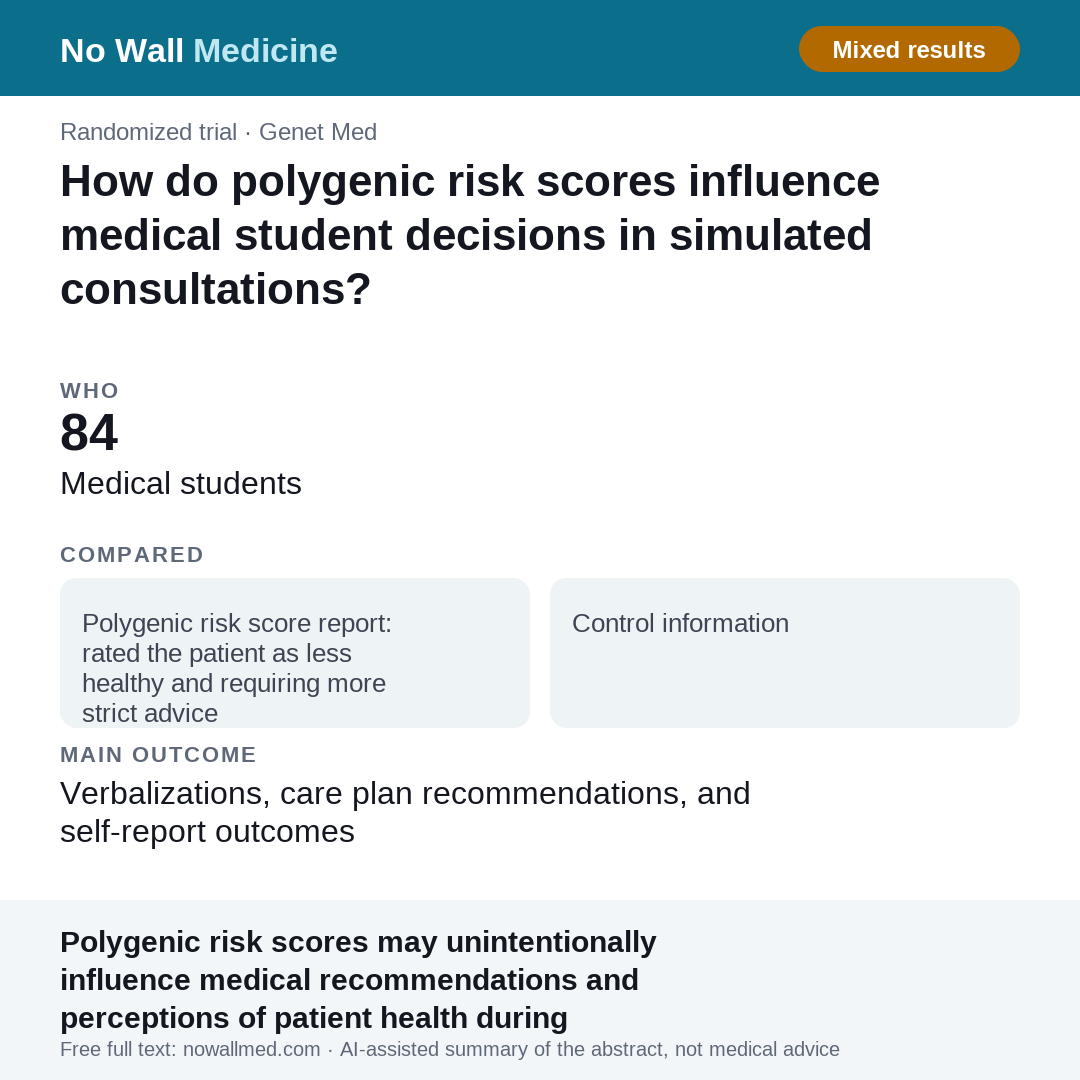
- The study randomized 84 medical students to a virtual reality primary care simulation with either a Black or White patient and a polygenic risk score report.
- When receiving polygenic risk scores, which are calculations of genetic risk, students rated patients as less healthy and provided more strict advice.
- Polygenic risk scores influenced specific medical recommendations despite students reporting they did not use the information for that purpose.
Why it matters: It is unknown how the introduction of polygenic risk scores into clinical care might influence medical decision-making or create biases regarding patient race.
Discussion prompts
- Would these patients look like yours? Who was left out?
- Is the main outcome one that matters to patients?
- Is the difference large enough to change what you do?
Cite: Hollister BM, Schopp EM, Telaak SH, et al. Educational considerations based on medical student use of polygenic risk information and apparent race in a simulated consultation. Genet Med. 2022. doi:10.1016/j.gim.2022.08.004
Free full text: PubMed Central · Summary and visual abstract: nowallmed.com/a/educational-considerations-based-on-medical-student-use-of-polygenic-1aa5xqs/ (AI-assisted from the abstract; check the paper before relying on it).