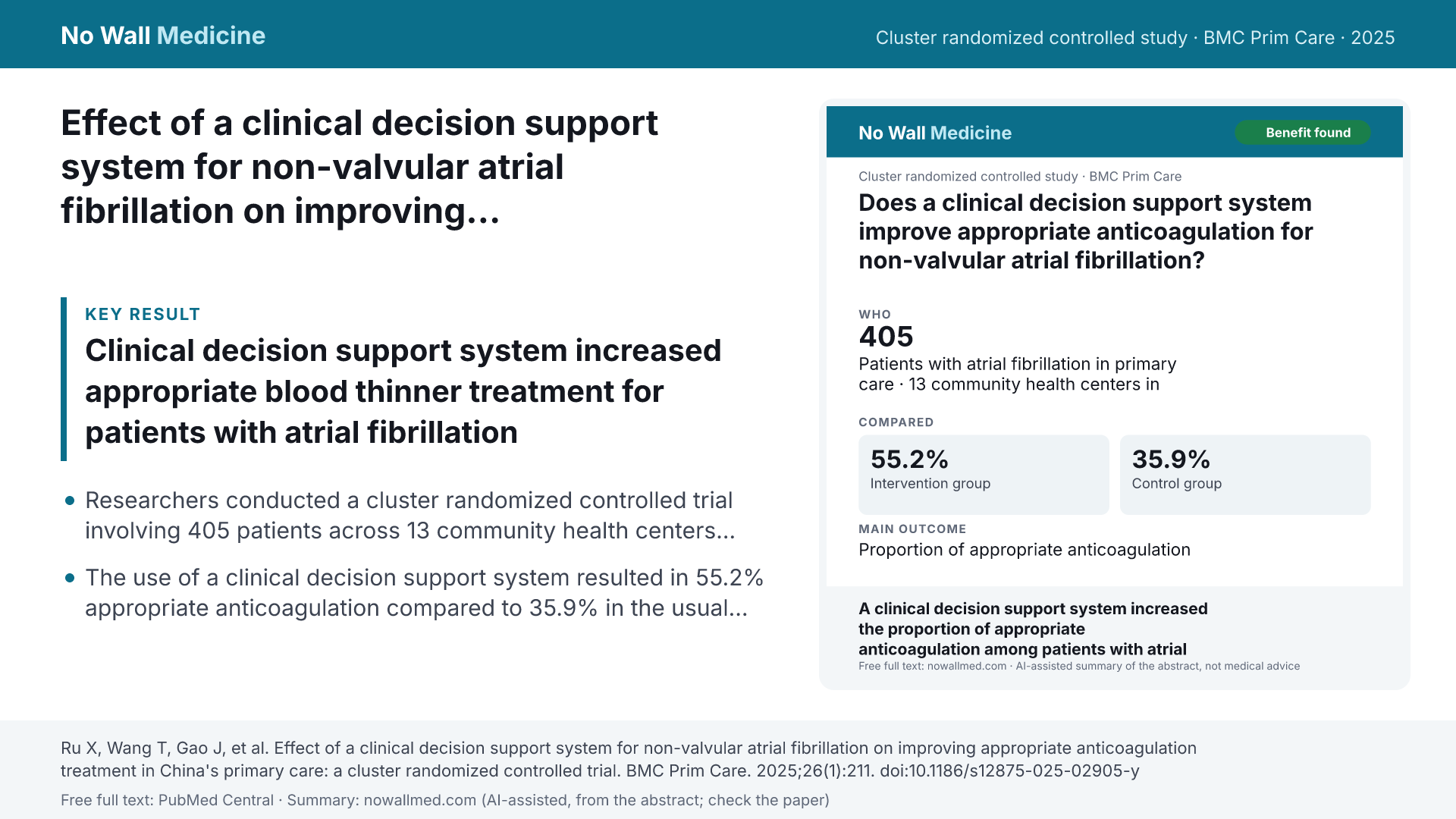
Effect of a clinical decision support system for non-valvular atrial fibrillation on improving appropriate anticoagulation treatment in China's primary care: a cluster randomized controlled trial
Key result: Clinical decision support system increased appropriate blood thinner treatment for patients with atrial fibrillation
Key points
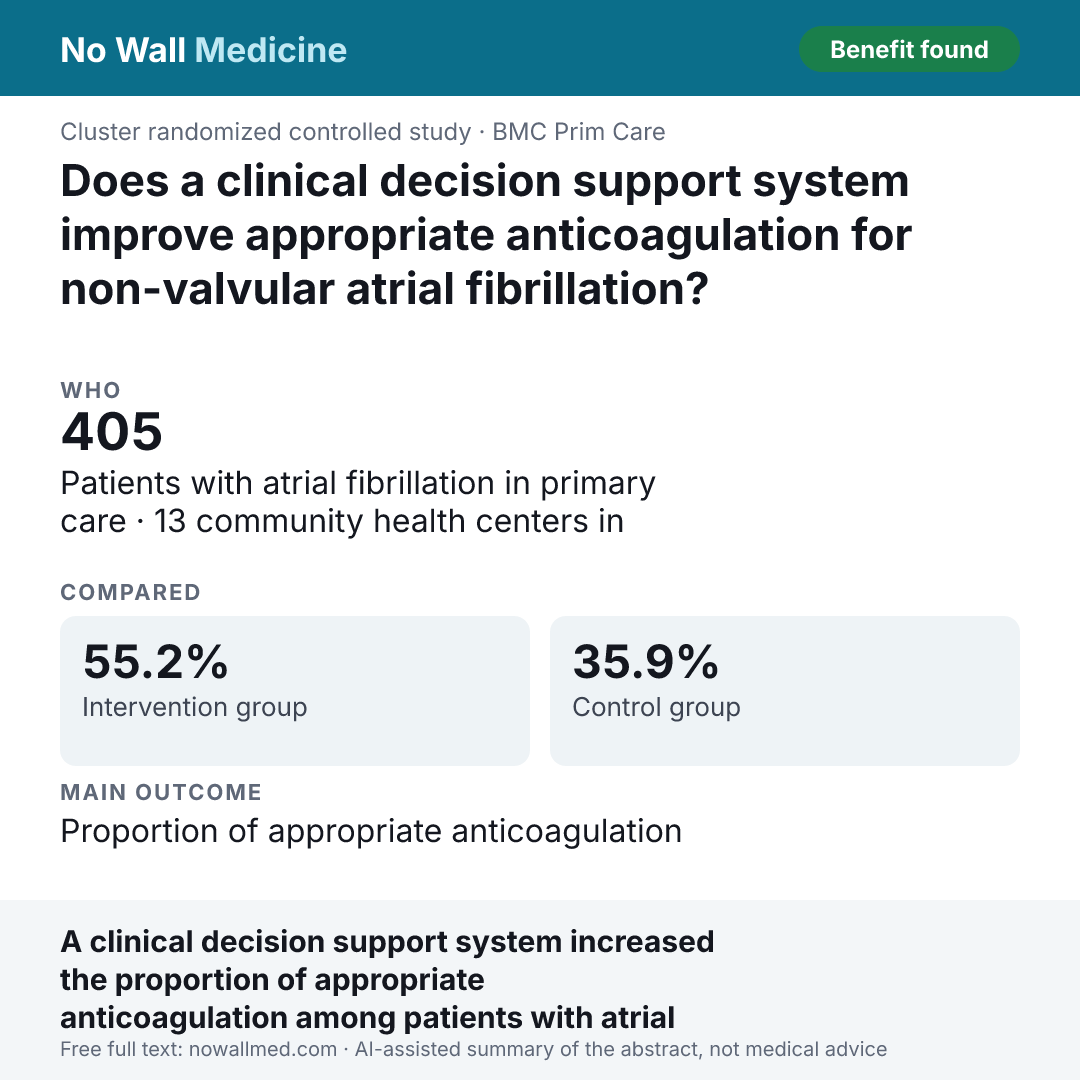
- Researchers conducted a cluster randomized controlled trial involving 405 patients across 13 community health centers in Shanghai, China.
- The use of a clinical decision support system resulted in 55.2% appropriate anticoagulation compared to 35.9% in the usual care group.
- Patients using the decision support system were more likely to experience a correct transition of their anticoagulation therapies (RR = 2.528).
In absolute numbers: Intervention group 55.2% vs Control group 35.9%, a difference of 19.3 percentage points (about 6 people treated for one more to benefit).
Discussion prompts
- Would these patients look like yours? Who was left out?
- Is the main outcome one that matters to patients?
- Is the difference large enough to change what you do?
Cite: Ru X, Wang T, Gao J, et al. Effect of a clinical decision support system for non-valvular atrial fibrillation on improving appropriate anticoagulation treatment in China's primary care: a cluster randomized controlled trial. BMC Prim Care. 2025;26(1):211. doi:10.1186/s12875-025-02905-y
Free full text: PubMed Central · Summary and visual abstract: nowallmed.com/a/effect-of-a-clinical-decision-support-system-for-non-valvular-atrial-12hjg6k/ (AI-assisted from the abstract; check the paper before relying on it).