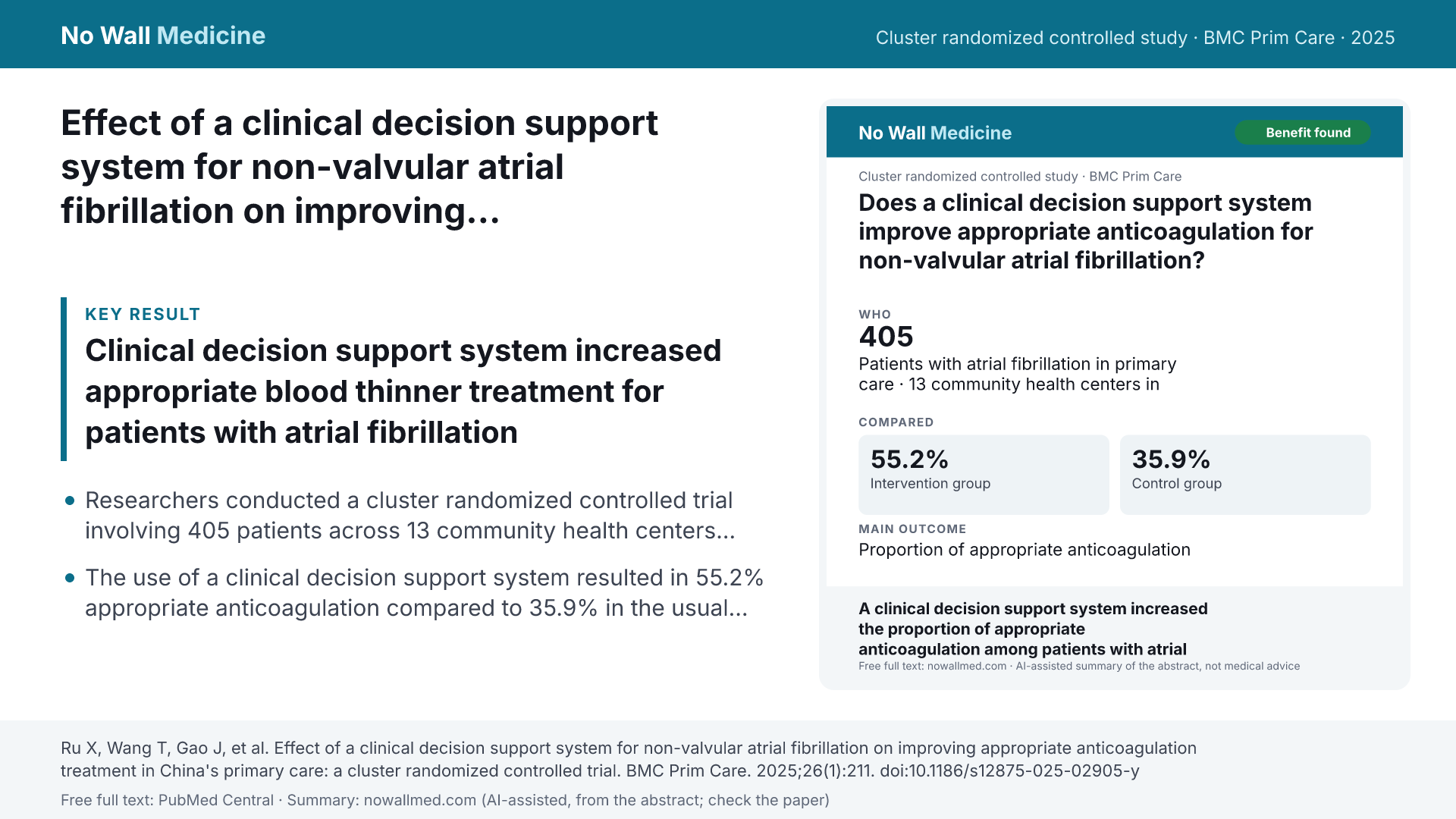
Clinical decision support system increased appropriate blood thinner treatment for patients with atrial fibrillation
Effect of a clinical decision support system for non-valvular atrial fibrillation on improving appropriate anticoagulation treatment in China's primary care: a cluster randomized controlled trial
Cluster randomized controlled studyBenefit found
Does a clinical decision support system improve appropriate anticoagulation for non-valvular atrial fibrillation?
Who
405
Patients with atrial fibrillation in primary care · 13 community health centers in Shanghai, China
Compared
55.2%Intervention group
35.9%Control group
Main outcome
Proportion of appropriate anticoagulation
Result: relative risk 1.441 (95% CI 1.429-1.453)
Bottom line: A clinical decision support system increased the proportion of appropriate anticoagulation among patients with atrial fibrillation in primary care.
BMC Prim Care · 2025-07-02Download image
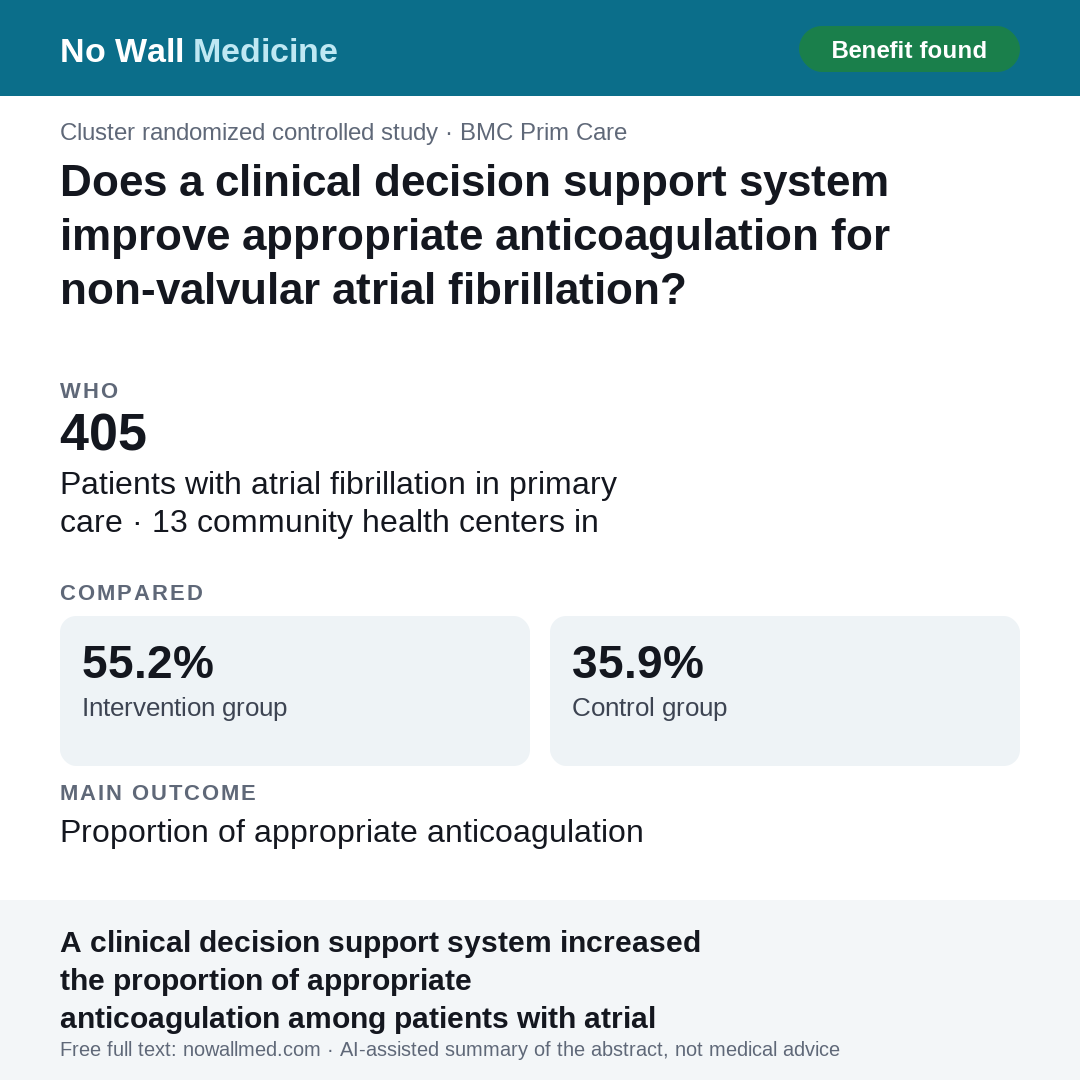
Clinical question: Does a clinical decision support system improve appropriate anticoagulation for non-valvular atrial fibrillation?
Why it matters: It was unknown if a clinical decision support system could improve the quality of management for non-valvular atrial fibrillation in primary care settings.
In absolute numbers
Intervention group: 55.2% · Control group: 35.9% → a difference of 19.3 percentage points, so about 6 people would need the treatment for 1 more to benefit (number needed to treat) over the trial’s follow-up.
Worked out by us from the two group results above, not reported by the authors. Check the paper for the exact outcome and timing.
Key points
- Researchers conducted a cluster randomized controlled trial involving 405 patients across 13 community health centers in Shanghai, China.
- The use of a clinical decision support system resulted in 55.2% appropriate anticoagulation compared to 35.9% in the usual care group.
- Patients using the decision support system were more likely to experience a correct transition of their anticoagulation therapies (RR = 2.528).
Headline and key points written with AI from the paper’s abstract, with every number checked against it. Read the paper before relying on them.
Was this summary helpful?
Subject terms
Cite this article
Ru X, Wang T, Gao J, et al. Effect of a clinical decision support system for non-valvular atrial fibrillation on improving appropriate anticoagulation treatment in China's primary care: a cluster randomized controlled trial. BMC Prim Care. 2025. doi:10.1186/s12875-025-02905-y
Spotted a mistake? Suggest a correction