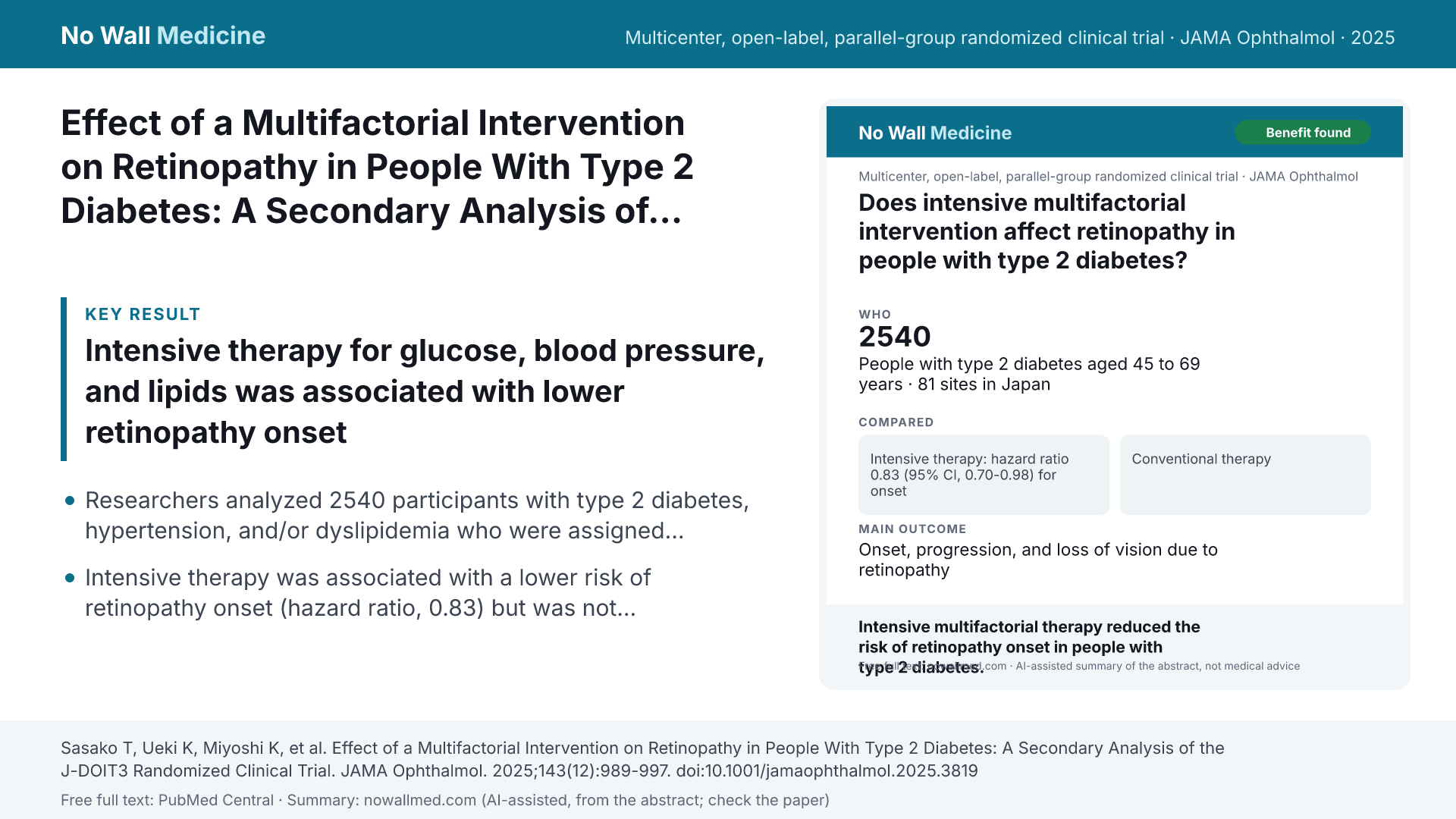
Intensive therapy for glucose, blood pressure, and lipids was associated with lower retinopathy onset
Effect of a Multifactorial Intervention on Retinopathy in People With Type 2 Diabetes: A Secondary Analysis of the J-DOIT3 Randomized Clinical Trial
Secondary analysis of a trialBenefit found
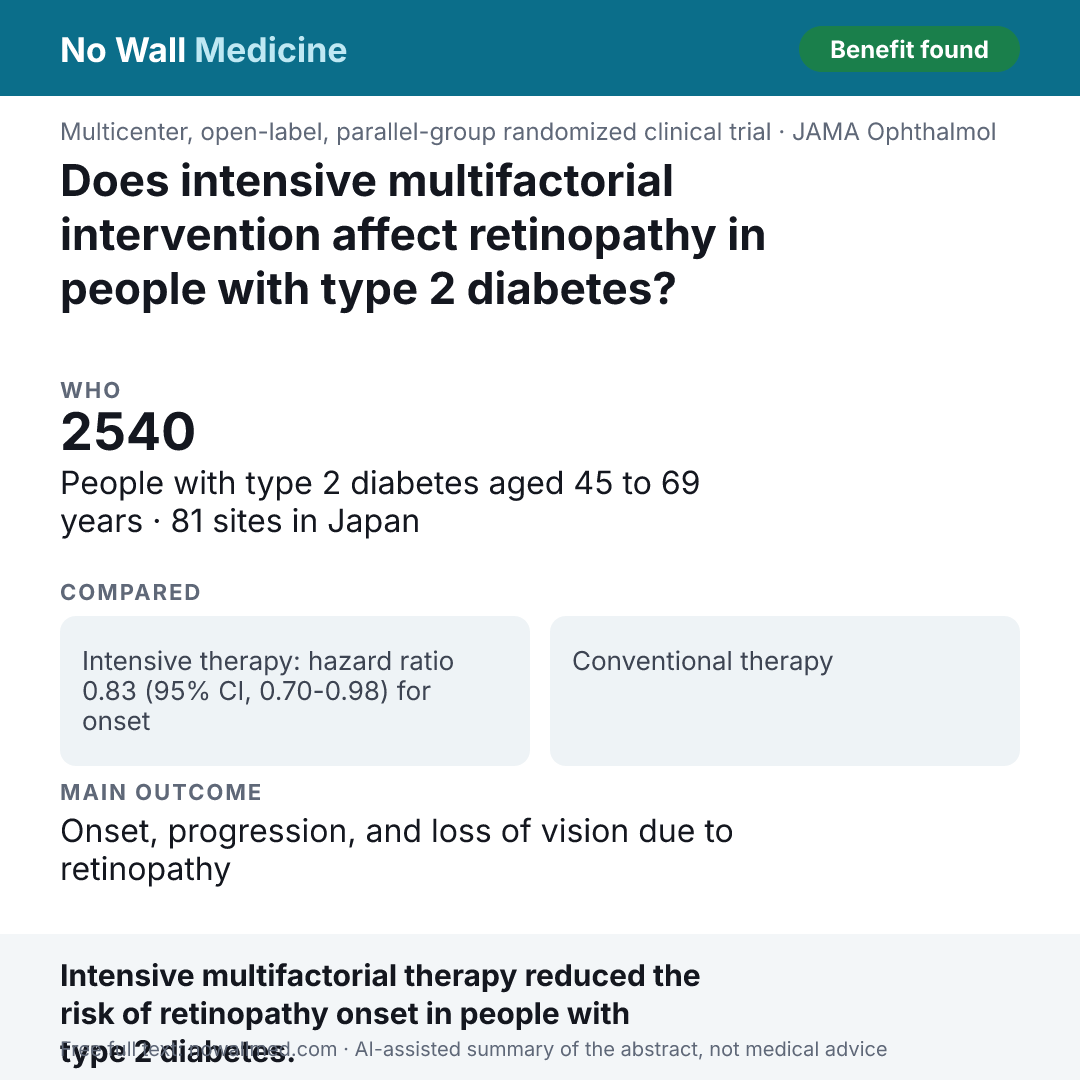
Does intensive multifactorial intervention affect retinopathy in people with type 2 diabetes?
Who
2540
People with type 2 diabetes aged 45 to 69 years · 81 sites in Japan
Compared
Intensive therapy: hazard ratio 0.83 (95% CI, 0.70-0.98) for onset
Conventional therapy
Main outcome
Onset, progression, and loss of vision due to retinopathy
Result: hazard ratio 0.83 (95% CI, 0.70-0.98) for onset of retinopathy
Bottom line: Intensive multifactorial therapy reduced the risk of retinopathy onset in people with type 2 diabetes.
JAMA Ophthalmol · 2025-10-23 · Save PNG
Same trial (NCT00300976)
Papers we list that report this registered trial, oldest first. Read a secondary analysis alongside the main results.
- Main results No clear difference
Intensive therapy for blood sugar, blood pressure, and cholesterol did not change fracture risk J Clin Endocrinol Metab 2021-01 - Secondary analysis Benefit found
This paper JAMA Ophthalmol 2025-10
Clinical question: Does intensive multifactorial intervention affect retinopathy in people with type 2 diabetes?
Key points
- Researchers analyzed 2540 participants with type 2 diabetes, hypertension, and/or dyslipidemia who were assigned to intensive or conventional therapy for a median of 8.5 years.
- Intensive therapy was associated with a lower risk of retinopathy onset (hazard ratio, 0.83) but was not associated with a lower risk of retinopathy progression (hazard ratio, 1.02).
- Higher hemoglobin A1c levels and more frequent episodes of hypoglycemia, or low blood sugar, were associated with a higher risk of retinopathy onset.
Headline and key points written with AI from the paper’s abstract, with every number checked against it. Read the paper before relying on them.
Was this summary helpful?
Subject terms
Headline, design, result, key points, caveat and citation as plain text.
Cite this article
Sasako T, Ueki K, Miyoshi K, et al. Effect of a Multifactorial Intervention on Retinopathy in People With Type 2 Diabetes: A Secondary Analysis of the J-DOIT3 Randomized Clinical Trial. JAMA Ophthalmol. 2025;143(12):989-997. doi:10.1001/jamaophthalmol.2025.3819
Spotted a mistake? Suggest a correction