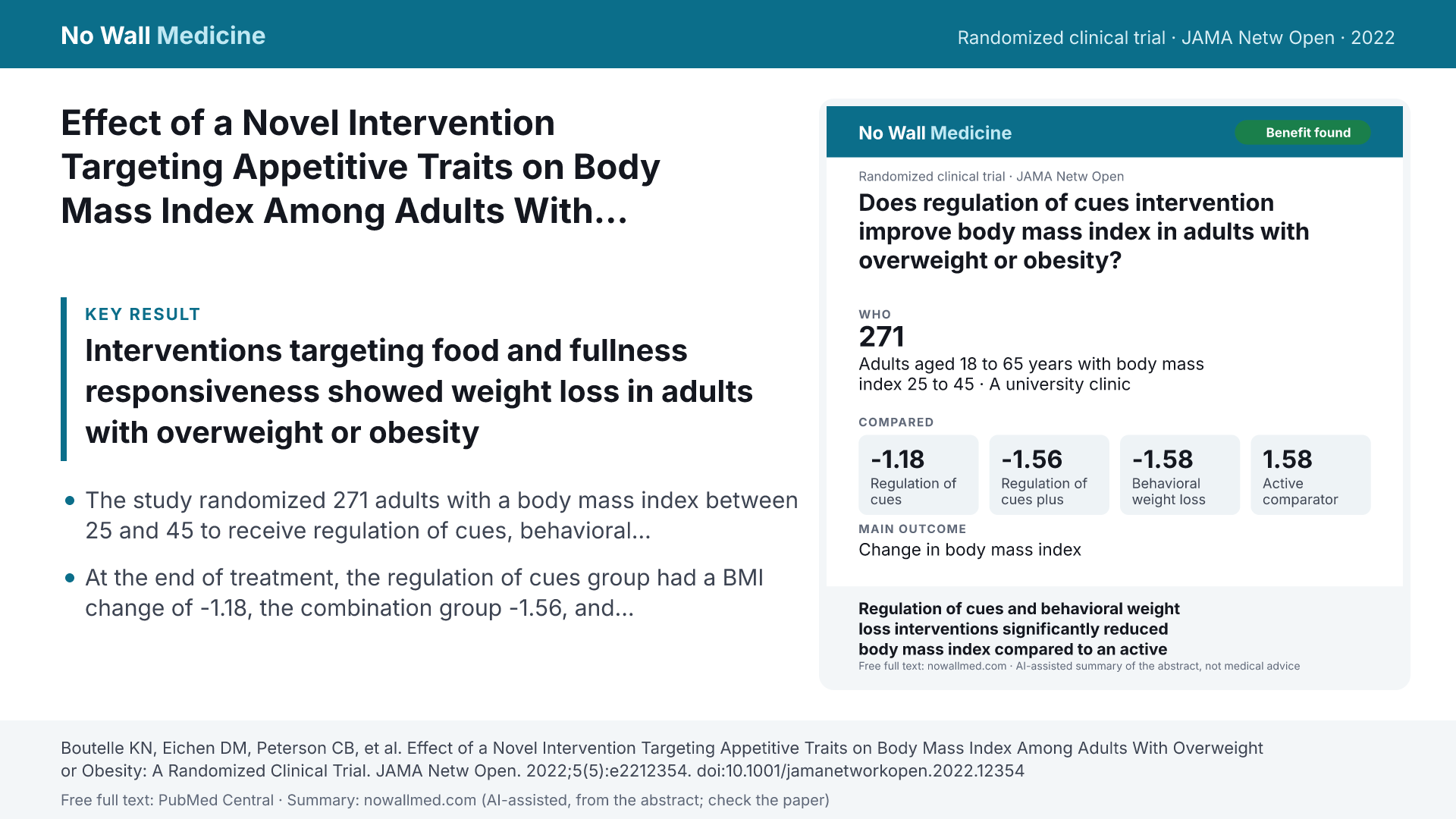
Effect of a Novel Intervention Targeting Appetitive Traits on Body Mass Index Among Adults With Overweight or Obesity: A Randomized Clinical Trial
Key result: Interventions targeting food and fullness responsiveness showed weight loss in adults with overweight or obesity
Key points
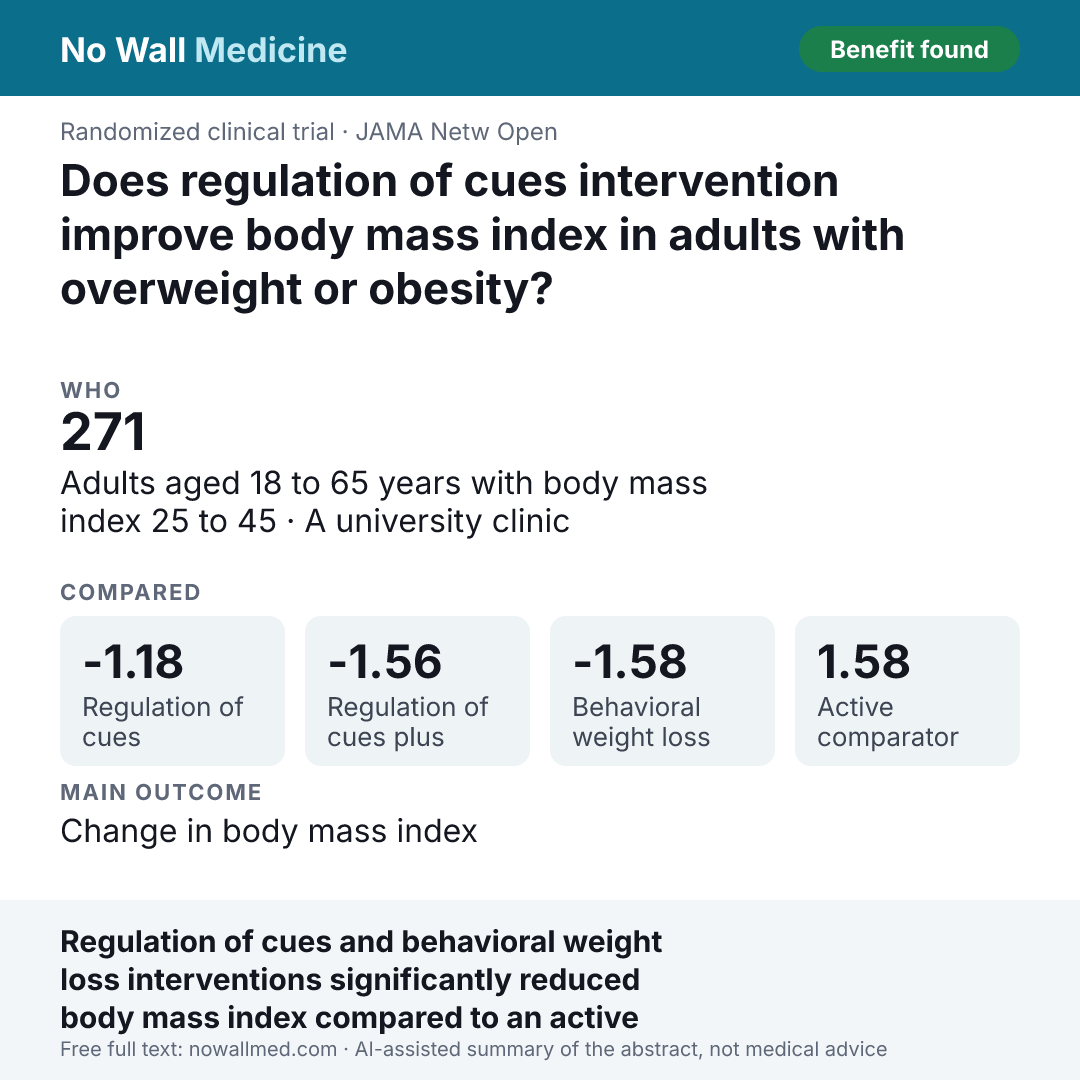
- The study randomized 271 adults with a body mass index between 25 and 45 to receive regulation of cues, behavioral weight loss, a combination, or an active comparator.
- At the end of treatment, the regulation of cues group had a BMI change of -1.18, the combination group -1.56, and the behavioral weight loss group -1.58.
- The BMI of the active comparator group was 1.58 higher than the other groups at the end of treatment, and BMI reductions at 24 months were similar across the three main interventions.
Why it matters: Most individuals regain weight after behavioral weight loss programs, and it is unknown if targeting genetically determined appetitive traits like food and satiety responsiveness can improve outcomes.
Discussion prompts
- Would these patients look like yours? Who was left out?
- Is the main outcome one that matters to patients?
- Is the difference large enough to change what you do?
Cite: Boutelle KN, Eichen DM, Peterson CB, et al. Effect of a Novel Intervention Targeting Appetitive Traits on Body Mass Index Among Adults With Overweight or Obesity: A Randomized Clinical Trial. JAMA Netw Open. 2022;5(5):e2212354. doi:10.1001/jamanetworkopen.2022.12354
Free full text: PubMed Central · Summary and visual abstract: nowallmed.com/a/effect-of-a-novel-intervention-targeting-appetitive-traits-on-body-qkac97/ (AI-assisted from the abstract; check the paper before relying on it).