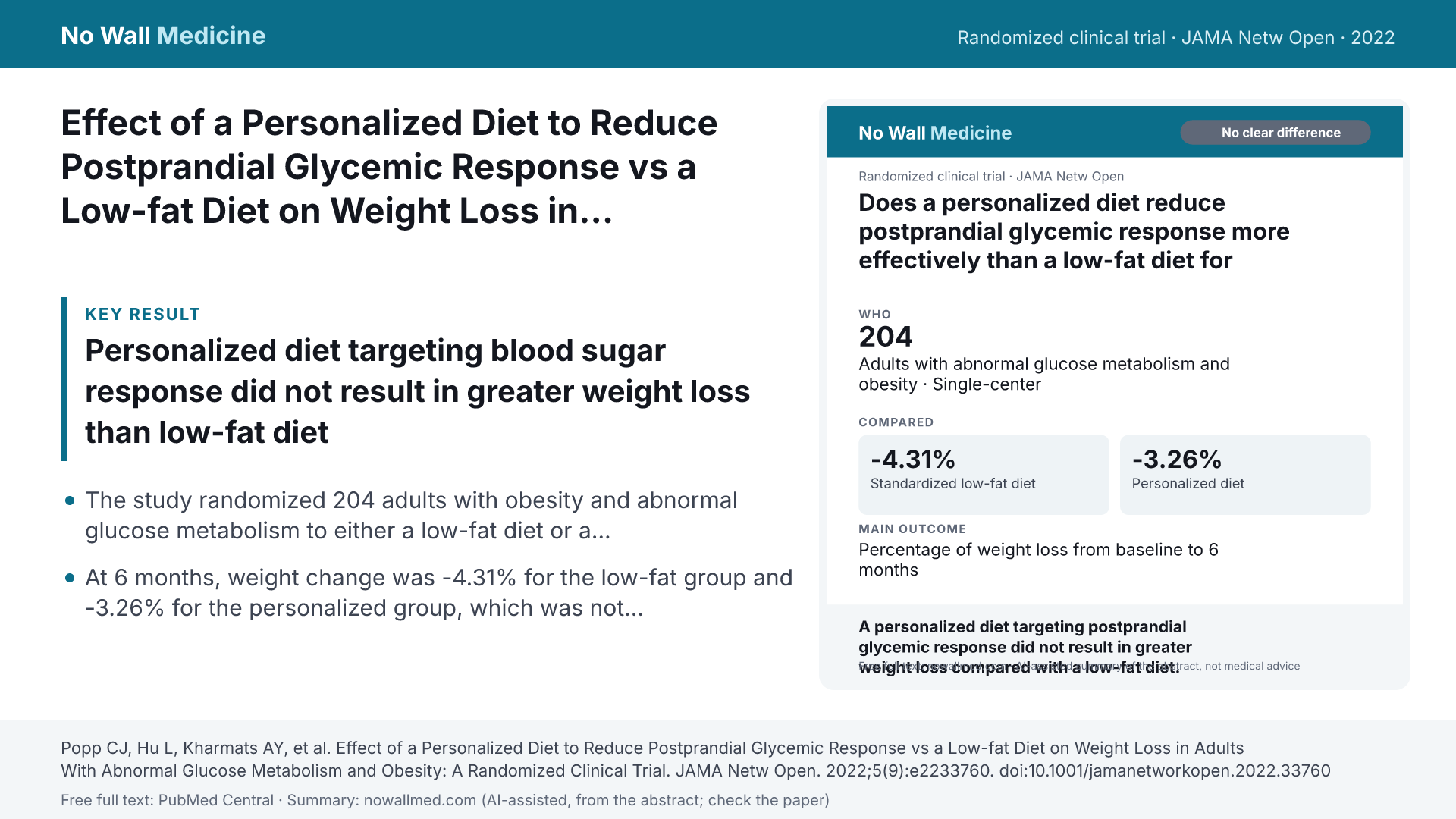
Personalized diet targeting blood sugar response did not result in greater weight loss than low-fat diet
Effect of a Personalized Diet to Reduce Postprandial Glycemic Response vs a Low-fat Diet on Weight Loss in Adults With Abnormal Glucose Metabolism and Obesity: A Randomized Clinical Trial
Randomized clinical trialNo clear difference
Does a personalized diet reduce postprandial glycemic response more effectively than a low-fat diet for weight loss?
Who
204
Adults with abnormal glucose metabolism and obesity · Single-center
Compared
-4.31%Standardized low-fat diet (95% CI, -5.37% to -3.24%)
-3.26%Personalized diet (95% CI, -4.25% to -2.26%)
Main outcome
Percentage of weight loss from baseline to 6 months
Result: difference between groups, 1.05% (95% CI, -0.40% to 2.50%)
Bottom line: A personalized diet targeting postprandial glycemic response did not result in greater weight loss compared with a low-fat diet.
Limitation: Future studies should assess methods of increasing dietary self-monitoring adherence and intervention exposure.
JAMA Netw Open · 2022-09-01Download image
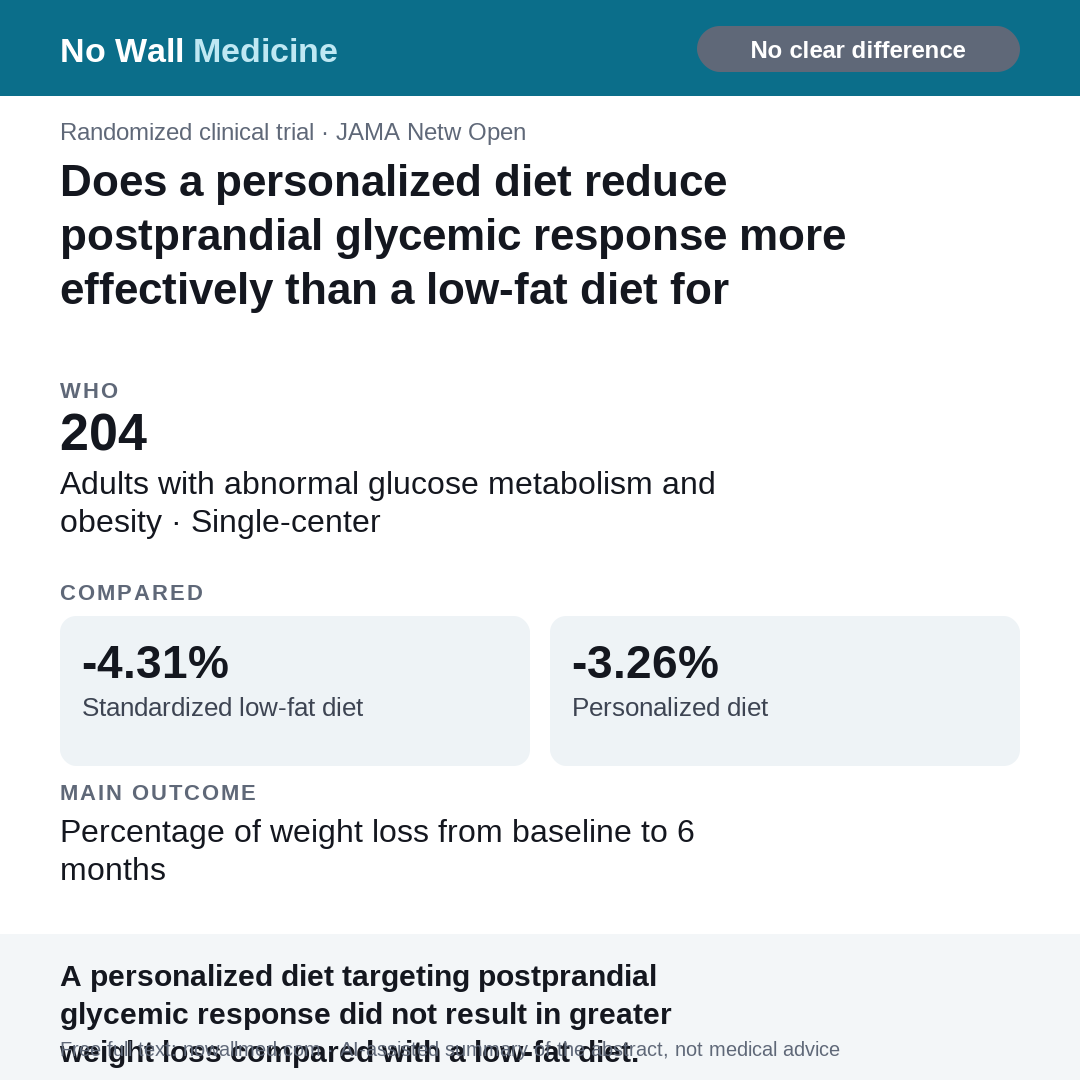
Clinical question: Does a personalized diet reduce postprandial glycemic response more effectively than a low-fat diet for weight loss?
Why it matters: It is unknown if a precision nutrition approach that estimates personalized postprandial glycemic response to specific foods is more effective for weight loss than standard dietary interventions.
Key points
- The study randomized 204 adults with obesity and abnormal glucose metabolism to either a low-fat diet or a personalized diet using machine learning to estimate blood sugar responses.
- At 6 months, weight change was -4.31% for the low-fat group and -3.26% for the personalized group, which was not a statistically significant difference.
- The standardized low-fat group showed a significantly greater change in resting energy expenditure, which is the calories burned at rest, compared to the personalized group.
Headline and key points written with AI from the paper’s abstract, with every number checked against it. Read the paper before relying on them.
Was this summary helpful?
Subject terms
Cite this article
Popp CJ, Hu L, Kharmats AY, et al. Effect of a Personalized Diet to Reduce Postprandial Glycemic Response vs a Low-fat Diet on Weight Loss in Adults With Abnormal Glucose Metabolism and Obesity: A Randomized Clinical Trial. JAMA Netw Open. 2022. doi:10.1001/jamanetworkopen.2022.33760
Spotted a mistake? Suggest a correction