Effect of a Personalized Diet to Reduce Postprandial Glycemic Response vs a Low-fat Diet on Weight Loss in Adults With Abnormal Glucose Metabolism and Obesity: A Randomized Clinical Trial
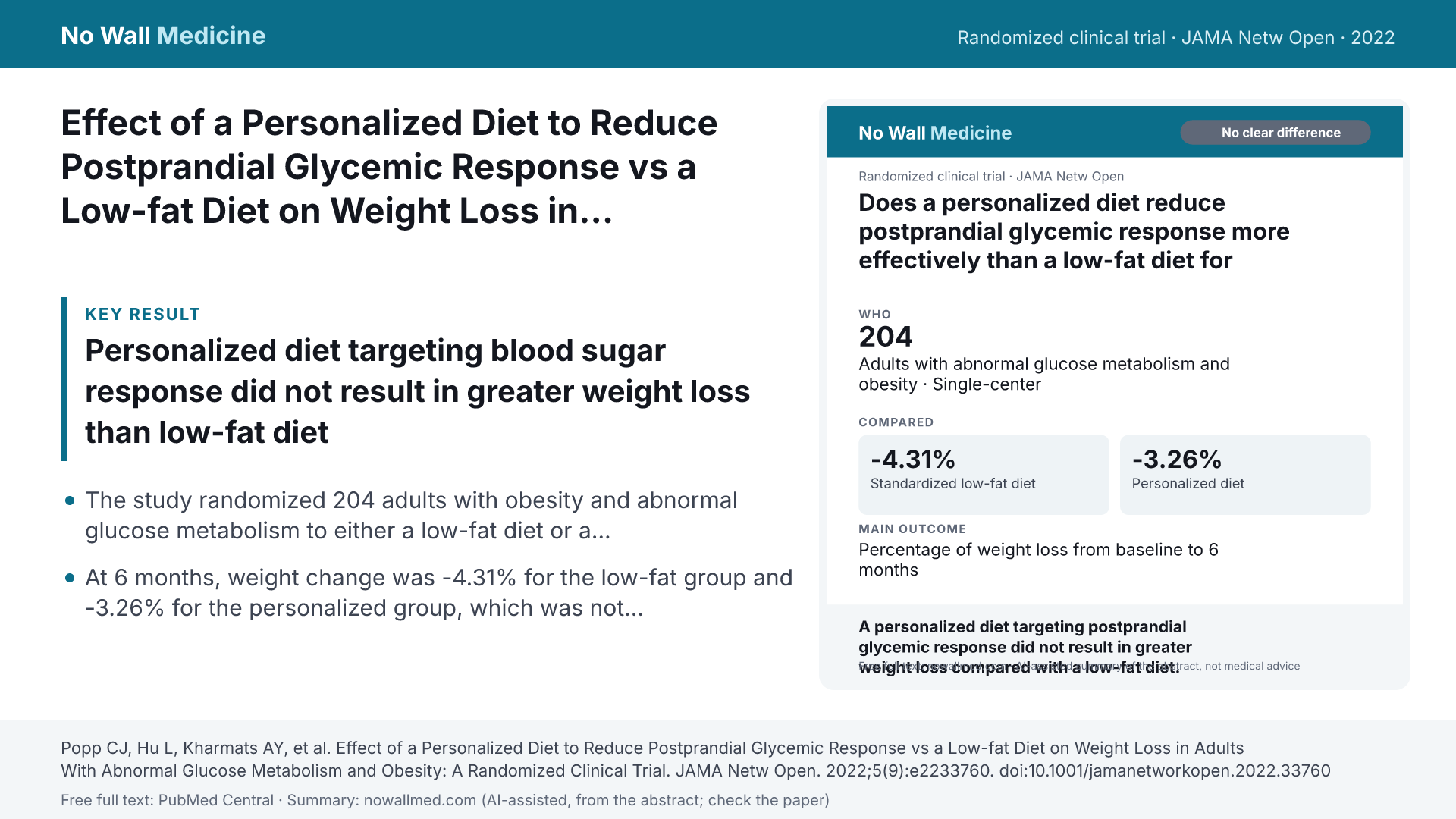
Key result: Personalized diet targeting blood sugar response did not result in greater weight loss than low-fat diet
Randomized clinical trialNo clear difference
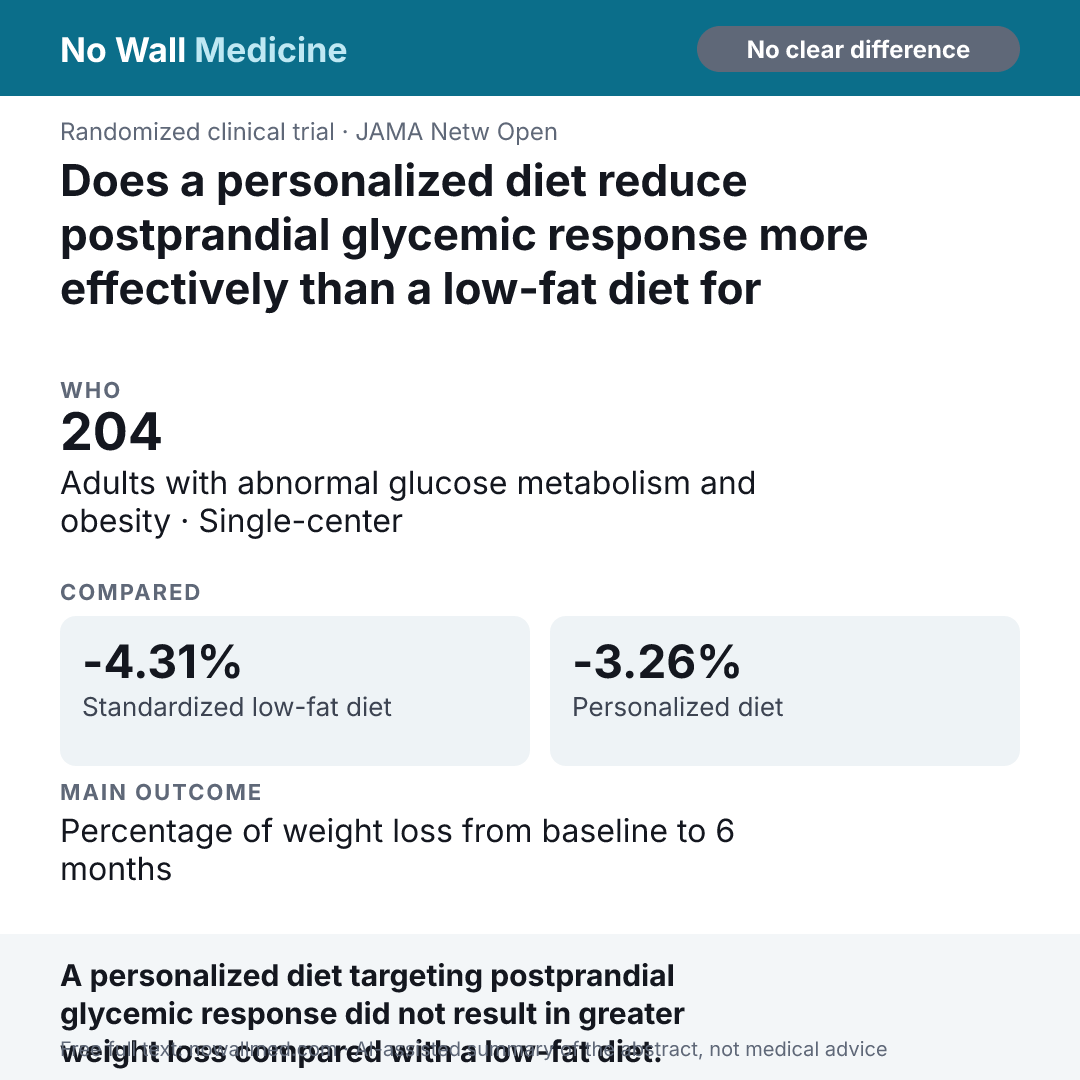
Does a personalized diet reduce postprandial glycemic response more effectively than a low-fat diet for weight loss?
Who
204
Adults with abnormal glucose metabolism and obesity · Single-center
Compared
-4.31%Standardized low-fat diet (95% CI, -5.37% to -3.24%)
-3.26%Personalized diet (95% CI, -4.25% to -2.26%)
Main outcome
Percentage of weight loss from baseline to 6 months
Result: difference between groups, 1.05% (95% CI, -0.40% to 2.50%)
Bottom line: A personalized diet targeting postprandial glycemic response did not result in greater weight loss compared with a low-fat diet.
Limitation: Future studies should assess methods of increasing dietary self-monitoring adherence and intervention exposure.
JAMA Netw Open · 2022-09-01 · Save PNG
Key points
- The study randomized 204 adults with obesity and abnormal glucose metabolism to either a low-fat diet or a personalized diet using machine learning to estimate blood sugar responses.
- At 6 months, weight change was -4.31% for the low-fat group and -3.26% for the personalized group, which was not a statistically significant difference.
- The standardized low-fat group showed a significantly greater change in resting energy expenditure, which is the calories burned at rest, compared to the personalized group.
Discussion prompts
- Would these patients look like yours? Who was left out?
- Is the main outcome one that matters to patients?
- Is the difference large enough to change what you do?
Cite: Popp CJ, Hu L, Kharmats AY, et al. Effect of a Personalized Diet to Reduce Postprandial Glycemic Response vs a Low-fat Diet on Weight Loss in Adults With Abnormal Glucose Metabolism and Obesity: A Randomized Clinical Trial. JAMA Netw Open. 2022;5(9):e2233760. doi:10.1001/jamanetworkopen.2022.33760
Free full text: PubMed Central · Summary and visual abstract: nowallmed.com/a/effect-of-a-personalized-diet-to-reduce-postprandial-glycemic-sfrrbj/ (AI-assisted from the abstract; check the paper before relying on it).