Effect of a Postoperative Multimodal Opioid-Sparing Protocol vs Standard Opioid Prescribing on Postoperative Opioid Consumption After Knee or Shoulder Arthroscopy: A Randomized Clinical Trial
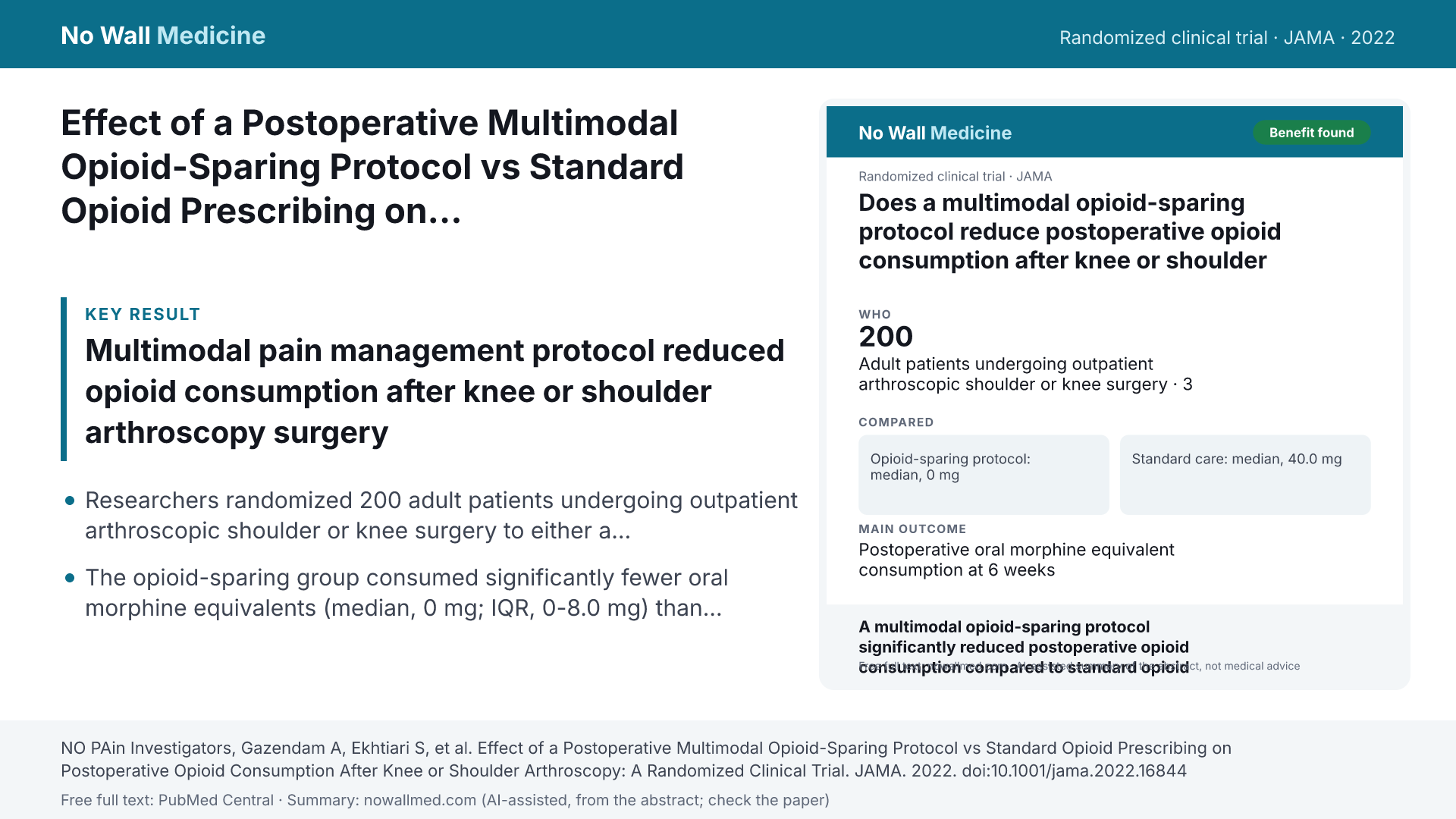
Key result: Multimodal pain management protocol reduced opioid consumption after knee or shoulder arthroscopy surgery
Key points
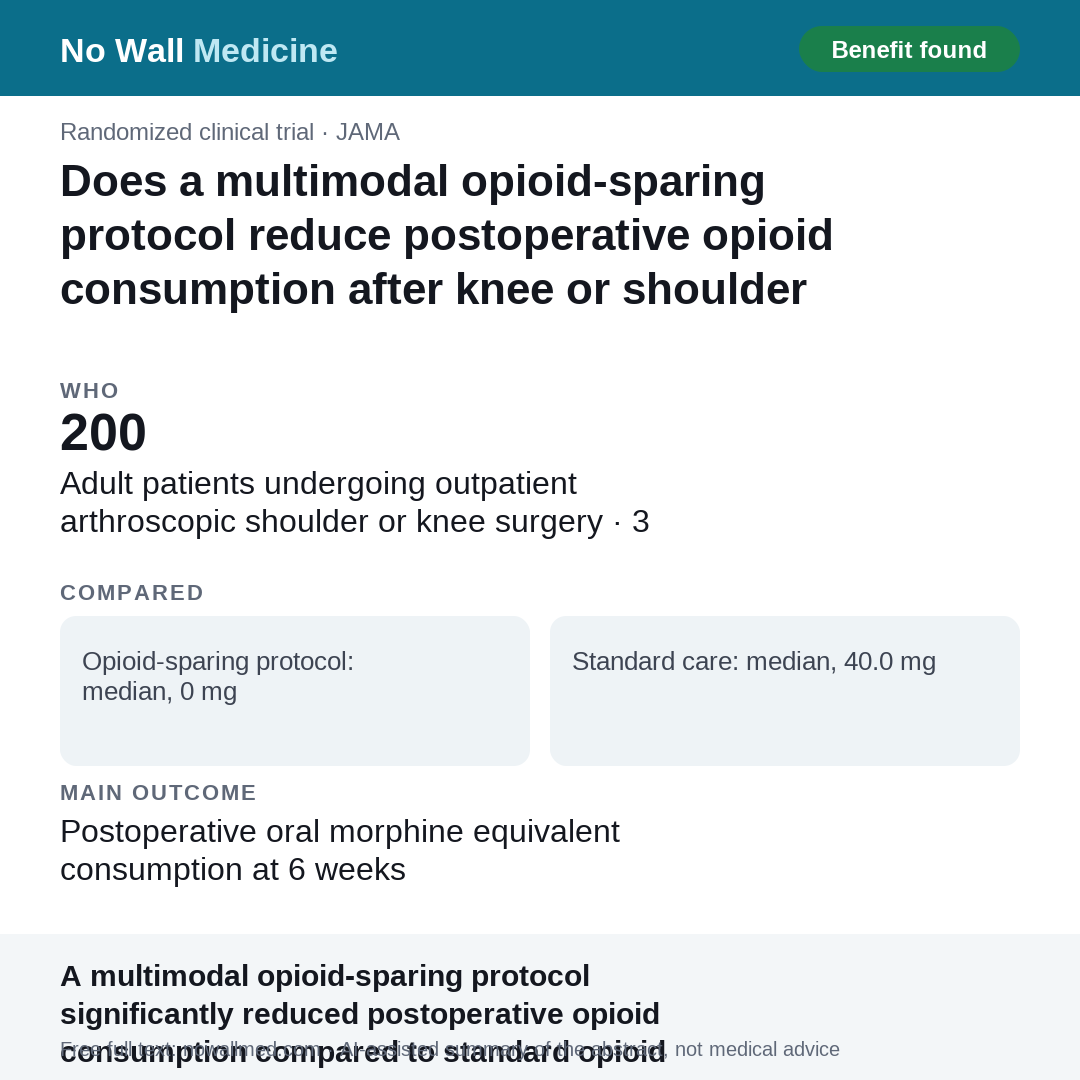
- Researchers randomized 200 adult patients undergoing outpatient arthroscopic shoulder or knee surgery to either a multimodal opioid-sparing protocol or standard opioid prescribing.
- The opioid-sparing group consumed significantly fewer oral morphine equivalents (median, 0 mg; IQR, 0-8.0 mg) than the control group (median, 40.0 mg; IQR, 7.5-105.0).
- The mean amount of oral morphine equivalents prescribed was 40.4 mg in the opioid-sparing group compared to 341.2 mg in the standard care group.
Why it matters: Prospective, comparative trials evaluating the effectiveness of opioid-sparing protocols versus standard care for patients undergoing arthroscopic shoulder or knee surgery are lacking.
Discussion prompts
- Would these patients look like yours? Who was left out?
- Is the main outcome one that matters to patients?
- Is the difference large enough to change what you do?
Cite: NO PAin Investigators, Gazendam A, Ekhtiari S, et al. Effect of a Postoperative Multimodal Opioid-Sparing Protocol vs Standard Opioid Prescribing on Postoperative Opioid Consumption After Knee or Shoulder Arthroscopy: A Randomized Clinical Trial. JAMA. 2022. doi:10.1001/jama.2022.16844
Free full text: PubMed Central · Summary and visual abstract: nowallmed.com/a/effect-of-a-postoperative-multimodal-opioid-sparing-protocol-vs-fu5iix/ (AI-assisted from the abstract; check the paper before relying on it).