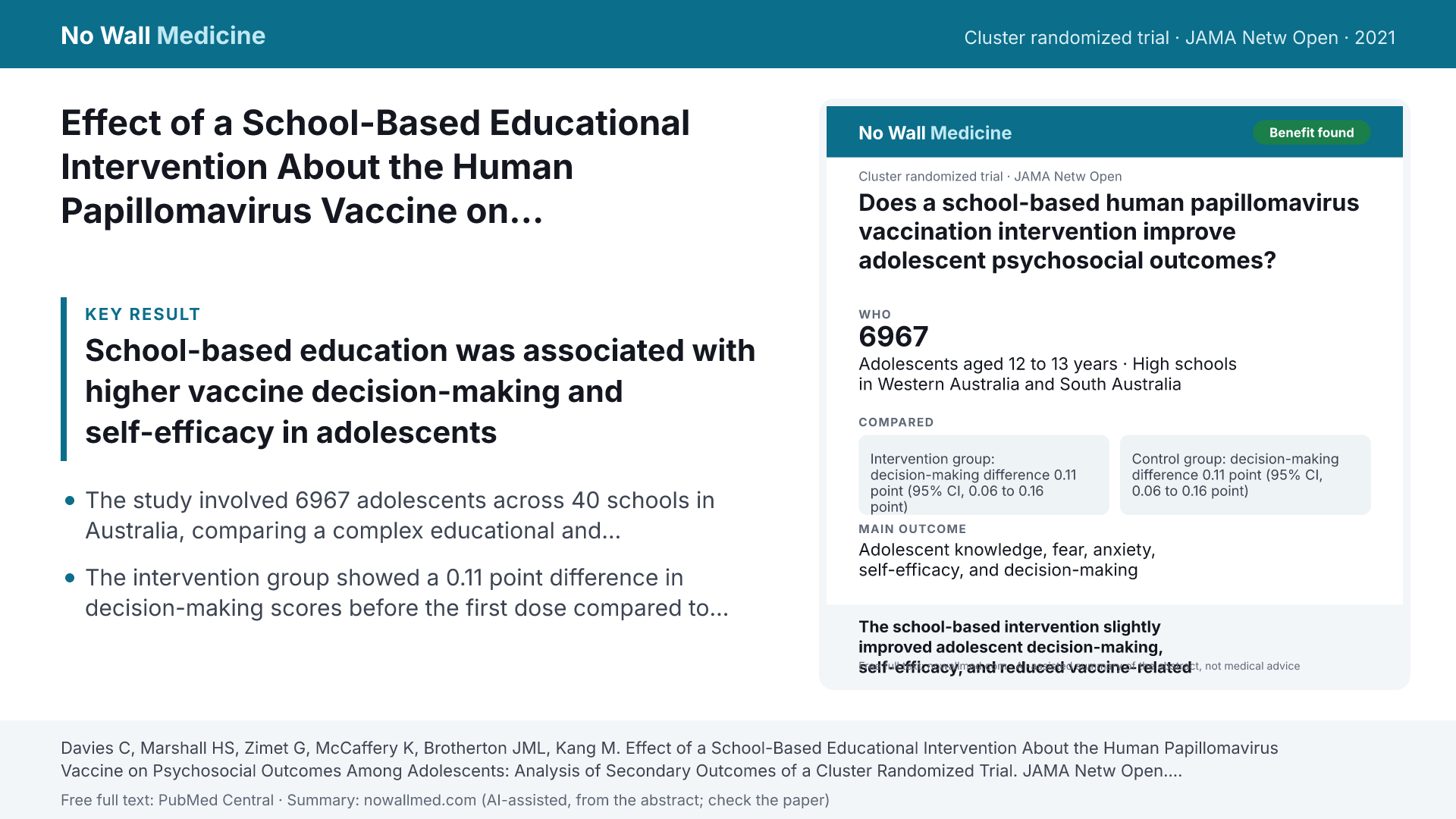
School-based education was associated with higher vaccine decision-making and self-efficacy in adolescents
Effect of a School-Based Educational Intervention About the Human Papillomavirus Vaccine on Psychosocial Outcomes Among Adolescents: Analysis of Secondary Outcomes of a Cluster Randomized Trial
Cluster randomized trialBenefit found
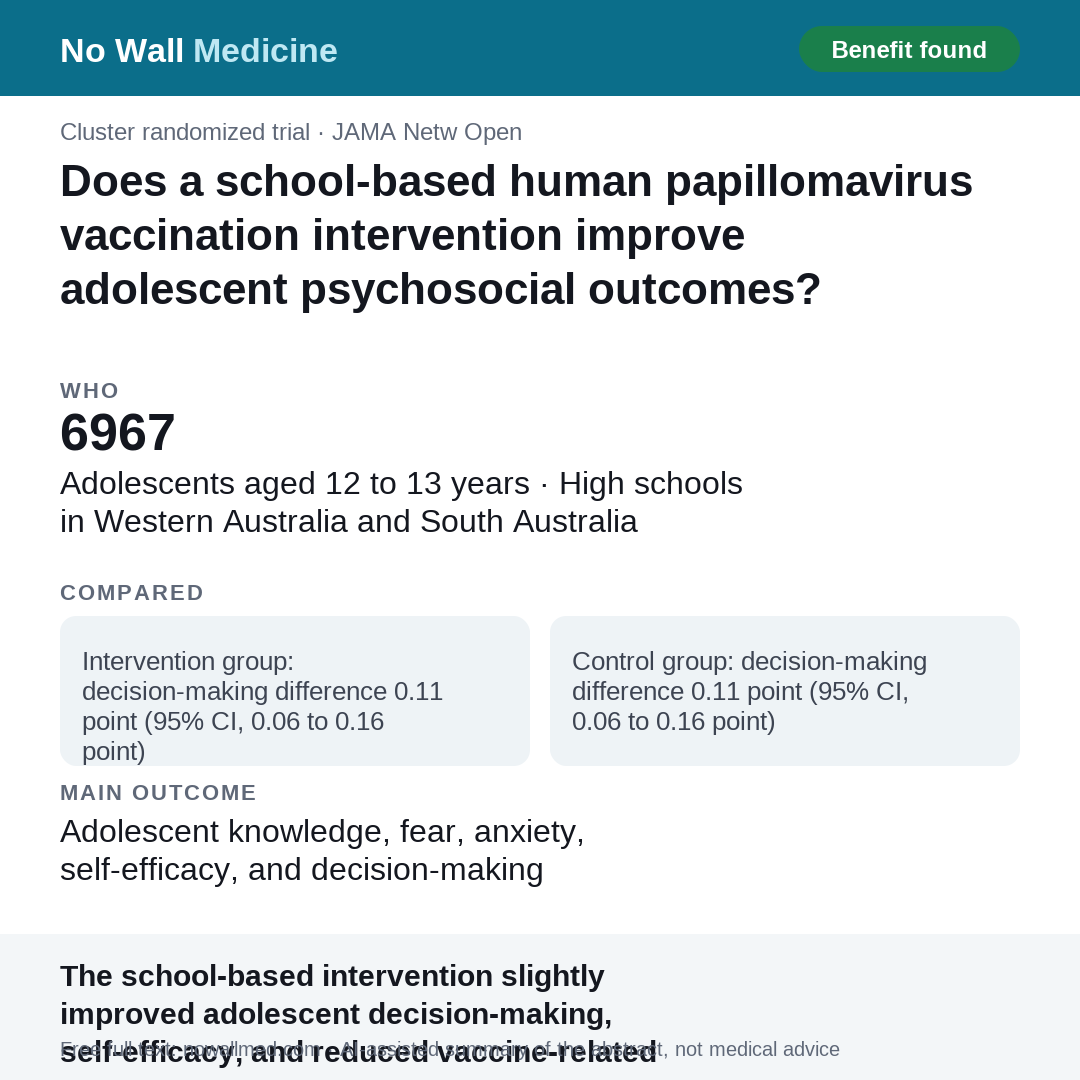
Does a school-based human papillomavirus vaccination intervention improve adolescent psychosocial outcomes?
Who
6967
Adolescents aged 12 to 13 years · High schools in Western Australia and South Australia
Compared
Intervention group: decision-making difference 0.11 point (95% CI, 0.06 to 0.16 point)
Control group: decision-making difference 0.11 point (95% CI, 0.06 to 0.16 point)
Main outcome
Adolescent knowledge, fear, anxiety, self-efficacy, and decision-making
Result: decision-making difference 0.11 point (95% CI, 0.06 to 0.16 point)
Bottom line: The school-based intervention slightly improved adolescent decision-making, self-efficacy, and reduced vaccine-related anxiety throughout the vaccination course.
JAMA Netw Open · 2021-11-01Download image
Clinical question: Does a school-based human papillomavirus vaccination intervention improve adolescent psychosocial outcomes?
Why it matters: It was unknown if a school-based program could influence adolescent involvement in health decisions, self-efficacy, and fear regarding the human papillomavirus vaccine.
Key points
- The study involved 6967 adolescents across 40 schools in Australia, comparing a complex educational and logistical intervention to a control group.
- The intervention group showed a 0.11 point difference in decision-making scores before the first dose compared to the control group.
- The intervention was associated with increased vaccine-related self-efficacy and reduced vaccine-related anxiety across all three vaccine doses.
Limitation the authors note: The overall response rate for the questionnaire was 55%, with a 35% response rate in Western Australia where parental consent was required.
Headline and key points written with AI from the paper’s abstract, with every number checked against it. Read the paper before relying on them.
Was this summary helpful?
Subject terms
Cite this article
Davies C, Marshall HS, Zimet G, McCaffery K, Brotherton JML, Kang M. Effect of a School-Based Educational Intervention About the Human Papillomavirus Vaccine on Psychosocial Outcomes Among Adolescents: Analysis of Secondary Outcomes of a Cluster Randomized Trial. JAMA Netw Open. 2021. doi:10.1001/jamanetworkopen.2021.29057
Spotted a mistake? Suggest a correction
Top studies every Monday
The week’s key trials and guidelines in your specialties, plus any topics you follow. By email, free.
Get the weekly digest