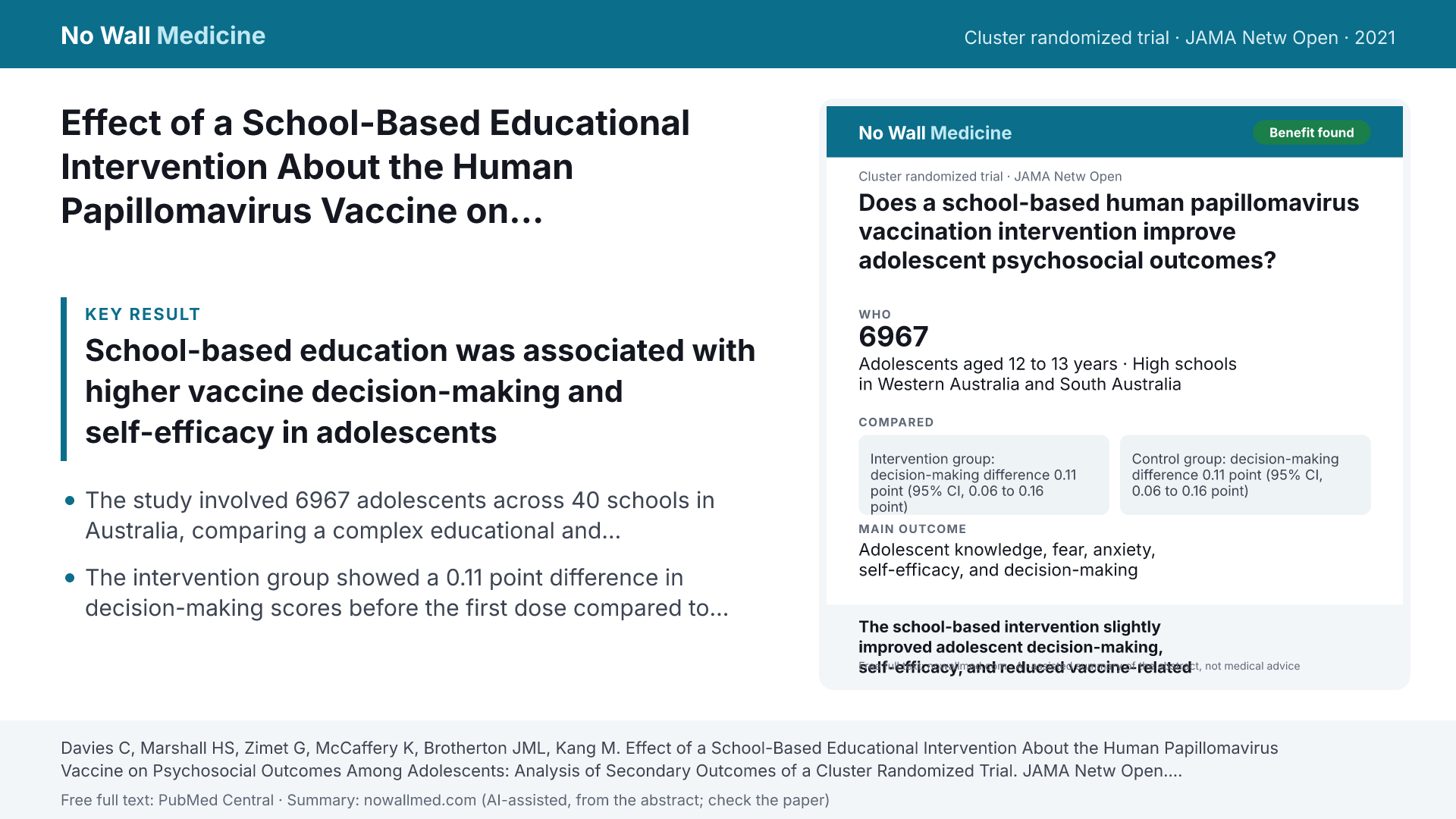
Effect of a School-Based Educational Intervention About the Human Papillomavirus Vaccine on Psychosocial Outcomes Among Adolescents: Analysis of Secondary Outcomes of a Cluster Randomized Trial
Key result: School-based education was associated with higher vaccine decision-making and self-efficacy in adolescents
Key points
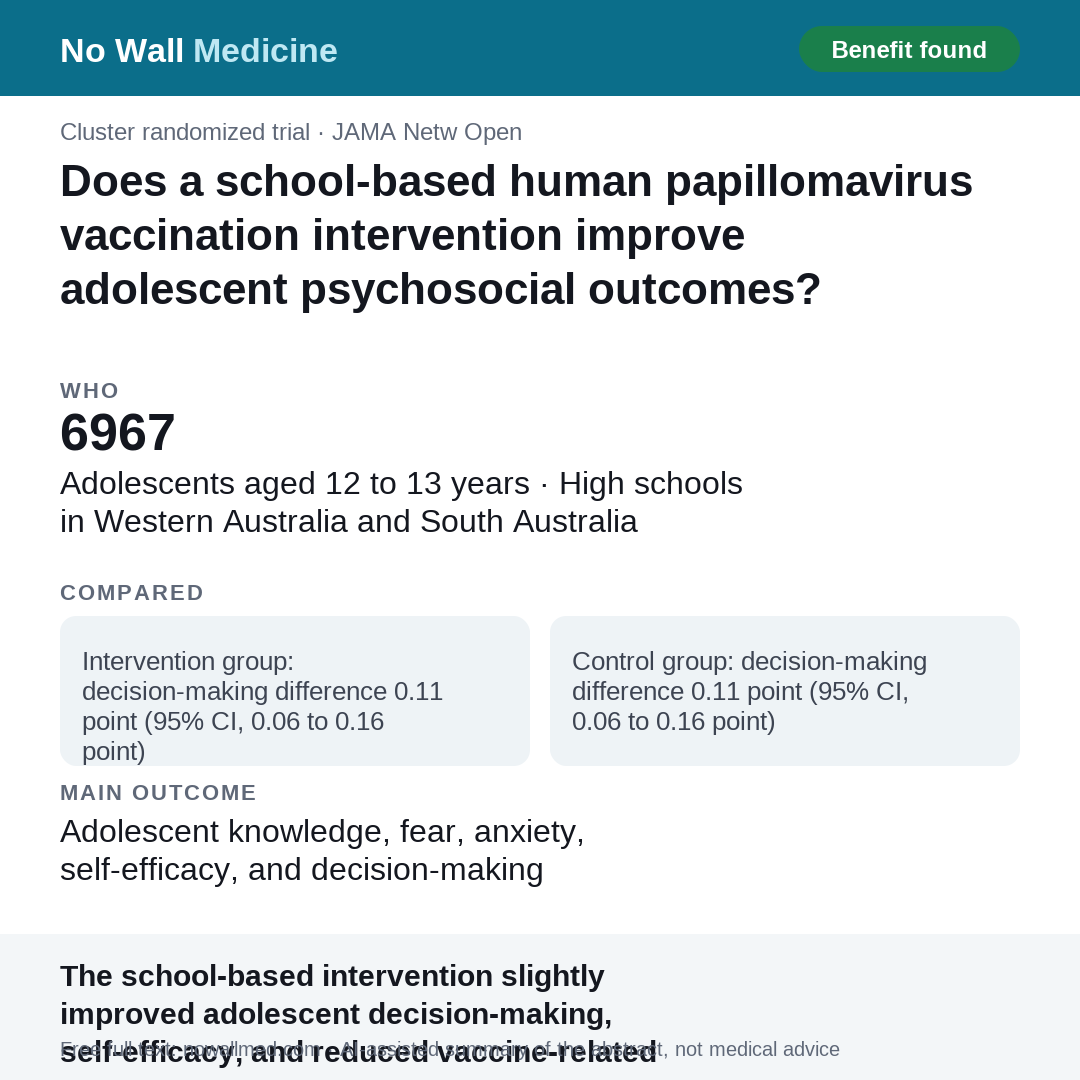
- The study involved 6967 adolescents across 40 schools in Australia, comparing a complex educational and logistical intervention to a control group.
- The intervention group showed a 0.11 point difference in decision-making scores before the first dose compared to the control group.
- The intervention was associated with increased vaccine-related self-efficacy and reduced vaccine-related anxiety across all three vaccine doses.
Why it matters: It was unknown if a school-based program could influence adolescent involvement in health decisions, self-efficacy, and fear regarding the human papillomavirus vaccine.
Limitation the authors note: The overall response rate for the questionnaire was 55%, with a 35% response rate in Western Australia where parental consent was required.
Discussion prompts
- Would these patients look like yours? Who was left out?
- Is the main outcome one that matters to patients?
- Is the difference large enough to change what you do?
Cite: Davies C, Marshall HS, Zimet G, McCaffery K, Brotherton JML, Kang M. Effect of a School-Based Educational Intervention About the Human Papillomavirus Vaccine on Psychosocial Outcomes Among Adolescents: Analysis of Secondary Outcomes of a Cluster Randomized Trial. JAMA Netw Open. 2021. doi:10.1001/jamanetworkopen.2021.29057
Free full text: PubMed Central · Summary and visual abstract: nowallmed.com/a/effect-of-a-school-based-educational-intervention-about-the-human-15piq1s/ (AI-assisted from the abstract; check the paper before relying on it).